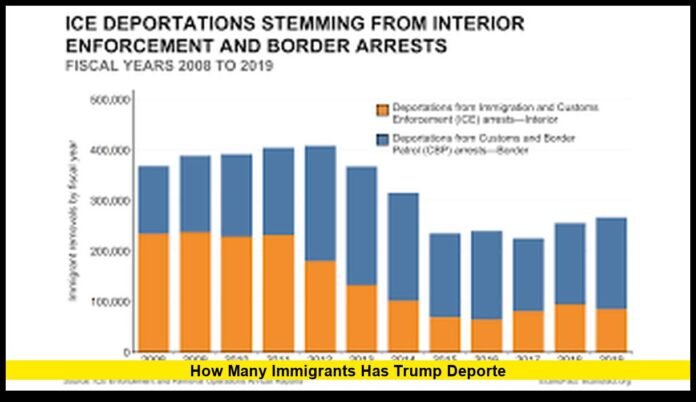

How many immigrants has Trump deported? Based on the most recent verified federal enforcement data, Donald Trump oversaw 935,346 formal deportations during his first term in office, covering fiscal years 2017 through 2020. These figures come from annual Immigration and Customs Enforcement (ICE) reporting and reflect confirmed removals carried out under his administration.
Immigration enforcement was a defining issue of Trump’s presidency. Campaign promises focused heavily on border security, stricter enforcement, and large-scale deportations. Yet the official removal totals show a more nuanced picture than many political narratives suggest.
This in-depth review breaks down the verified numbers, explains how deportations are counted, compares them historically, and outlines what is known so far about enforcement during his second term.
Official Deportation Totals During Trump’s First Term
The Department of Homeland Security tracks removals by fiscal year, which runs from October 1 through September 30. Trump served from January 20, 2017, through January 20, 2021.
Here are the confirmed ICE removal totals during his presidency:
| Fiscal Year | Removals |
|---|---|
| FY 2017 | 226,119 |
| FY 2018 | 256,085 |
| FY 2019 | 267,258 |
| FY 2020 | 185,884 |
Total (FY 2017–FY 2020): 935,346 removals
Fiscal year 2021 began on October 1, 2020. Trump remained in office until January 20, 2021, meaning some deportations during early FY 2021 occurred under his leadership. However, federal reporting combines the full fiscal year under one annual total, which includes months served by the next administration. Because of that structure, the most accurate confirmed figure attributed fully to Trump’s first term remains 935,346 removals.
What Counts as a Deportation?
To understand these numbers, it is important to know how the government defines deportation.
ICE uses the term “removal” for a formal deportation. A removal includes:
- A legally issued order of removal
- Physical departure from the United States
- Legal penalties for unlawful reentry
Removals differ from voluntary departures, which involve leaving the country without a formal removal order. Modern immigration reporting focuses primarily on removals rather than voluntary returns.
When discussing how many immigrants has Trump deported, the official total refers specifically to formal removals carried out by ICE.
Year-by-Year Trends Under Trump
Fiscal Year 2017
Trump took office in January 2017. That fiscal year recorded 226,119 removals. Enforcement priorities shifted quickly after his inauguration. Federal agents received broader authority to pursue individuals who had violated immigration law, rather than focusing only on serious criminal offenders.
Fiscal Year 2018
Removals rose to 256,085. Interior enforcement activity increased during this period. ICE operations expanded in several metropolitan areas, drawing both support and criticism nationwide.
Fiscal Year 2019
This year marked the highest annual total of Trump’s presidency, with 267,258 removals. Migration levels at the southern border increased significantly during this time, contributing to higher enforcement numbers.
Fiscal Year 2020
Removals dropped sharply to 185,884. The COVID-19 pandemic disrupted court operations, detention capacity, and international travel. Global travel restrictions limited deportation flights to many countries. As a result, overall removals declined.
Comparing Trump’s Deportation Numbers to Past Presidents
Public debate often suggests that deportations surged to historic levels during Trump’s presidency. The official data tells a more complex story.
During the early years of the Obama administration, annual removal totals exceeded 400,000 in some fiscal years. Those peak numbers remain higher than any single-year total recorded under Trump.
While Trump emphasized aggressive immigration enforcement in public messaging, removal totals did not surpass earlier highs set before 2017.
That does not mean enforcement was unchanged. Policy priorities and enforcement strategies shifted. However, the overall annual removal count remained below previous historical peaks.
Border Enforcement vs. Interior Removals
Deportation totals include two broad categories:
- Individuals apprehended near the border
- Individuals arrested within the interior of the United States
Border enforcement can fluctuate sharply depending on migration trends. When border crossings rise, enforcement actions often increase.
Interior removals focus on people already living inside the country. During Trump’s first years in office, interior enforcement initially increased. Broader eligibility guidelines allowed officers to pursue more cases. Over time, interior removal numbers stabilized and later declined during the pandemic.
Migration patterns, court backlogs, and detention space all influence these totals.
The Impact of COVID-19 on Deportations
The pandemic significantly altered immigration enforcement operations in 2020.
Several operational challenges emerged:
- Immigration courts temporarily reduced in-person hearings
- Detention facilities adjusted capacity due to health concerns
- International travel restrictions complicated deportation flights
- Consular processing slowed
At the same time, public health authority allowed rapid expulsions at the border. These expulsions were processed separately from formal removals and do not count toward ICE deportation totals.
Because of these disruptions, FY 2020 removals fell to their lowest level of Trump’s presidency.
Second Term Enforcement: Current Status
Donald Trump began his second term on January 20, 2025. As of the latest available federal reporting, a finalized cumulative removal total covering his second term has not yet been officially published.
Federal agencies release comprehensive annual statistics after the close of each fiscal year. Full fiscal year data reflecting his current term will be available once reporting cycles are completed.
Until those finalized reports are released, no verified public figure exists for the total number of deportations carried out during his second term.
Policy Shifts That Influenced Enforcement
Trump’s immigration policies included several changes that shaped enforcement strategy:
- Expansion of expedited removal authority
- Increased cooperation between federal and local law enforcement
- Greater scrutiny of asylum claims
- Heightened worksite enforcement operations
Although eligibility for removal broadened, actual deportation totals depended on available resources and case processing capacity.
Court backlogs also played a role. Immigration courts faced significant caseloads during his presidency, which affected how quickly cases could move toward final removal orders.
Misconceptions About Deportation Totals
Immigration statistics often become politicized. Several common misunderstandings persist.
Claim: Trump deported millions of immigrants.
Official ICE records do not support that figure for his first term. Confirmed removals totaled just under one million from FY 2017 through FY 2020.
Claim: Deportations reached record highs under Trump.
The highest annual removal totals occurred earlier in the decade, before his presidency.
Claim: All deported individuals had violent criminal histories.
Many removals involved individuals with criminal convictions. Others involved immigration violations without violent criminal records.
Clear understanding requires examining the verified data rather than relying on campaign messaging or viral social media claims.
How Deportation Totals Are Influenced
Presidential policy direction is only one factor affecting removal numbers. Several structural elements shape enforcement outcomes:
- Congressional funding levels
- Staffing of immigration judges
- ICE detention capacity
- Bilateral agreements with other nations
- Transportation logistics
- Shifts in migration flows
Even strong executive directives must operate within these institutional limits.
Why the Numbers Matter
For many Americans, deportation statistics serve as a measure of immigration policy effectiveness. Supporters often view higher removal numbers as evidence of stricter enforcement. Critics focus on humanitarian impacts and family separation concerns.
Accurate figures provide clarity in an often emotional debate. They also help voters evaluate whether policy promises align with measurable outcomes.
When examining how many immigrants has Trump deported, it is essential to rely on confirmed federal reporting rather than estimates or projections.
The Bottom Line
Here is what verified data shows:
- 226,119 removals in FY 2017
- 256,085 removals in FY 2018
- 267,258 removals in FY 2019
- 185,884 removals in FY 2020
That results in 935,346 confirmed deportations during Trump’s first term.
Additional removals occurred during the early months of FY 2021 before January 20, 2021, but those figures are included in broader fiscal year totals that extend beyond his presidency.
Second-term cumulative totals are not yet finalized in official annual reports.
Understanding these numbers provides context to one of the most debated issues in modern American politics. Immigration enforcement continues to evolve, and future federal data releases will clarify the trajectory of deportations during Trump’s current term.
As new federal enforcement statistics are released, the national conversation will continue—stay informed and share your thoughts on how these numbers shape America’s immigration debate.