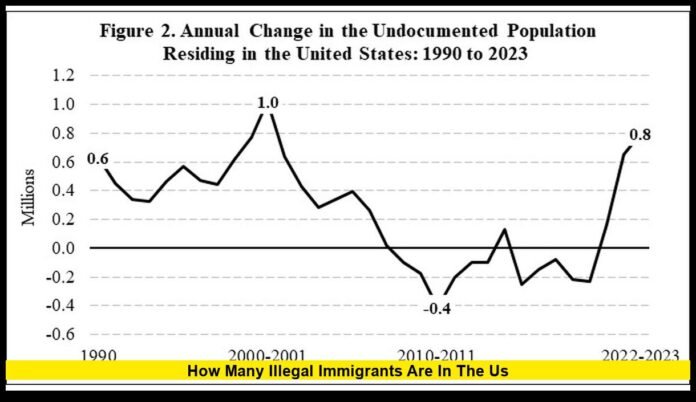

How many illegal immigrants are in the US remains a major question in 2026, and the most recent verified estimates place the number at approximately 10.5 million to 11 million people. Despite recent spikes in border activity, the total number of unauthorized immigrants living in the country has stayed relatively stable over time.
Latest Population Estimate
Current data shows that the unauthorized immigrant population has not dramatically increased in recent years.
- Total population: 10.5–11 million
- Percentage of U.S. population: Around 3%
- Active workforce: About 7–8 million
This group includes individuals who entered without authorization as well as those who overstayed temporary visas.
Why the Total Has Not Surged
While border crossings have made headlines, they do not directly translate into long-term population growth.
Several factors help keep the overall number steady:
- Ongoing deportations and enforcement actions
- People voluntarily leaving the country
- Some individuals gaining temporary or permanent legal status
- Changes in migration patterns compared to earlier decades
These dynamics balance out new arrivals, preventing sharp increases.
Where Most Unauthorized Immigrants Live
Unauthorized immigrants tend to settle in states with strong job markets and established communities.
Top states include:
- California
- Texas
- Florida
- New York
- New Jersey
Urban areas remain key destinations due to demand for labor in industries like construction, hospitality, and agriculture.
Countries and Regions of Origin
The unauthorized population in the U.S. is diverse, though certain regions account for larger shares.
- Mexico continues to be the largest country of origin
- Central American nations such as Guatemala, Honduras, and El Salvador
- South American countries
- Asian nations, often linked to visa overstays
Recent migration trends show increasing diversity compared to earlier decades.
Border Activity vs. Actual Population
There is often confusion between border encounters and the total number of people living in the country without legal status.
- Border encounters reached high levels in recent years
- Not everyone who crosses remains in the U.S.
- Many are processed, released under supervision, or removed
As a result, rising border numbers do not automatically increase the long-term population.
How Long People Have Been in the U.S.
A large share of unauthorized immigrants are not recent arrivals.
- Nearly half have lived in the U.S. for over 10 years
- A growing portion arrived within the last five years
- Millions live in mixed-status families with U.S.-born children
This shows the issue involves both long-term residents and newer migrants.
Role in the U.S. Economy
Unauthorized immigrants are part of several key sectors of the economy.
They commonly work in:
- Agriculture
- Construction
- Hospitality and food services
- Home and personal care
They also contribute billions in taxes and help fill labor shortages in essential industries.
How These Numbers Are Calculated
There is no exact real-time count of unauthorized immigrants. Experts rely on:
- National census data
- Immigration and visa records
- Advanced statistical models
These methods produce consistent estimates, even though small variations can occur.
Immigration Policy Focus in 2026
The question of how many illegal immigrants are in the US continues to shape national policy discussions.
Key topics include:
- Strengthening border enforcement
- Reforming the asylum process
- Expanding or limiting work permits
- Debating pathways to legal status
As of now, no major federal overhaul has been finalized.
Key Takeaways
- The U.S. has an estimated 10.5–11 million unauthorized immigrants
- The number has remained relatively stable over time
- Border crossings do not equal permanent population increases
- Many individuals are long-term residents contributing to the economy
Understanding how many illegal immigrants are in the US provides important context, but the issue continues to evolve as policies and migration patterns change.
Have a perspective on this topic? Share your thoughts below and stay updated as new data emerges.