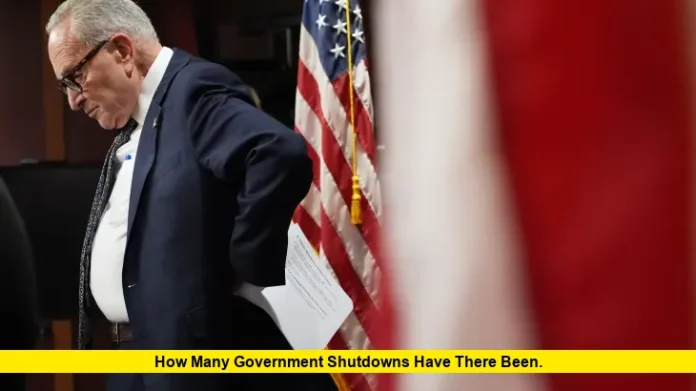

As of October 1, 2025, the United States has now experienced 21 federal government shutdowns. For many Americans asking how many government shutdowns have there been, the number is a reflection of the ongoing budget battles that have marked modern U.S. politics. The most recent shutdown began today, following another deadlock in Congress over appropriations for the new fiscal year.
Understanding Government Shutdowns
Shutdowns are not just a matter of political gridlock—they ripple far beyond Capitol Hill and directly affect millions of Americans in their everyday lives. Families who depend on federal programs, such as food assistance, housing support, or healthcare services, often face delays and uncertainty that can disrupt their stability. Small businesses and contractors tied to government projects may see payments postponed, leaving them struggling to meet payroll or cover expenses.
Federal workers, from park rangers to scientists to administrative staff, are left in limbo—either furloughed without pay or required to report to work without the certainty of a paycheck, which can put significant strain on household budgets. Communities that rely on tourism from national parks or federally funded cultural institutions also experience financial setbacks when those facilities close their doors. At the broader level, the national economy absorbs billions in lost productivity, reduced consumer spending, and slowed investments, with ripple effects that touch nearly every sector. Ultimately, a government shutdown is not just an abstract policy debate; it is a disruption that cascades into the daily lives of ordinary people and businesses across the country.
How Many Shutdowns Have Happened
The United States has experienced a total of 21 government shutdowns since the modern budgeting process was established in the 1970s. This figure is based on every lapse in appropriations that forced federal agencies to scale back operations for at least one full day. While some shutdowns were brief and barely noticeable to the public, others dragged on long enough to cause significant disruptions to federal services, workers, and the economy.
Not all shutdowns have the same weight. A few lasted only a matter of hours or a single day—more symbolic in nature than impactful—often caused by last-minute disputes or delays in passing funding bills. On the other hand, several shutdowns stretched into weeks, leaving a mark on the nation’s political memory and sparking widespread public frustration. Out of the 21, at least four are considered especially significant due to their length, economic consequences, and the level of political standoff that created them.
The longest shutdown in U.S. history occurred between December 22, 2018, and January 25, 2019, during President Donald Trump’s administration. Lasting 34 days, it left hundreds of thousands of federal employees without pay for more than a month and caused ripple effects across industries dependent on government contracts and services. Before that, the mid-1990s saw two highly publicized shutdowns under President Bill Clinton, both triggered by clashes with a Republican-led Congress over budget priorities. One of these shutdowns lasted 21 days, making it one of the most disruptive of the era. Another widely remembered shutdown happened in 2013, lasting 16 days, as partisan battles over the Affordable Care Act came to a head.
Together, these episodes highlight that while shutdowns are relatively common in the U.S. budget process, only a handful have been severe enough to leave lasting scars on the political landscape and the economy. The history of shutdowns underscores not only the difficulties of forging bipartisan agreements but also the very real consequences that arise when political disputes reach a stalemate.
The 2025 Shutdown
Today’s shutdown marks the latest chapter in this ongoing saga. At midnight, federal agencies began implementing contingency plans after lawmakers failed to reach a budget agreement for fiscal year 2026.
Key issues behind this current standoff include disagreements over health care funding, social program spending, and the size of federal deficits. The inability to find common ground left no option but to close much of the government’s operations.
This shutdown is particularly notable because of warnings about permanent staffing cuts. Unlike previous shutdowns, which typically ended with federal employees returning to work and receiving back pay, this one has raised fears of more lasting damage to the federal workforce.
Read Also-What Does Furlough Mean? A Complete Look at Its Impact in the U.S.
Impact on Federal Workers and Services
The effects of the shutdown are immediate and far-reaching:
- Federal Employees: Roughly three-quarters of a million government workers face furloughs. Many are without pay until Congress acts. Essential staff, such as air traffic controllers, military personnel, and Border Patrol agents, continue working but will not receive paychecks on time.
- Public Health Agencies: Health organizations face staffing reductions that could reach more than half of their employees. Research, grant programs, and disease monitoring are among the most disrupted functions.
- Transportation: The Federal Aviation Administration is reducing staff by the thousands. Travelers may not see major disruptions immediately, but long shutdowns often lead to flight delays, slower safety inspections, and workforce shortages.
- National Parks: Open-air spaces remain accessible, but visitor centers, campgrounds, and other facilities are closing. This partial access model has been used in recent years, though maintenance and safety issues often increase when staff are absent.
- Economy: Analysts estimate the government could lose hundreds of millions of dollars per day in worker compensation and lost productivity. If prolonged, the ripple effects will extend to contractors, small businesses, and local economies tied to federal activity.
Why Shutdowns Keep Happening
The recurring question of how many government shutdowns have there been points to a deeper structural problem in American politics. Shutdowns became a regular feature of governance after the 1970s, when budget rules changed and partisan divides began intensifying.
Since then, Congress has often failed to meet deadlines for passing appropriations. Temporary funding measures, known as continuing resolutions, usually avert shutdowns—but when these fail, agencies run out of money and operations stop.
At the core, shutdowns are a symptom of political gridlock. They occur when neither side is willing to compromise on key issues, whether tax policy, health care reform, or spending priorities. Each new episode highlights the difficulties of governing in a deeply divided political environment.
Comparing Past Shutdowns
While every shutdown is disruptive, some stand out:
- 1980s Shutdowns: Several brief closures occurred during disputes over social spending, foreign aid, and other priorities.
- 1995–1996: The two Clinton-era shutdowns were the most significant of their decade, lasting five days and 21 days respectively.
- 2013: A 16-day closure tied to debates over the Affordable Care Act disrupted national parks, delayed federal loans, and slowed the economy.
- 2018–2019: The longest shutdown in U.S. history, lasting 34 days, was driven by disagreements over border wall funding.
- 2025: The newest shutdown, still ongoing, is notable for warnings of potential permanent cuts and its timing at the start of a new fiscal year.
Each event has left a mark on federal agencies, employees, and the public, reinforcing the reality that shutdowns have become a recurring crisis rather than a rare occurrence.
The Cost of Shutdowns
Beyond the immediate inconvenience, shutdowns are costly in the long run. Federal workers eventually receive back pay, but contractors often do not. Agencies fall behind on projects, services stall, and trust in government erodes. Businesses and communities that rely on federal programs face unnecessary uncertainty.
Economists have estimated that extended shutdowns shave billions off the nation’s GDP. Even when funding is restored, the disruptions cannot be fully reversed.
Looking Ahead
With 21 shutdowns now on record, the United States is facing a troubling pattern. Each new lapse erodes confidence in government’s ability to function effectively. Solutions are not simple, but many experts argue for reforms to prevent shutdowns altogether, such as automatic continuing resolutions or changes to budget rules.
Until such reforms are enacted, the cycle is likely to continue. And so, the question of how many government shutdowns have there been will keep climbing, each number marking another moment of dysfunction in Washington.
The Bottom Line
The United States has now seen 21 shutdowns in its modern history, with the latest beginning today in 2025. Each one disrupts services, harms workers, and reminds Americans of the fragile state of budget negotiations in Congress.
What are your thoughts on this latest shutdown and its impact on daily life? Share your views below and join the conversation.