
If you are wondering how do you legally immigrate to the United States, the first step is to determine which immigration category you qualify for. U.S. immigration law provides several pathways for foreign nationals who want to live in the country, including family-sponsored immigration, employment-based visas, humanitarian protection, and certain special immigrant programs.
For many applicants, the long-term objective is to obtain a Green Card, officially known as a Permanent Resident Card. Lawful permanent residents can generally live and work in the United States indefinitely, subject to the rules governing their status. Those who meet additional eligibility requirements may eventually apply for U.S. citizenship.
However, there is no single application that works for everyone. A person with a U.S. citizen spouse may qualify under a different process from a professional sponsored by an American employer. Someone seeking protection from persecution must follow different procedures from an individual applying through an investment-based category.
Understanding these differences can help applicants choose an appropriate route, prepare the necessary paperwork, and avoid costly mistakes. It is also important to recognize that immigration policies, visa availability, and screening requirements can change.
The best immigration pathway depends on your qualifications, family circumstances, nationality, immigration history, and the specific requirements of the category you intend to pursue.
Understanding Legal Immigration Status in the United States
Legal immigration includes several types of permission to enter or remain in the United States. Some are temporary, while others provide a route to permanent residence.
A nonimmigrant visa generally allows a person to enter for a limited purpose, such as tourism, education, or qualifying temporary employment. An immigrant visa generally allows an eligible applicant abroad to seek admission as a lawful permanent resident.
A Green Card provides permanent resident status, but obtaining one requires meeting the requirements of an eligible immigration category. Depending on the situation, the process may involve a family petition, employer sponsorship, an immigrant visa application, or an application to adjust status from within the United States.
A temporary visa does not automatically become a Green Card. Applicants must qualify independently for the permanent immigration category they pursue and follow the relevant procedures.
Before beginning, applicants should identify their intended immigration route and determine whether they can apply from abroad or may be eligible to complete the process while already in the United States.
1. Family-Based Immigration Through a U.S. Citizen or Green Card Holder
Family sponsorship is an important option for people who have close relatives who are U.S. citizens or lawful permanent residents. The relationship between the petitioner and applicant determines which immigration categories may be available.
U.S. citizens can generally sponsor their spouses, unmarried children under 21, and parents if the citizen is at least 21 years old. They may also petition for eligible adult sons and daughters, married children, and siblings under the applicable family-preference categories.
Green Card holders can generally petition for their spouses and unmarried children. They cannot sponsor parents or siblings through the same family-based provisions available to U.S. citizens.
The process usually begins with Form I-130, Petition for Alien Relative. The petitioner must provide evidence establishing the qualifying relationship. Depending on the circumstances, this may include birth certificates, marriage records, and proof of citizenship or permanent resident status.
After approval, some applicants can continue immediately, while others must wait for an immigrant visa to become available. Immediate relatives of U.S. citizens are not subject to the annual numerical limits that apply to family-preference categories.
Applicants abroad typically complete consular processing. Eligible applicants already in the United States may be able to apply for adjustment of status.
Family sponsorship does not guarantee approval. Applicants must satisfy the applicable eligibility requirements, and financial sponsorship may be necessary in many cases.
2. Employment-Based Immigration for Professionals and Skilled Workers
Employment-based immigration provides opportunities for foreign nationals whose qualifications, professional experience, or investment activities meet specific U.S. immigration requirements.
The employment-based immigrant visa system includes five main categories:
- EB-1: Certain individuals with extraordinary ability, outstanding professors or researchers, and qualifying multinational executives or managers.
- EB-2: Professionals with advanced degrees and individuals with exceptional ability, including eligible applicants seeking a national interest waiver.
- EB-3: Qualifying skilled workers, professionals, and certain other workers.
- EB-4: Individuals who qualify under specific special immigrant provisions.
- EB-5: Eligible investors who meet applicable investment, job-creation, and other program requirements.
Many employment-based applications require a permanent job offer from a U.S. employer. The employer may also need to complete a labor certification process before submitting the immigrant petition.
Some categories allow qualified individuals to petition on their own behalf. For example, applicants who meet the extraordinary ability requirements of EB-1 may be able to proceed without an employer sponsor. Certain EB-2 applicants may qualify for a national interest waiver.
Applicants should understand that having a job offer or advanced degree does not automatically qualify them for permanent residency. The relevant category has specific legal standards, and visa availability can affect the timeline.
Temporary employment visas are another option for people seeking to work in the United States. However, temporary work authorization and employment-based permanent residency are separate immigration processes.
3. Diversity Visa Program and Green Card Lottery Eligibility
The Diversity Visa Program, often known as the Green Card Lottery, provides a limited number of immigrant visas for eligible applicants from countries with historically low rates of immigration to the United States.
Eligibility generally depends on country of chargeability, educational qualifications or qualifying work experience, and compliance with the program’s application rules.
The program has traditionally authorized up to 55,000 visas annually, although statutory provisions can reduce the number available in a particular year.
Selection does not guarantee a visa or permanent residency. Selected applicants must still complete the required procedures, establish eligibility, undergo screening, and receive a visa within the applicable deadline.
The program is also subject to a significant current restriction. The U.S. Department of State announced on August 31, 2026, that it had paused the issuance of Diversity Visa immigrant visas while reviewing screening and vetting procedures. The published guidance allowed applicants to continue submitting applications and attending interviews, but stated that visas would not be issued during the pause.
Applicants should check the current status of the program before making financial commitments or travel plans. They should also be cautious of anyone who promises guaranteed selection or offers to influence the outcome of a lottery application.
4. Refugee and Asylum Protection
Refugee admission and asylum are humanitarian pathways for individuals who meet specific requirements under U.S. law.
Refugee resettlement generally applies to eligible individuals outside the United States who are considered for admission under the applicable refugee program. Applicants must undergo screening and satisfy the relevant eligibility requirements.
Asylum is available to certain individuals who are physically present in the United States or arrive at a U.S. port of entry. Applicants generally must establish past persecution or a well-founded fear of persecution connected to a protected ground, such as race, religion, nationality, membership in a particular social group, or political opinion.
Additional eligibility restrictions and exceptions may apply. Filing deadlines can also be important, and some applicants may need to establish that an exception applies if they file outside the general one-year period.
People granted asylum may become eligible to apply for permanent residence after satisfying the applicable requirements. Refugees follow a separate process for obtaining a Green Card.
These pathways are not general alternatives for people who simply want better employment or living conditions. Applicants should carefully evaluate their circumstances and seek qualified legal assistance when necessary.
5. Special Immigrant Categories and Other Legal Options
Certain foreign nationals may qualify for immigration through special categories established under federal law.
Depending on the circumstances, these categories may include qualifying religious workers, certain employees of the U.S. government abroad, eligible international organization employees, and other individuals covered by specific statutory provisions.
Separate protections may be available to qualifying victims of abuse, human trafficking, or certain crimes. Eligible children who meet the requirements concerning abuse, abandonment, or neglect may also qualify for special immigrant juvenile classification.
International adoption can create immigration options for eligible children, although the process depends on the adoption circumstances, the child’s situation, and the applicable legal requirements.
These categories have different standards and procedures. Applicants should establish which classification applies to their circumstances rather than assuming that eligibility for one program guarantees eligibility for another.
6. How to Apply for a Green Card Step by Step
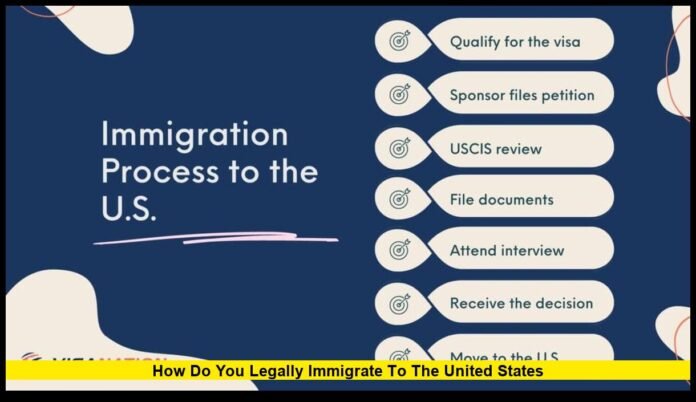
The process for obtaining permanent residency varies by category, but many applications involve several stages.
First, identify the appropriate immigration category. Determine whether your eligibility comes from a qualifying family relationship, employment, humanitarian protection, or another recognized basis.
Second, submit the required petition or application. Many family-sponsored and employment-based cases begin with a petition filed with U.S. Citizenship and Immigration Services. The required form depends on the category.
Third, wait for approval and visa availability. Petition approval does not always mean a visa is immediately available. Applicants in preference categories may need to wait until their priority date becomes current under the Visa Bulletin.
Fourth, complete the appropriate processing route. Applicants outside the United States generally complete consular processing, which may include an immigrant visa application, civil documents, a medical examination, and an interview.
Eligible applicants already in the United States may be able to apply for adjustment of status using Form I-485. Eligibility depends on the category, immigration history, visa availability where required, and other legal conditions.
Finally, complete the required screening and await a decision. Immigration authorities may review identity documents, criminal history, immigration records, financial sponsorship, medical information, and other relevant factors.
Applicants applying abroad must receive an immigrant visa before traveling to seek admission as permanent residents. Those approved for adjustment of status generally obtain permanent resident status through that process.
7. Required Documents, Fees, and Financial Sponsorship
Preparing accurate documents is essential for a successful immigration application. Missing information or inconsistent records can result in requests for additional evidence and delays.
Depending on the immigration category, applicants may need:
- A valid passport and identity documents.
- Birth certificates, marriage certificates, and divorce records where applicable.
- Evidence of family relationships or employment qualifications.
- Police certificates and other required background records.
- Medical examination documentation.
- Financial sponsorship forms and supporting records, when required.
- Certified translations for foreign-language documents, where applicable.
Many family-sponsored cases require a financial sponsor to submit Form I-864, Affidavit of Support. The sponsor generally must meet applicable income requirements or use a permitted alternative, such as a qualifying joint sponsor.
Applicants should also budget for filing fees, medical examinations, translations, and travel expenses. Costs vary depending on the immigration category and the applicant’s circumstances.
Providing false information or submitting fraudulent documents can result in denial and potentially serious immigration consequences. Every application should accurately reflect the applicant’s history and circumstances.
8. Latest Immigration Policy and Processing Updates
Immigration policies, visa availability, and screening procedures can change. Applicants should review the current rules that apply to their particular category before filing or making travel arrangements.
Diversity Visa issuance: The Department of State announced a pause on Diversity Visa issuance in August 2026. Applicants should verify whether the restriction remains in effect before assuming that a selected case can result in a visa.
Nationality-specific restrictions: Certain visa policies may affect applicants based on nationality, immigration category, or individual circumstances. The scope of these restrictions can differ, so applicants should avoid assuming that a rule affecting one group applies to everyone.
Visa availability: Family-preference and employment-based applicants may face waiting periods because immigrant visa numbers are limited. Priority dates and category-specific cutoffs can change from month to month.
Interview scheduling: Applicants processing cases abroad may need to attend interviews at the designated U.S. embassy or consulate. Current procedures generally direct immigrant visa applicants to the consular district associated with their residence or, when requested, their country of nationality, subject to applicable exceptions.
Processing times: Petition review, document verification, interview availability, and additional screening can all affect the overall timeline. No single processing estimate applies to every case.
Applicants should rely on current case information and avoid treating unofficial predictions as confirmed government decisions.
9. Common Mistakes to Avoid During the Immigration Process
People researching how do you legally immigrate to the United States should understand that entering the country legally is not the same as qualifying for permanent residency.
A visitor visa does not provide unrestricted permission to live or work in the United States. A student visa does not guarantee employment sponsorship, and a temporary work visa does not automatically convert into a Green Card.
Other common mistakes include choosing an incorrect immigration category, missing filing deadlines, overlooking visa availability, submitting incomplete financial records, and failing to disclose relevant information.
Applicants should also avoid individuals who promise guaranteed approval or claim they can bypass official procedures in exchange for payment.
If an applicant has previous visa refusals, periods of unlawful presence, removal proceedings, criminal issues, or other potential grounds of inadmissibility, professional legal advice may be particularly valuable.
10. Permanent Residency and Future U.S. Citizenship
A Green Card can provide a foundation for building a long-term life in the United States. Lawful permanent residents can generally live and work in the country indefinitely, subject to applicable legal requirements and rules governing their status.
Some permanent residents may eventually qualify for U.S. citizenship through naturalization. Many applicants must generally hold permanent resident status for five years, while certain qualifying spouses of U.S. citizens may be eligible under a three-year rule.
Applicants must also satisfy other requirements, which may include continuous residence, physical presence, good moral character, and applicable English and civics requirements.
Permanent residents should understand how extended travel abroad and other circumstances may affect their status or future eligibility for citizenship.
Naturalization is a separate application process. Receiving a Green Card does not automatically make someone a U.S. citizen.
Final Thoughts
Knowing how do you legally immigrate to the United States begins with identifying the immigration category that best matches your circumstances. Family sponsorship, employment-based immigration, humanitarian protection, special immigrant classifications, and the Diversity Visa Program each have distinct eligibility requirements and procedures.
The most effective starting point is to understand your eligibility, gather accurate documentation, prepare for the potential costs and waiting periods, and verify the current requirements before applying. Because immigration policies can change, applicants should evaluate the rules that apply to their particular case rather than relying on assumptions or outdated information.
Share your thoughts in the comments and stay updated on U.S. immigration policies, visa opportunities, and Green Card developments.