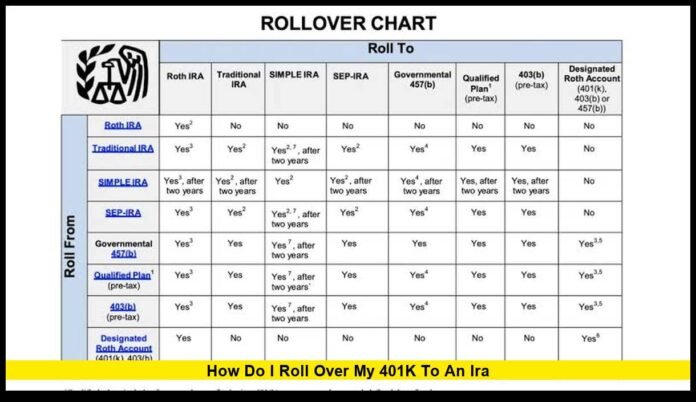
 to an IRA, understand tax rules, avoid common mistakes, and complete a direct rollover.)
If you are asking how do I roll over my 401k to an ira, you can generally start by opening an individual retirement account (IRA), contacting your 401(k) plan administrator, and requesting a direct rollover. This process allows eligible retirement savings to move from an employer-sponsored plan into an IRA while generally preserving tax-deferred status when you transfer traditional 401(k) funds into a traditional IRA.
A 401(k)-to-IRA rollover can be useful after leaving a job, retiring, or consolidating multiple retirement accounts. However, the right approach depends on your existing account, the type of IRA you choose, and the tax treatment of your retirement savings.
In 2026, the fundamental IRS rollover rules continue to distinguish between tax-deferred transfers to traditional IRAs and taxable conversions to Roth IRAs. Choosing a direct rollover can also help you avoid mandatory federal income tax withholding that generally applies when eligible taxable distributions go directly to you.
Before moving your money, compare investment choices, fees, withdrawal rules, and account protections. A rollover is not automatically the best option for everyone, but understanding the process can help you make a more informed retirement planning decision.
What Is a 401(k)-to-IRA Rollover?
A 401(k)-to-IRA rollover transfers eligible retirement funds from an employer-sponsored retirement plan into an individual retirement account. The money can remain invested for retirement rather than being withdrawn for immediate personal use.
A 401(k) is typically offered through an employer, while an IRA is an account you establish and manage through an eligible financial institution.
People commonly consider a rollover when they leave an employer, change jobs, retire, or want to bring several retirement accounts together.
The tax consequences depend on the source account and destination account.
- Traditional 401(k) to traditional IRA: Eligible pretax money generally remains tax-deferred.
- Roth 401(k) to Roth IRA: Eligible Roth funds can generally move without creating current income tax solely because of the rollover.
- Traditional 401(k) to Roth IRA: Pretax funds generally become taxable income when converted.
- Mixed traditional and Roth balances: The funds generally need to go into appropriately matched account types to preserve their tax treatment.
A rollover also does not guarantee that your money will be invested automatically. Depending on your IRA provider, you may need to choose investments after the transfer is complete.
How Do I Roll Over My 401(k) to an IRA?
The process usually involves seven main steps. Completing them in order can help reduce administrative delays and avoid preventable tax problems.
Step 1: Review Your Existing 401(k) Account
Begin by reviewing your account through your employer’s retirement plan website or contacting the plan administrator.
Check your total account balance and determine how much you can transfer. Employer contributions may be subject to vesting rules, so the balance displayed on your statement may not always equal your vested balance.
Review these details before submitting a rollover request:
- Your vested account balance.
- Traditional pretax contributions and earnings.
- Any designated Roth 401(k) balance.
- After-tax contributions, if applicable.
- Outstanding plan loans or loan offsets.
- Investment choices and administrative fees.
- Any company stock held inside the plan.
- Whether your plan permits the requested distribution.
These details matter because different portions of your account may receive different tax treatment.
For example, employer stock distributed under qualifying circumstances may be eligible for special tax treatment. Moving those shares into an IRA without reviewing the consequences could affect that treatment.
If you still work for the employer sponsoring the plan, ask whether an in-service rollover is available. Some plans permit certain distributions while you remain employed, but others restrict access until you meet specific conditions.
Step 2: Choose the Right Type of IRA
Your next decision is selecting the account that will receive the money.
A traditional IRA is generally the natural destination for eligible pretax 401(k) savings when you want to preserve tax deferral. A Roth IRA is generally the appropriate destination for eligible designated Roth 401(k) funds.
| Account transfer | General tax treatment |
|---|---|
| Traditional 401(k) to traditional IRA | Generally tax-deferred |
| Roth 401(k) to Roth IRA | Generally no immediate tax from an eligible rollover |
| Traditional 401(k) to Roth IRA | Generally taxable to the extent of pretax funds |
| Eligible after-tax funds to an IRA | Depends on the source and destination account and applicable rules |
If your 401(k) contains both traditional and Roth money, ask the administrator how to separate the balances. You may need a traditional IRA and a Roth IRA to preserve the appropriate tax treatment.
Before opening an account, compare financial institutions based on investment selection, account fees, customer service, trading costs, and available retirement planning tools.
Step 3: Open Your IRA
Choose a brokerage firm, bank, or other eligible financial institution that offers the type of IRA you need.
Many providers allow you to open an account online. You will generally need personal information and may need to complete identity verification.
Make sure the account is established before requesting the transfer. Obtain the IRA account number and the receiving institution’s rollover instructions.
Your new provider may give you specific instructions for electronic transfers or checks. Follow those instructions carefully to ensure the funds reach the correct account.
Opening an IRA does not require you to make a new annual contribution. An eligible rollover is different from a regular IRA contribution and generally does not count toward the annual contribution limit.
Step 4: Request a Direct Rollover
Contact your 401(k) plan administrator and explain that you want to transfer eligible retirement funds into your IRA.
Ask for the plan’s direct rollover procedure. The administrator will explain the required forms, identification details, and transfer options.
You may need to provide:
- Your IRA provider’s name.
- Your new IRA account number.
- The receiving institution’s rollover instructions.
- The amount you want to transfer.
- Any required distribution authorization.
Depending on the plan, the funds may move electronically or through a check payable to the receiving financial institution for your benefit.
A direct rollover generally means the plan sends the eligible funds to the receiving institution rather than paying the distribution directly to you.
This distinction is important because eligible taxable distributions paid to participants generally face mandatory 20% federal income tax withholding. A qualifying direct rollover generally avoids that withholding.
Step 5: Check the Transfer Details
Before authorizing the transaction, confirm the destination account, the amount being transferred, and whether the plan will liquidate your investments.
Some plans transfer money as cash after selling the investments held in the 401(k). Other arrangements may permit certain assets to transfer in kind.
Do not assume your existing 401(k) investments will automatically appear in the IRA in their original form. Different accounts may offer different investment options.
If you hold company stock, have an outstanding loan, or own investments with special distribution rules, seek clarification before completing the transfer.
Step 6: Confirm Receipt of the Funds
After the administrator processes the rollover, monitor your 401(k) and IRA accounts.
Processing time varies according to the plan, receiving institution, paperwork, and transfer method.
When the funds arrive, confirm the amount and review any fees or adjustments. Contact the institutions if the transfer is delayed or the amount does not match your expectations.
If the money arrives as cash, decide how to invest it. An IRA can hold uninvested cash, but that may not match your long-term retirement objectives.
Consider your time horizon, risk tolerance, diversification needs, and investment expenses when choosing how to allocate the money.
Step 7: Keep Your Tax Documents
A tax-deferred rollover generally remains reportable even when it does not create immediate taxable income.
Your former employer’s retirement plan may issue Form 1099-R to report the distribution. Your IRA provider may issue Form 5498 to report the rollover contribution.
Keep these documents, your account statements, and the rollover confirmation with your tax records.
Review the reported amounts when preparing your tax return. If any portion of the distribution was not rolled over or was converted to a Roth IRA, different tax reporting requirements may apply.
How Are 401(k)-to-IRA Rollovers Taxed?
The tax consequences depend primarily on the type of money you transfer and the account receiving it.
When you move eligible pretax 401(k) funds into a traditional IRA through a qualifying rollover, you generally do not owe federal income tax on the transfer itself. The money remains tax-deferred, and you generally pay income tax when you take taxable withdrawals later.
However, transferring pretax money into a Roth IRA generally creates taxable income in the year of the conversion. You should consider this consequence before authorizing the transaction.
Other factors can affect the outcome, including after-tax contributions, outstanding plan loans, and distributions that do not qualify for rollover treatment.
What Happens if Your 401(k) Withholds 20%?
A common mistake occurs when someone receives a 401(k) distribution directly instead of requesting a direct rollover.
For eligible taxable distributions paid directly to you, the plan generally must withhold 20% for federal income taxes.
Consider a $50,000 distribution:
| Item | Amount |
|---|---|
| Original 401(k) distribution | $50,000 |
| Federal withholding at 20% | $10,000 |
| Amount you receive | $40,000 |
If you want to roll over the entire $50,000, you generally need to deposit the $40,000 you received plus the $10,000 withheld from another source. You must complete the rollover within the applicable deadline.
If you deposit only the $40,000, the remaining $10,000 generally becomes taxable unless another applicable rule changes the result. An additional tax on early distributions may also apply if you are under age 59½ and no exception covers the amount.
The withholding does not necessarily represent your final tax liability. It is generally credited toward your federal income tax when you file your return.
A direct rollover can help you avoid this complication because eligible funds generally move directly to the receiving institution without mandatory 20% withholding.
What Is the 60-Day Rollover Rule?
The 60-day rollover rule generally applies when you receive an eligible retirement plan distribution and then deposit the eligible amount into another qualifying retirement account.
You generally must complete the rollover by the 60th day after receiving the distribution.
If you miss the deadline, the amount that you fail to roll over may become taxable. An additional 10% tax may apply to taxable early distributions when no exception is available.
The IRS can waive the deadline in certain circumstances, and some situations qualify for specific relief. However, you should not rely on receiving a waiver.
A direct rollover is generally simpler because the money moves from the retirement plan to the receiving institution without requiring you to redeposit a personal distribution within 60 days.
Can You Roll Over a Traditional 401(k) Into a Roth IRA?
Yes. Eligible pretax money from a traditional 401(k) can generally move into a Roth IRA through a Roth conversion.
However, the conversion usually creates taxable income for the year in which it occurs.
For example, if you convert $40,000 of entirely pretax retirement funds, the $40,000 generally becomes taxable income, assuming the entire amount is taxable and no adjustment applies.
A Roth conversion may appeal to people who want to pay taxes now in exchange for the potential benefit of tax-free qualified withdrawals later. However, the decision requires careful consideration of your income, tax bracket, retirement timeline, and ability to pay the conversion tax.
Qualified Roth IRA distributions generally require the applicable five-year holding period and a qualifying condition, such as reaching age 59½. Other rules apply to certain distributions and converted amounts.
Do not assume a Roth conversion is automatically beneficial. Compare the immediate tax cost with the potential long-term advantages before proceeding.
Can You Roll Over a Roth 401(k) Into a Roth IRA?
Yes. Eligible funds from a designated Roth 401(k) account can generally move into a Roth IRA.
This type of rollover can help consolidate retirement accounts while maintaining Roth tax treatment.
However, Roth 401(k) and Roth IRA distribution rules differ in some respects. The holding period associated with your workplace Roth account does not necessarily satisfy every Roth IRA requirement.
Keep records of your Roth contributions, rollover dates, and account history. These details may help establish the tax treatment of future withdrawals.
If your 401(k) contains both Roth and traditional funds, ask the administrator how to direct each portion into the appropriate account.
Which 401(k) Funds Cannot Be Rolled Over?
Not every payment from a retirement plan qualifies for rollover treatment.
Certain distributions are generally excluded, including required minimum distributions, hardship distributions, and specific corrective payments. Some periodic payments and certain other distributions also cannot be rolled over.
Plan loans require particular attention. If you leave your job with an outstanding loan, your plan may require repayment or offset the loan against your account. Some loan offsets qualify for rollover treatment under specific rules, while deemed distributions generally follow different rules.
If your account includes employer stock, special tax rules may also affect whether a rollover is appropriate.
Before starting the process, ask your plan administrator to identify the amount eligible for rollover and explain any restrictions.
Should You Roll Over Your 401(k) or Leave It With Your Former Employer?
Moving your retirement savings into an IRA can provide flexibility, but keeping your money in the former employer’s plan may also make sense.
Compare the available options before deciding.
| Consideration | Former employer’s 401(k) | IRA |
|---|---|---|
| Investment choices | Limited to the plan’s menu | Often offers a broader selection |
| Fees | Depends on the plan | Depends on the provider and investments |
| Account management | Keeps savings in the workplace plan | Can consolidate multiple accounts |
| Creditor protections | Federal ERISA protections may apply | Protections vary by law and circumstances |
| Withdrawal rules | Governed by plan terms and applicable law | Governed by IRA distribution rules |
| Special features | May include plan-specific investments or services | May not offer identical features |
Some employer plans offer low-cost institutional investments that are difficult to replicate in an IRA. An IRA may provide more investment choices, but those choices can also involve additional fees or complexity.
Legal protections also differ. Employer plans covered by ERISA generally provide federal protections that may be broader than the protections available to IRAs outside bankruptcy. Federal bankruptcy law provides separate protections for qualifying retirement assets.
Consider your account balance, fees, investment needs, age, and retirement plans. You do not need to roll over a 401(k) simply because you have left your job.
What Happens if You Do Nothing With an Old 401(k)?
You may be able to leave your retirement savings in your former employer’s plan, depending on the plan’s rules and your account balance.
However, certain smaller accounts may be subject to automatic distribution procedures. Under applicable rules, a plan may automatically transfer certain former employees’ balances into an IRA if they do not make another election.
For some accounts with balances of $1,000 or less, a plan may also be permitted to distribute the money without the participant’s consent, subject to applicable requirements.
Review any notices you receive after leaving your employer. Check your account periodically and confirm how the plan will handle your balance.
If you want to choose your own IRA provider and investments, taking action before a default distribution occurs can help you maintain control over the destination of your retirement savings.
How Much Can You Roll Over Into an IRA in 2026?
An eligible rollover generally is not limited by the annual IRA contribution limit.
For 2026, the regular IRA contribution limit is $7,500, or $8,600 for individuals age 50 or older, subject to applicable eligibility and compensation rules. Those limits apply to regular contributions, not qualifying rollover amounts.
For example, an eligible $100,000 rollover can generally move into an IRA even though it exceeds the annual contribution limit.
However, the transaction must qualify as a rollover under the applicable rules. You cannot simply classify an ordinary cash withdrawal or an ineligible distribution as a rollover to avoid taxes.
Keep your rollover records and confirm the correct reporting treatment when filing your tax return.
Frequently Asked Questions About Rolling Over a 401(k) to an IRA
1. How do I roll over my 401k to an ira without paying taxes?
Request a direct rollover of eligible pretax 401(k) funds into a traditional IRA. This generally preserves tax deferral and avoids immediate federal income tax on the eligible transfer. A rollover into a Roth IRA usually creates taxable income when pretax money is converted.
2. Can I roll over my 401(k) to an IRA after leaving my job?
Yes. Leaving an employer is a common reason to roll over a 401(k). Contact your former employer’s plan administrator, open an appropriate IRA, and follow the plan’s direct rollover procedures.
3. How long does a 401(k)-to-IRA rollover take?
The timing varies by plan and financial institution. Processing may depend on paperwork, account verification, investment liquidation, and the transfer method. Ask both institutions for an estimated timeline and monitor the accounts until the transfer is complete.
4. Do I have to sell my 401(k) investments before the rollover?
It depends on your plan and the assets you hold. Some plans sell investments and transfer the proceeds as cash. Certain arrangements may allow eligible assets to transfer in kind. Ask the plan administrator which method applies to your account.
5. Can I roll over multiple 401(k) accounts into one IRA?
Generally, yes. You can often consolidate eligible balances from multiple former employers into one suitable IRA. Traditional and Roth balances generally need to retain their respective tax treatment, so you may need separate receiving accounts.
6. Can I roll over my 401(k) while still employed?
Possibly. Some plans allow in-service distributions for certain participants or contribution types. Others restrict access until you leave the employer or meet another qualifying condition. Review your plan’s distribution rules before making a request.
7. Will I pay a penalty for rolling over my 401(k)?
A properly completed, eligible rollover generally does not trigger the 10% additional tax on early distributions. However, an ineligible distribution, a missed rollover deadline, or an amount you fail to roll over may create tax consequences.
8. Can I withdraw money from my IRA after the rollover?
Yes, but withdrawal rules apply. Taxable traditional IRA distributions generally count as ordinary income. An additional 10% tax may apply to early withdrawals before age 59½ unless an exception applies. Roth IRA withdrawals follow different rules.
9. Do I need to report a rollover on my tax return?
Generally, yes. Your former plan may issue Form 1099-R, and your IRA provider may issue Form 5498. A tax-deferred rollover may not create taxable income, but you must report the transaction according to the applicable tax rules.
10. Is a traditional IRA better than a Roth IRA for a 401(k) rollover?
Neither option is universally better. A traditional IRA generally preserves the tax-deferred status of eligible pretax 401(k) savings. A Roth IRA conversion usually requires paying income tax on pretax funds now in exchange for the potential benefits of qualified tax-free withdrawals later.
11. What happens if my former employer sends me a 401(k) check?
Check the payee and follow the receiving institution’s instructions. If the check is payable to you, the 60-day rollover deadline and mandatory withholding rules may apply. If it is payable to the IRA custodian for your benefit, it may be part of a direct rollover. Confirm the details before depositing it.
12. Should I consult a tax professional before rolling over my 401(k)?
Professional advice can be useful if you have a large account balance, company stock, after-tax contributions, an outstanding plan loan, or plans to convert pretax savings to a Roth IRA. A qualified tax professional can help you understand the consequences before you authorize the transaction.
Final Thoughts
Rolling over a 401(k) to an IRA can simplify retirement account management, broaden your investment choices, and help keep eligible retirement savings invested for the future. The most important steps are selecting the correct IRA, requesting a direct rollover when appropriate, understanding the tax consequences, and keeping accurate records. Compare the costs and protections of both accounts before deciding which option best supports your retirement goals.
Have you completed a 401(k)-to-IRA rollover or are you preparing to move your retirement savings? Share your questions and experience in the comments, and stay informed about important retirement planning updates.