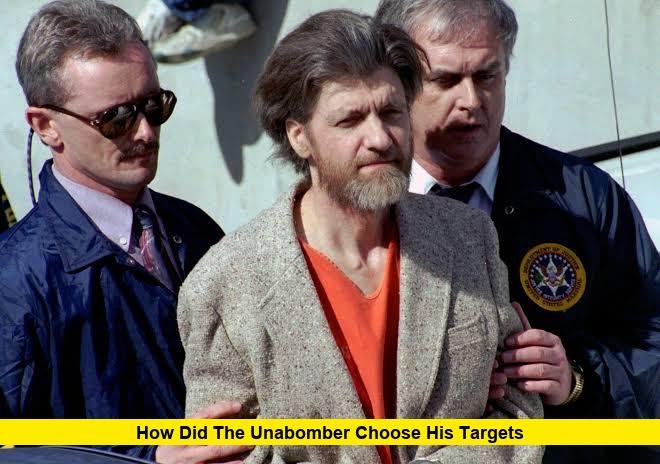

The question “how did the Unabomber choose his targets” has remained one of the most examined parts of the Ted Kaczynski case. Over nearly two decades, Kaczynski carried out a bombing campaign against people connected to universities, airlines, technology companies, and scientific fields. Investigators later determined that his targets were generally selected through research rather than personal relationships, although the exact reasoning behind every individual target was not always known.
Kaczynski, who became known as the Unabomber, chose victims that he associated with his opposition to modern technology and industrial society. His attacks were designed to attract attention to his ideological beliefs, which he later explained in his 1995 manifesto, “Industrial Society and Its Future.”
The Unabomber’s Target Selection Strategy
Ted Kaczynski’s method of choosing targets was different from many criminals because he usually did not select people based on direct personal conflicts. Instead, investigators found that he researched possible victims and organizations before sending or placing explosive devices.
The FBI’s investigation revealed that many targets were connected to areas Kaczynski criticized, including:
- Universities and academic institutions
- Computer science and technology companies
- Researchers and scientists
- Airline-related targets
- Executives or organizations connected to industries he opposed
The FBI later described many of the victims as being chosen through library research, meaning Kaczynski gathered information from publicly available sources before deciding where to send his bombs.
Why Did the Unabomber Focus on Universities and Technology?
The name “Unabomber” came from the FBI investigation code name UNABOM, which referred to university and airline bombings. These areas represented some of Kaczynski’s main ideological targets because he believed technological advancement and scientific research were contributing to a society that reduced individual freedom.
Kaczynski’s first known bomb attack occurred in 1978 at the University of Chicago. Over the following years, he expanded his targets to include professors, researchers, businesses, and technology-related individuals.
His selection pattern reflected his belief that certain institutions represented what he called the “industrial-technological system.” However, investigators found that his victims were not always directly responsible for the issues he criticized.
How Did Kaczynski Find Information About His Targets?
Kaczynski carefully studied information that was publicly available. Investigators examining his cabin after his arrest found documents, writings, and materials that helped explain how he researched his targets.
His research methods included studying:
- University directories
- Professional information
- Newspaper reports
- Public records
- Published articles and technical information
Rather than acting immediately, Kaczynski often spent significant time preparing devices and identifying potential targets. His ability to remain anonymous for many years was partly due to his careful planning and efforts to avoid leaving evidence.
Were the Unabomber’s Targets Completely Random?
The Unabomber’s targets sometimes appeared random to the public because they were spread across different states and industries. However, investigators later determined that there were patterns behind his choices.
The FBI found that Kaczynski had connections between his locations, interests, and the people or organizations he targeted. Early attacks were linked to areas where he had lived or spent time, including Chicago, Salt Lake City, and the San Francisco Bay Area.
At the same time, there was not always a confirmed explanation for why Kaczynski selected a specific individual over another. Some details about his personal decision-making process remain unclear.
The Role of Kaczynski’s Anti-Technology Beliefs
Kaczynski’s writings provide the clearest explanation of his motivations. In his manifesto, he argued that modern technology had created systems that limited human independence and changed society in harmful ways.
Many of the people he targeted worked in fields he viewed as symbols of technological development. For Kaczynski, the attacks were intended to promote his ideas and force public discussion.
However, law enforcement officials and prosecutors viewed the bombings as acts of violence that caused severe harm to innocent victims. His ideological explanations did not change the criminal consequences of his actions.
Examples of People and Organizations Targeted by the Unabomber
During his bombing campaign from 1978 to 1995, Kaczynski targeted a range of individuals and locations. His victims included people connected to:
- Universities and academic departments
- Computer-related businesses
- Scientific research
- Airlines and transportation
- Companies involved in industries he opposed
The attacks killed three people and injured many others before Kaczynski was arrested in 1996.
How Investigators Learned About His Target Selection
For years, the FBI struggled to identify the bomber because he avoided leaving traditional evidence. Investigators studied the locations, construction methods, and patterns of the devices but could not identify him.
The major breakthrough came when Kaczynski demanded that his manifesto be published. Investigators believed his writing style and ideas could reveal his identity. After the manifesto was published, his brother David Kaczynski recognized similarities between the writings and contacted authorities.
The FBI used linguistic analysis and other evidence to connect Kaczynski to the bombings. A search of his Montana cabin revealed bomb-making materials, writings, and evidence connected to the crimes.
Career and Background That Influenced His Target Choices
Before becoming the Unabomber, Kaczynski was a highly educated mathematician. He earned a doctorate from the University of Michigan and worked as a mathematics professor at the University of California, Berkeley.
His academic background gave him familiarity with universities, scientific communities, and technical subjects. After leaving his teaching career, he moved to a remote cabin in Montana, where he continued developing his ideas and planning his attacks.
His personal experiences, isolation, and extreme opposition to modern technology became central parts of the investigation into his crimes.
Public Interest in the Unabomber’s Target Selection
The question of how the Unabomber chose his targets continues to attract attention because it combines criminal investigation, psychology, technology debates, and forensic analysis.
The case remains one of the FBI’s most studied investigations because investigators had to rely on unusual methods, including linguistic analysis and behavioral patterns, rather than traditional evidence alone.
Although Kaczynski explained his actions through political and philosophical arguments, the attacks resulted in deaths, injuries, and lasting effects on victims and their families.
Latest Updates About the Unabomber Case
Ted Kaczynski died in 2023 while serving a life sentence in federal prison. The historical investigation into his crimes continues to be studied through FBI records, criminal justice research, and discussions about domestic terrorism and radicalization.
There are no known new developments that change the established understanding of how Kaczynski selected his targets. The available evidence continues to show that he researched victims and chose targets connected to themes present in his writings.
Final Thoughts
The Unabomber’s target selection was based on a combination of ideological beliefs, research, and his desire to publicize his message. While some targets appeared unpredictable at first, investigators later identified patterns linking many victims to areas Kaczynski associated with technology and industrial development.
Understanding how the Unabomber chose his targets helps explain the investigation, but it also highlights the human impact of a campaign that harmed many people who had little or no personal connection to him.
Share your thoughts about this historic case in the comments and stay updated for more in-depth crime history articles.