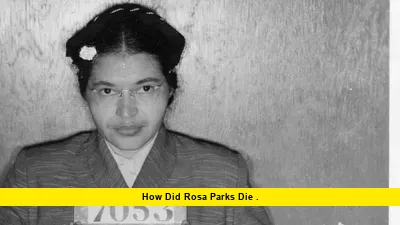

Rosa Parks remains one of the most respected figures in American history. For generations, students have learned about her courageous stand against segregation. Yet many people still ask: how did Rosa Parks die? Understanding the circumstances of her death also helps us reflect on the extraordinary life she lived and the movement she helped transform.
Rosa Parks died on October 24, 2005, at the age of 92 in her home in Detroit, Michigan. She passed away from natural causes after experiencing declining health in her later years. In 2004, she had been diagnosed with progressive dementia, which gradually limited her public appearances. Even so, her legacy never faded.
Keep reading to explore the full story of her life, her final years, and the national response that followed her passing.
Early Life in the Segregated South
Rosa Louise McCauley was born on February 4, 1913, in Tuskegee, Alabama. She grew up during a time when racial segregation shaped daily life across the South. As a child, she witnessed discrimination firsthand, from unequal school systems to deeply rooted racial injustice in public spaces.
Her family valued education and resilience. Despite limited opportunities, Parks pursued her schooling and developed a strong sense of justice at an early age. In 1932, she married Raymond Parks, who supported her involvement in civil rights efforts. Together, they became active in community work aimed at challenging racial inequality.
The Bus Ride That Changed History
On December 1, 1955, Rosa Parks boarded a Montgomery city bus after a long day of work. When the driver ordered her to give up her seat to a white passenger, she refused. Her arrest sparked outrage in the Black community and led to the Montgomery Bus Boycott.
The boycott lasted 381 days and became one of the most important protests of the civil rights movement. It led to a Supreme Court decision that ended segregation on public buses. Parks’ quiet act of defiance turned into a nationwide movement that reshaped American law and society.
Her decision was not spontaneous. She had already been involved in civil rights work and understood the risks. Her courage helped energize a generation of activists and placed her at the center of American history.
Moving North and Continuing the Fight
After facing threats and economic hardship in Alabama, Rosa Parks and her husband moved to Detroit, Michigan. Life did not suddenly become easy. The couple struggled financially, but Parks continued her commitment to justice.
In 1965, she began working for Congressman John Conyers Jr. as a receptionist and aide. She remained in that position until her retirement in 1988. In Detroit, Parks advocated for fair housing, economic opportunity, and equal treatment under the law.
Her activism extended beyond the bus boycott. She attended marches, spoke at events, and supported younger activists. Her presence remained powerful and symbolic throughout the decades.
How Did Rosa Parks Die? Final Years Explained
For those still wondering how did Rosa Parks die, the answer reflects the natural progression of a long life. She died peacefully from natural causes on October 24, 2005, at her home in Detroit.
In the year before her death, she had been diagnosed with progressive dementia. The condition affected her memory and reduced her public visibility. However, the nation continued to honor her contributions while she was still alive, recognizing her role in shaping civil rights history.
At 92 years old, Parks had witnessed enormous change in the United States. From the height of Jim Crow segregation to the election of Black leaders in major offices, she saw decades of transformation influenced in part by her own bravery.
A Nation Pauses to Honor Her
After Rosa Parks died, tributes poured in from across the country. Her body lay in honor at the U.S. Capitol Rotunda, making her the first woman in American history to receive that distinction. Thousands of Americans paid their respects.
In Detroit and Montgomery, buses displayed black ribbons to honor the woman whose refusal to surrender her seat changed public transportation laws. Memorial services drew political leaders, civil rights activists, and ordinary citizens.
Parks was laid to rest in Detroit’s Woodlawn Cemetery. Her gravesite continues to attract visitors who want to pay tribute to her life and courage.
The Lasting Impact of Rosa Parks
The question of how did Rosa Parks die often leads to a deeper reflection: how did she live? Her legacy extends far beyond a single bus ride.
Schools, streets, and public buildings across the United States bear her name. Her birthday, February 4, is observed in many states as Rosa Parks Day. Educational programs continue to teach students about her role in advancing equality.
Her example shows how individual action can influence national change. Parks did not shout or seek attention. She stood firm in her dignity. That quiet strength reshaped American civil rights law and inspired future movements.
Today, her story remains central to discussions about equality, justice, and civic responsibility. She represents perseverance in the face of systemic injustice.
Why Her Story Still Matters Today
More than two decades after her death, Rosa Parks continues to symbolize courage and moral clarity. Young Americans learn about her as a foundational figure in the struggle for civil rights. Community leaders reference her example when encouraging civic engagement.
Her life also reminds the nation that social change often begins with ordinary individuals who choose to stand up—or in her case, remain seated—for what is right.
Understanding how did Rosa Parks die provides context, but remembering how she lived gives her story lasting power. She dedicated her life to equality, endured hardship without bitterness, and became a unifying figure in American history.
Rosa Parks’ courage changed the course of history—share your thoughts below and join the conversation about her lasting impact.