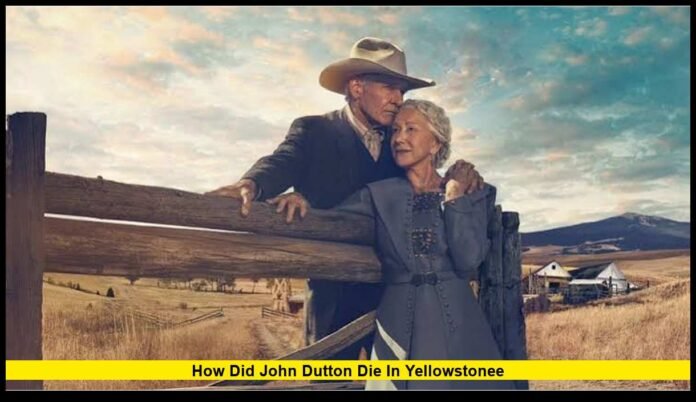

For fans searching how did john dutton die in yellowstone, the answer marks one of the most emotional and game-changing moments in the history of the hit television series. John Dutton, the powerful ranch owner and governor of Montana portrayed by Kevin Costner, met a shocking end during the final chapters of Yellowstone. His death not only altered the future of the Dutton family but also became the driving force behind the show’s dramatic conclusion.
As the leader of the Yellowstone Ranch, John Dutton spent years defending his family’s land from politicians, developers, corporations, and rivals who wanted control of the most valuable property in Montana. Throughout the series, he survived assassination attempts, family betrayals, and countless threats. Yet his final chapter arrived in a way that few viewers expected.
The fallout from his death rippled through every corner of the Yellowstone universe, creating consequences that would impact Beth, Kayce, Jamie, Rip, and the future of the ranch itself.
John Dutton’s Position Before His Death
Before his death, John Dutton occupied one of the most influential positions in Montana.
After years of resisting political involvement, he eventually became governor, believing it was the best way to protect the Yellowstone Ranch from outside interests. His move into politics represented a major shift for the character. Rather than fighting from the sidelines, he now possessed the authority to directly influence policies affecting ranchers and landowners across the state.
However, political power brought new challenges.
His decisions created enemies in both government and business circles. Powerful corporations viewed him as a roadblock to economic development projects. Political opponents criticized his leadership. Meanwhile, tensions within his own family continued to grow.
The most dangerous conflict existed between John and Jamie Dutton.
Their relationship had been deteriorating for years, creating a division that seemed impossible to repair. What began as disagreements eventually evolved into deep resentment, setting the stage for events that would change everything.
A Family Divided
One of the central themes of Yellowstone was family loyalty.
John expected absolute commitment from those around him, especially his children. Beth embraced that expectation and became his fiercest defender. Kayce often struggled between family obligations and personal beliefs. Jamie, meanwhile, frequently found himself caught between seeking his father’s approval and pursuing his own ambitions.
Over time, those tensions became increasingly severe.
John’s criticism of Jamie created lasting emotional wounds. Jamie’s decisions repeatedly disappointed John. Their relationship transformed into one of the most complicated dynamics in modern television drama.
By the time the series reached its final chapters, trust between them had almost completely disappeared.
That breakdown would ultimately play a major role in the tragedy that followed.
The Shocking Discovery
The second half of the final season delivered devastating news.
John Dutton was found dead at the governor’s residence.
The discovery stunned family members, political allies, ranch workers, and viewers alike. For a brief period, authorities presented a straightforward explanation. Initial reports suggested that John had taken his own life.
The news spread rapidly among those closest to him.
Beth struggled to process the information. Kayce appeared deeply shaken. Rip Wheeler, one of John’s most trusted allies, faced the painful reality of losing the man who had helped shape his life.
Despite widespread shock, questions quickly emerged.
Many people who knew John found it difficult to accept the official explanation.
He had spent decades overcoming adversity and fighting relentlessly for what he believed in. The circumstances surrounding his death raised immediate suspicions.
Why Beth Refused to Believe the Story
Beth Dutton’s reaction stood apart from everyone else’s.
While grief consumed her, she almost immediately rejected the idea that her father had ended his own life.
Beth knew John better than almost anyone.
She understood his stubborn nature, his determination, and his willingness to fight until the very end. The official narrative simply did not fit the man she knew.
Her instincts told her something was wrong.
Rather than accepting the explanation provided by authorities, she began looking for answers herself. That decision transformed her grief into a mission.
The deeper she looked into the circumstances surrounding her father’s death, the more inconsistencies she discovered.
Those discoveries eventually pointed toward a much darker truth.
The Murder Plot Revealed
As investigations continued, evidence emerged showing that John Dutton had not died by suicide.
Instead, he was the victim of a carefully planned assassination.
The revelation completely changed the direction of the story.
According to what was later uncovered, professional killers entered the governor’s residence and carried out a coordinated operation designed to eliminate John while making his death appear self-inflicted.
The attackers carefully staged the scene to mislead investigators.
Every detail was intended to support the false narrative and prevent questions from being asked.
For a time, the plan succeeded.
However, as Beth and others continued digging into the case, cracks began appearing in the official version of events.
The truth gradually surfaced, exposing a conspiracy that reached beyond a simple family dispute.
Sarah Atwood’s Role
The investigation eventually led to Sarah Atwood.
Throughout the season, Sarah had become one of the most influential figures surrounding Jamie Dutton. She consistently encouraged him to view John as an obstacle rather than a father.
Sarah represented interests that wanted the Yellowstone Ranch removed from the equation.
From her perspective, John Dutton’s continued presence blocked major opportunities and business plans. Eliminating him would clear a path forward for those seeking control over valuable Montana land.
As details emerged, it became clear that Sarah played a key role in setting events into motion.
Her actions transformed a political and corporate struggle into a deadly conspiracy.
The revelation shocked many viewers because it connected larger business interests directly to the personal tragedy at the center of the Dutton family.
Jamie Dutton’s Position in the Fallout
No character faced greater scrutiny after John’s death than Jamie.
For years, he had openly clashed with his father. Their disagreements had become increasingly hostile, creating an atmosphere where suspicion naturally fell on him.
Although the circumstances surrounding the murder were complex, Jamie’s previous actions and conversations placed him at the center of the controversy.
Beth became convinced that he bore responsibility.
The accusations intensified an already toxic relationship between the siblings. Any remaining possibility of reconciliation disappeared.
Instead, their conflict escalated into an all-out war.
The consequences of John’s death pushed every family member toward difficult decisions, but Jamie found himself under especially intense pressure.
His future became tied to the investigation and the growing desire for justice among those closest to John.
How Did John Dutton Die in Yellowstone and Why Does It Matter?
The question how did john dutton die in yellowstone remains significant because his death represented far more than the loss of a single character.
John served as the foundation of the entire series.
Every major storyline connected to him in some way. The ranch existed because of his leadership. Family relationships revolved around his influence. Political conflicts often stemmed from his decisions.
Removing that central figure created a power vacuum.
Suddenly, every character faced uncertainty.
Without John guiding the family, difficult questions emerged regarding leadership, responsibility, and the future of the Yellowstone Ranch.
The murder also accelerated conflicts that had been developing over multiple seasons. Relationships fractured further. Old wounds reopened. Long-standing rivalries reached their breaking points.
In many ways, the final episodes became a story about how people respond after losing the individual who held everything together.
The Effect on Kayce Dutton
Kayce approached the tragedy differently than Beth.
While devastated by the loss of his father, he focused on uncovering facts rather than seeking immediate revenge.
His calm approach helped move the investigation forward.
Kayce examined evidence, questioned assumptions, and worked to understand exactly what had happened. His efforts provided important insights into the circumstances surrounding John’s death.
At the same time, he faced his own emotional struggle.
Losing a father is never easy, but losing one under suspicious circumstances created additional challenges.
Kayce’s journey reflected the broader themes of family, legacy, and responsibility that defined the series.
Rip Wheeler’s Loss
Rip Wheeler shared a unique bond with John Dutton.
Over the years, John became a mentor, father figure, employer, and trusted friend. Their relationship formed one of the emotional foundations of the show.
John gave Rip purpose when he needed it most.
As a result, the news of John’s death hit Rip particularly hard.
The loss affected him on both a personal and professional level. Beyond mourning the man himself, Rip also faced uncertainty about the future of the ranch and the family he had devoted his life to protecting.
His response demonstrated the immense respect and loyalty he felt toward John.
The Future of Yellowstone Ranch
Perhaps the biggest question after John’s death involved the future of Yellowstone Ranch.
For generations, the property represented the heart of the Dutton family’s identity.
John dedicated his entire life to preserving it.
Without him, the ranch entered a period of uncertainty.
Family members faced difficult choices regarding ownership, management, and long-term survival. Outside interests continued pursuing opportunities to acquire valuable land.
The struggle to protect the ranch became even more challenging.
Yet John’s influence remained present.
Every decision made after his death reflected lessons he had taught and values he had instilled throughout the years.
Kevin Costner’s Lasting Impact on the Character
John Dutton became one of television’s most memorable modern Western characters.
Kevin Costner’s performance helped transform Yellowstone into a cultural phenomenon that attracted millions of viewers.
The character embodied strength, determination, and an unwavering commitment to family legacy.
Even though his story came to an end, the impact of the role continues to resonate throughout the franchise.
Future stories connected to the Yellowstone universe still reflect the influence John Dutton had on the people around him.
His presence remains part of the franchise’s foundation.
Why Fans Continue Talking About His Death
Years from now, viewers will likely continue discussing John Dutton’s death because it represented a major turning point in television storytelling.
The event combined emotional weight, family drama, political intrigue, and mystery into a storyline that reshaped an entire series.
Fans invested in the Dutton family wanted answers.
They wanted justice.
Most importantly, they wanted to understand how a man who had survived so many threats could ultimately fall victim to a carefully planned conspiracy.
That combination of tragedy and revelation ensured the storyline would remain one of the most memorable moments in the show’s history.
John Dutton’s Legacy Lives On
Although John Dutton’s journey ended, his legacy continues through the people he left behind.
Beth carries his determination.
Kayce reflects many of his values.
Rip honors the lessons he learned while working beside him.
The Yellowstone Ranch itself stands as a symbol of everything John spent his life protecting.
His story remains a defining part of modern television, and his influence continues shaping the future of the Yellowstone universe long after his final appearance.
The death of John Dutton may have marked the end of one chapter, but it also ensured that his legacy would remain central to every chapter that followed.