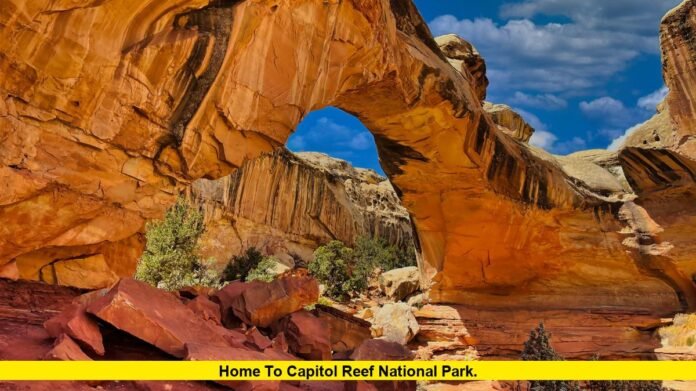

The quiet desert region home to capitol reef national park is gaining renewed attention as travelers across the United States rediscover one of Utah’s most striking landscapes. Located in south-central Utah, Capitol Reef National Park protects dramatic cliffs, canyons, domes, and natural bridges formed along a massive geological feature known as the Waterpocket Fold. The park spans more than 240,000 acres and stretches roughly 60 miles from north to south through rugged red-rock terrain.
Although the park is remote compared with other popular destinations in Utah, it continues to attract visitors seeking less crowded national parks with extraordinary scenery and rich geological history. Communities surrounding the park, particularly the tiny town of Torrey, serve as a primary gateway for tourists heading into this remarkable landscape.
If you enjoy discovering hidden national park destinations across the U.S., share this story with fellow travelers and explorers.
A Small Town Gateway to a Massive National Park
Torrey, Utah, sits just west of Capitol Reef National Park and functions as the closest town to the park’s main visitor center. The town lies about eight miles from the park entrance along Utah State Route 24, offering lodging, restaurants, and services for travelers arriving to explore the surrounding wilderness.
Despite its small population of only a few hundred residents, Torrey plays a key role in supporting tourism to the park. Visitors often stay in the town before heading into the park’s scenic drives, hiking trails, and historic districts.
Torrey’s location between Boulder Mountain and the red-rock cliffs of Capitol Reef provides sweeping views of the surrounding desert landscape. The area is known for its peaceful atmosphere, making it a favorite stop for travelers looking to escape crowded tourist hubs.
Planning a national park trip this year? Save this guide and check back for more updates about destinations worth exploring across the U.S.
A Landscape Shaped Over Millions of Years
Capitol Reef National Park protects one of North America’s most fascinating geological formations. The Waterpocket Fold, which runs nearly 100 miles through the region, formed when layers of rock were lifted and warped by ancient tectonic forces.
The result is a dramatic ridge of cliffs, domes, and canyons that stretch across the desert landscape. These formations reveal millions of years of geological history, with rock layers dating back more than 250 million years.
The park’s white Navajo Sandstone domes inspired the name “Capitol,” because early explorers thought they resembled the domes of the U.S. Capitol building. The term “reef” referred to the rugged rock barriers that once blocked early travelers moving through the region.
Today, the park stands as one of the most visually unique landscapes in the American Southwest.
From “Wayne Wonderland” to a National Park
Long before it became a national park, the region had another nickname: “Wayne Wonderland.” Local boosters promoted the area’s colorful canyons and towering formations during the early 20th century.
In 1937, the federal government designated the area as Capitol Reef National Monument to protect its natural features. Decades later, in 1971, Congress officially established Capitol Reef National Park.
The park now covers approximately 241,904 acres across multiple counties in Utah and is managed by the National Park Service. It remains open year-round, giving visitors access to scenic drives, hiking routes, historic orchards, and archaeological sites.
What Visitors Experience Inside the Park
Travelers exploring the region home to capitol reef national park often start their journey at the park’s visitor center along Highway 24. From there, the park opens up into a network of scenic roads and trails.
Popular highlights include:
- Fruita Historic District, where orchards planted by Mormon settlers in the 1880s still grow apples, peaches, cherries, and pears.
- Hickman Bridge Trail, a short but dramatic hike leading to a massive natural stone arch.
- Scenic Drive, an eight-mile paved route offering access to overlooks and canyon trails.
- Ancient petroglyph panels, left by the Fremont culture more than a thousand years ago.
The park’s remote location also creates exceptional conditions for stargazing. With minimal light pollution, the area is recognized for its incredibly dark night skies, making it a favorite destination for astronomy enthusiasts.
Why Capitol Reef Is Becoming a Must-Visit Park
While Utah’s other national parks often receive larger crowds, Capitol Reef has developed a reputation as a quieter alternative with equally dramatic scenery. Many visitors appreciate the opportunity to explore red-rock landscapes without the heavy traffic seen at more famous parks.
The park receives over a million visitors each year, and interest continues to grow as travelers search for lesser-known outdoor destinations. Road trips across Utah’s “Mighty Five” national parks frequently include Capitol Reef as a central stop between Bryce Canyon and Canyonlands.
For outdoor enthusiasts, photographers, and geology fans, the region offers a rare combination of solitude and spectacular scenery.
The Town That Supports the Adventure
Torrey’s role as the town home to capitol reef national park continues to expand as tourism grows. Small hotels, local restaurants, and tour operators help visitors prepare for days spent hiking, exploring canyons, or driving through the park’s scenic routes.
Despite the increase in tourism, Torrey retains its relaxed small-town charm. Travelers often describe the area as a place where red-rock cliffs meet quiet rural life.
That blend of natural beauty and community character has helped turn this small Utah town into one of the most appealing gateway destinations in the American Southwest.
Capitol Reef’s Enduring Appeal
Capitol Reef National Park may be one of Utah’s quieter parks, but its landscapes rival any in the region. Towering sandstone formations, winding canyons, and centuries of human history combine to create an unforgettable destination.
For travelers seeking the next great American road trip stop, the region surrounding Capitol Reef offers the kind of scenery that defines the Southwest.
Have you visited Capitol Reef National Park or the small town that welcomes travelers at its edge? Share your experience or stay tuned for more travel stories and national park updates.