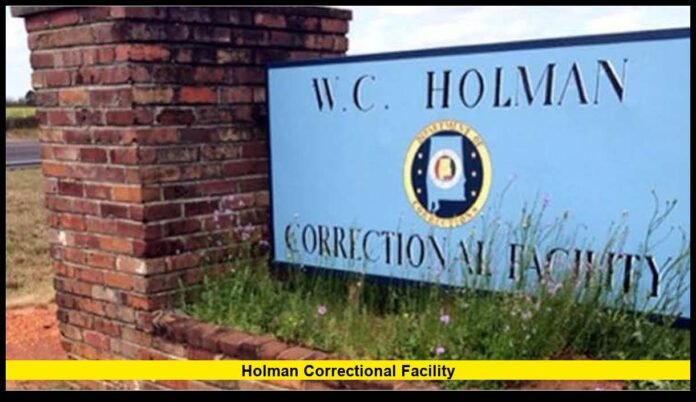

Holman Correctional Facility remains one of Alabama’s most closely watched prisons after a major execution took place there on August 13, 2026. Jeremy Tremaine Williams was put to death by lethal injection after being convicted in the 2021 killing of 5-year-old Kamarie Holland.
The execution brought renewed attention to the Atmore prison and its continuing role in Alabama’s death penalty system. It also came during a year of significant developments involving Alabama’s execution methods, prison security and correctional operations.
Williams’ execution was especially notable because he had waived further appeals and asked Alabama to move forward with his death sentence. His execution was completed Thursday evening, making it the state’s first execution of 2026.
Latest Update From Holman
The most important development is the completion of Williams’ execution.
Williams was scheduled to be executed during a window that began Thursday, August 13, and continued into the early morning hours of August 14. The state ultimately carried out the lethal injection on Thursday evening.
The execution process lasted roughly 20 minutes. Williams was pronounced dead at 6:16 p.m., according to reports from the prison.
The case had received significant attention because Williams pleaded guilty to four capital murder counts in 2024. He also chose not to continue the lengthy appeals process normally associated with a death sentence.
His decision allowed the state to move toward execution much faster than in many other capital cases.
The execution also placed Alabama among three states that carried out executions on the same day. Oklahoma and Tennessee also conducted executions on August 13.
That made the date particularly significant in the recent history of capital punishment in the United States.
Where the Prison Is Located
The prison sits in Atmore, Alabama, in Escambia County.
Its official address is 866 Ross Road, Atmore, Alabama. The institution operates under the Alabama Department of Corrections and serves as a maximum-security prison.
The facility has a long association with Alabama’s death row. It also contains the state’s execution chamber.
Although much of the original prison complex has faced major infrastructure and maintenance problems, the institution continues to perform important correctional functions.
The prison’s current role is more specialized than its historical role. It is particularly associated with death-row housing and executions.
Why the Prison Matters in 2026
The institution has become a central location in Alabama’s capital punishment system.
Death-row inmates are housed there, and executions take place inside the facility. That makes developments involving Alabama’s execution policies especially relevant to the prison.
The facility has also been connected to several execution methods in recent years.
Alabama has used lethal injection at the prison. The state has also conducted nitrogen hypoxia executions there.
That history became particularly important in 2026 as courts considered legal challenges involving nitrogen hypoxia.
The legal disputes have created uncertainty around the future use of that method. Lethal injection, however, remained available and was used for Williams.
Jeremy Williams Execution
Jeremy Tremaine Williams was convicted in connection with the killing of Kamarie Holland.
The child was five years old when she was killed in 2021. Williams later pleaded guilty to the capital charges.
The case resulted in a death sentence, and Williams eventually asked the state to proceed with his execution.
Before the execution, Williams spent his final hours on death row. Family members visited him during the final day.
Reports also indicated that he received several meals during his final 24 hours.
The execution proceeded Thursday evening after the courts did not stop the state’s plans.
Williams was executed by lethal injection at the Atmore prison.
His death marked Alabama’s first execution of the year.
Why Lethal Injection Was Used
Alabama has made national headlines for its use of nitrogen hypoxia, a method that involves replacing breathable oxygen with nitrogen.
The state conducted several nitrogen hypoxia executions beginning in 2024. Those executions generated intense legal and public debate.
In 2026, a federal court blocked Alabama from using its nitrogen protocol against death-row inmate Jeffery Lee.
That legal development became significant because Alabama had scheduled Lee for execution using nitrogen hypoxia.
The court’s ruling did not eliminate Lee’s death sentence. Instead, it created a legal barrier to using the challenged nitrogen procedure in his case.
Alabama subsequently pursued lethal injection as an alternative.
The Williams execution showed that lethal injection remained an active option for the state.
The Jeffery Lee Case
Jeffery Lee’s case is another major death-row development connected to the prison.
Lee was convicted in a 1998 robbery and double murder case in Alabama. He was sentenced to death after being convicted of killing Jimmy Ellis and Elaine Thompson.
His planned execution became the subject of a legal challenge over nitrogen hypoxia.
A federal judge ultimately barred Alabama from using its nitrogen procedure to execute Lee.
The ruling became an important development in Alabama’s continuing debate over execution methods.
Lee’s death sentence remained in place, but the legal dispute changed the immediate path toward carrying it out.
The state then sought permission to use lethal injection instead.
As of August 14, 2026, the latest available information does not establish a new execution date for Lee.
The Prison’s Death Row Role
One of the defining features of the institution is its connection to Alabama’s death row.
The prison has historically housed male death-row prisoners. It also remains the state’s execution site.
That role gives the facility national significance whenever Alabama schedules an execution.
Death-row operations require heightened security. Prison officials must also manage legal visits, family visits, medical procedures and other activities involving prisoners facing execution.
The Williams case demonstrated how those operations continue to function during an active execution period.
His final day involved visits from family members before he was taken through the final stages of the state’s execution process.
Security Concerns at the Facility
Security has remained an important issue during 2026.
In April, authorities arrested two people following an incident involving suspected contraband activity near the prison.
A trespasser was detected on prison property early on April 6. K-9 officers responded and tracked the individual.
The investigation later led authorities to a vehicle connected to another suspect.
Officials reported finding illegal drugs and cellphones during the investigation.
The incident demonstrated the security challenges surrounding a maximum-security prison.
Another investigation occurred later in April when a visitor was stopped during an alleged attempt to bring contraband into the prison.
Authorities reported finding drugs, cellphones and other prohibited items during that investigation.
The visitor was arrested and taken to the Escambia County detention facility.
These incidents show why contraband prevention remains a major priority for prison officials.
Contraband Remains a Major Challenge
Cellphones and illegal drugs can create serious security problems inside correctional institutions.
For a prison that houses death-row inmates and other high-security prisoners, controlling unauthorized items is particularly important.
Alabama has increased the use of K-9 units and other security measures to detect contraband.
The April incidents demonstrated that officials continue to investigate both attempted deliveries and unauthorized activity around the prison grounds.
The arrests also show that security concerns can involve people outside the inmate population.
Visitors and other individuals entering or approaching correctional property can face criminal charges if authorities discover prohibited activity.
The Prison’s Aging Infrastructure
The institution has also faced longstanding infrastructure concerns.
In 2020, Alabama officials announced plans to close portions of the prison because of serious maintenance problems.
The concerns included aging electrical, water and sewer systems.
Much of the original prison complex has since been decommissioned or taken out of regular use.
However, the facility’s specialized functions have continued.
The execution chamber remained an important part of Alabama’s correctional system.
The current situation therefore differs from the idea of the entire institution simply shutting down.
Instead, the facility continues to operate in a more limited and specialized capacity.
Current Role of the Facility
Today, the prison remains an active part of Alabama’s correctional system.
Its responsibilities include high-security incarceration, death-row operations and executions.
The facility also includes areas used for essential prison services and inmate programs.
Its role has changed over time, particularly as older sections of the complex were taken out of service.
Yet its importance has not disappeared.
The August 2026 execution made that especially clear.
Prison Programs and Daily Operations
The institution’s work extends beyond capital punishment.
Like other Alabama prisons, it has provided educational and work opportunities for eligible inmates.
Past facility information has included adult education and GED programs.
Industrial operations have also been associated with the prison.
Those activities form part of the broader correctional mission.
The prison must balance those responsibilities with the heightened security requirements associated with death-row housing.
Daily life inside the institution is therefore shaped by both routine correctional operations and its specialized capital punishment role.
Healthcare Changes in Alabama Prisons
Healthcare has also been an important correctional issue in Alabama during 2026.
The state ended its previous prison healthcare arrangement and moved toward a new provider after concerns surrounding the prior contract.
The change affected the wider Alabama prison system rather than only one institution.
For inmates at the Atmore facility, healthcare remains an essential part of daily prison operations.
Medical services are particularly important in a maximum-security environment that includes older death-row prisoners.
The transition also reflects broader efforts by state officials to address healthcare delivery throughout Alabama’s correctional system.
What Happens After the Williams Execution
The completion of Williams’ execution does not end the facility’s role in Alabama’s death penalty system.
Other inmates remain on death row.
Future executions will depend on court decisions, execution orders and the availability of legally permitted methods.
The Jeffery Lee case could remain particularly important because it involves the state’s use of nitrogen hypoxia.
The outcome of that litigation may influence how Alabama approaches future executions.
For the prison, that means legal developments outside its walls can directly affect its operations.
Why Holman Continues to Draw National Attention
Few Alabama prisons have the same connection to capital punishment.
The facility’s execution chamber, death-row population and history of high-security incarceration make it a major focus whenever the state schedules an execution.
The Williams case brought that attention back in August 2026.
The timing was also unusual because three states conducted executions on the same day.
For Alabama, the event represented the state’s first execution of the year.
For the prison, it was another reminder of its continuing place in the state’s death penalty system.
Current Status as of August 14, 2026
As of August 14, 2026, the prison remains operational.
The latest major event was the August 13 execution of Jeremy Tremaine Williams by lethal injection.
The facility continues to operate as a maximum-security institution in Atmore.
Its death-row responsibilities remain active, while legal disputes continue to shape Alabama’s approach to executions.
Recent security investigations also show that officials continue to focus on preventing contraband from entering the institution.
The prison’s aging infrastructure remains part of its longer-term history, but there is no indication that the facility has ceased its current specialized operations.
What Readers Should Know
The most important point is that the prison remains an active correctional institution despite years of infrastructure concerns and changes to Alabama’s prison system.
Its role has become increasingly specialized.
The facility is closely associated with death-row housing and executions, while security operations remain an important part of its daily activity.
The August 2026 execution confirmed that the state’s execution chamber remains in use.
At the same time, legal challenges surrounding execution methods could affect what happens there next.
The prison therefore remains an important location to watch as Alabama continues its capital punishment program.
Final Takeaway
The latest developments have once again placed the Atmore prison at the center of Alabama’s correctional and death penalty system. Jeremy Williams’ August 13 execution was the biggest recent event, while the continuing legal debate over execution methods could shape future activity at the facility.
What do you think about the latest developments at the prison? Share your thoughts below and stay informed as new updates emerge.