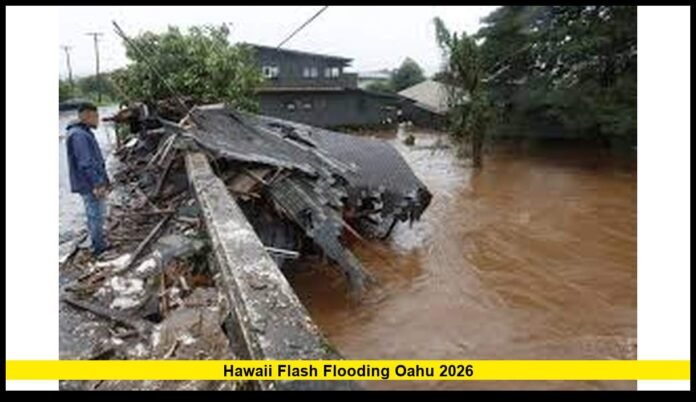

Hawaii flash flooding Oahu has triggered urgent warnings in March 2026 as intense rainfall led to rapidly rising water levels, flooded roadways, and emergency responses across the island. Authorities have issued flash flood alerts and urged residents to remain cautious as conditions developed quickly in several المناطق.
The heavy rain has created dangerous situations in both urban and rural areas. Emergency crews continue to respond to incidents while officials monitor weather patterns and water levels across Oahu.
Latest Situation Across Oahu
Oahu is experiencing significant impacts from heavy rainfall, with flash flooding affecting multiple communities. The fast-moving nature of these floods has made conditions unpredictable.
Current Conditions
- Flash flood warnings issued in several المناطق
- Flooded streets reported in urban and residential areas
- Emergency responders assisting stranded motorists
- Officials advising residents to limit travel
Water levels in streams and drainage systems have risen quickly, increasing the risk of overflow.
Communities Experiencing the Most Impact
Flooding does not affect all parts of Oahu equally. Certain areas face higher risk due to geography and infrastructure.
Most Affected Locations
- Honolulu and surrounding urban neighborhoods
- Windward coast communities exposed to heavy rainfall
- Valley مناطق where water collects rapidly
- Low-lying residential areas prone to drainage issues
Conditions can vary block by block, making localized awareness essential.
Weather Conditions Behind the Flooding
The flooding event is linked to a combination of weather factors that produced intense rainfall over a short period.
Key Weather Drivers
- Moist tropical air increasing rainfall intensity
- Slow-moving storm systems over the island
- Repeated rain bands passing through the same areas
These conditions have caused rainfall to accumulate quickly, overwhelming natural and man-made drainage systems.
Why Flash Flooding Happens Quickly on Oahu
Oahu’s natural landscape contributes to the speed and severity of flash flooding.
Geographic Factors
- Mountain ranges that channel rainwater downhill
- Narrow valleys that concentrate water flow
- Limited space for water to disperse
Urban Factors
- Paved surfaces that prevent water absorption
- Storm drains that can become overwhelmed
- Dense development in flood-prone zones
These combined factors allow water to rise rapidly during heavy rain events.
Emergency Response Efforts
Local authorities have mobilized resources to address the situation and protect residents.
Response Actions
- Emergency crews deployed to high-risk areas
- Road closures implemented for safety
- Continuous monitoring of streams and flood zones
- Public alerts issued through multiple channels
First responders are working to clear debris, assist stranded individuals, and maintain public safety.
Impact on Transportation and Infrastructure
Flooding has disrupted transportation across the island, creating challenges for commuters and emergency services.
Transportation Effects
- Major roads temporarily closed due to flooding
- Traffic delays across affected areas
- Limited access to certain neighborhoods
Infrastructure Concerns
- Drainage systems under strain
- Debris blocking roadways
- Temporary disruptions to local services
These issues highlight the widespread impact of flash flooding.
Safety Recommendations for Residents
Officials continue to emphasize safety as conditions evolve.
Essential Safety Tips
- Avoid driving through flooded streets
- Stay away from streams and drainage channels
- Follow official warnings and updates
- Keep emergency supplies ready
Even a small amount of moving water can pose serious risks.
Understanding Flash Flood Warnings
Flash flood warnings signal immediate danger and require quick action.
What Residents Should Know
- Flooding is occurring or imminent
- Conditions can worsen within minutes
- Immediate precautions are necessary
Ignoring warnings can lead to dangerous situations.
Historical Context of Flooding on Oahu
Flash flooding is a recurring issue in Hawaii due to its climate and terrain.
Past Patterns
- Heavy rainfall events causing rapid flooding
- Urban areas experiencing drainage challenges
- Valley regions prone to sudden water surges
These patterns show why preparedness remains important year-round.
Environmental Impact of the Flooding
Flooding can affect more than roads and homes. It also impacts the environment.
Environmental Effects
- Soil erosion in affected مناطق
- Debris carried into waterways
- Damage to vegetation and natural habitats
These impacts may take time to recover even after المياه recede.
Community Preparedness and Awareness
Prepared communities are better equipped to handle flash flooding events.
Preparation Steps
- Monitor weather alerts regularly
- Identify safe evacuation routes
- Keep emergency kits accessible
- Plan for communication during outages
Preparedness reduces risk and improves response times.
Role of Weather Monitoring and Alerts
Meteorologists play a critical role in tracking storm activity and issuing warnings.
Monitoring Tools Used
- Radar systems tracking rainfall intensity
- Satellite imagery showing storm movement
- Real-time weather data from ground stations
These tools help provide early warnings and updates to the public.
What Residents Can Expect Next
Weather conditions may continue to change, and officials remain vigilant.
Ongoing Concerns
- Additional rainfall could trigger more flooding
- Saturated ground increases runoff خطر
- Continued monitoring is essential
Residents should stay alert until conditions stabilize.
Key Facts About the Current Situation
- Flash flooding reported across Oahu in March 2026
- Emergency services actively responding to incidents
- Road closures and travel disruptions ongoing
- Public safety alerts remain in effect
These facts summarize the current conditions on the island.
Why Staying Informed Is Critical
Flash floods can develop quickly, leaving little time to react. Staying informed helps residents make safe decisions.
Following official updates and taking warnings seriously can reduce risks and prevent harm.
Conclusion
The Hawaii flash flooding Oahu situation in March 2026 highlights the rapid and dangerous nature of flash floods. Heavy rainfall has impacted communities, disrupted transportation, and required swift emergency responses.
Officials continue to monitor conditions closely while urging residents to remain cautious and prepared.
Have you experienced severe weather like this before? Share your thoughts and stay updated as conditions continue to develop.