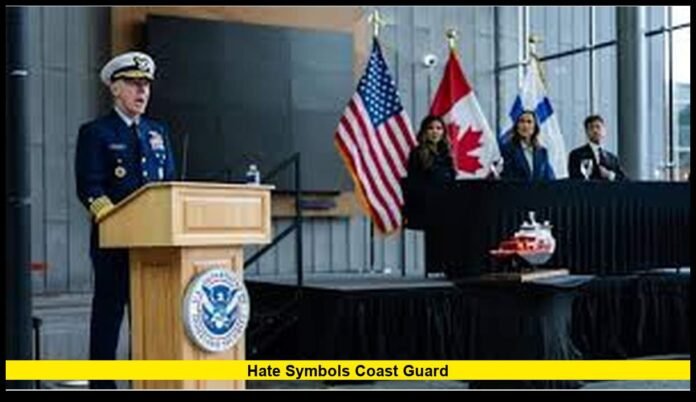

When the U.S. Coast Guard released its most recent directive focusing on hate symbols coast guard personnel, it marked a definitive moment in how the service will manage extremist imagery and protect unit cohesion. The policy, formally issued on November 20, 2025, emphasizes that symbols associated with hate-based groups will no longer be tolerated, clarifying any previous ambiguity and reaffirming expectations across commands and operational assets.
Background and Why This Update Matters
Over recent years, the issue of extremist imagery within military services has gained attention—from badges, tattoos and flags to nooses and swastikas. For the Coast Guard in particular, the presence of such symbols risked undermining morale, trust and the sense of shared purpose among personnel.
The new policy emerges after a short-lived draft that raised concerns by suggesting that certain emblematic images might be classified as “potentially divisive” rather than explicitly hateful. That phrasing triggered backlash from lawmakers, veterans’ groups and civil-rights organizations, prompting the service to revert and strengthen its stance.
As a result, the Coast Guard has issued a “new lawful order” that does more than update policy: it signals clear leadership commitment to the idea that hate-linked imagery is incompatible with service values and mission readiness.
Key Elements of the Directive
The policy centered on hate symbols coast guard personnel includes several major provisions:
- Definition and scope: The directive states that “divisive or hate symbols and flags are prohibited.” The list explicitly includes a swastika, a noose, and any symbol or flag adopted by hate-based organizations as representations of supremacy, racial or religious intolerance, antisemitism, or other improper bias.
- Applicability: The prohibition applies to all Coast Guard personnel—active duty, reserves, civilians and contractors—and covers display, distribution, use, or promotion of the symbols in any Coast Guard workplace, facility or asset.
- The Confederate battle flag: Remains banned in all visible contexts on Coast Guard property or while wearing the uniform. Exceptions are limited to educational or historical displays, or when it is only a minor component within artwork.
- Enforcement mechanism: The policy carries weight as a lawful general order under the Uniform Code of Military Justice (UCMJ). Violations can result in disciplinary action under Article 92 (failure to obey a lawful order).
- Oversight and accountability: Commanders, officers-in-charge and supervisors are directed to identify, order removal of, and investigate any display of divisive or hate symbols. They must consult their servicing legal office when necessary and ensure notification of chain-of-command and anti-harassment channels within 48 hours if there is potential media or Congressional interest.
Impacts on Coast Guard Culture and Operations
By making this kind of imagery explicitly prohibited, the Coast Guard is aiming to influence culture and operational readiness in several ways:
- Unit cohesion and morale: When symbols historically tied to oppression or white-supremacy ideologies appear, they can erode trust and sense of belonging among service members. This policy reduces ambiguity and reinforces a sense of safety and standards.
- Commander clarity: With clearer definitions and lawful order status, unit leaders have stronger tools to act, document issues and enforce the standard. That helps mitigate delays or uncertainty about how to respond.
- Operational discipline: In a service that spans deployments, cutters, shore stations and remote locations, a unified standard ensures that imagery issues do not vary by geography or mission type.
- Public trust and institutional legitimacy: When a federal uniformed service publicly affirms that extremist imagery is banned, it strengthens perceptions that the institution takes cultural and ethical risks seriously.
What Service Members Should Know and Do
For individual Coast Guard personnel and units, the policy on hate symbols coast guard must be understood at a practical level:
- Avoid display or possession: Any object, badge, apparel, sticker, flag or digital image linked to hate-based organizations is disallowed in official settings. That includes personal quarters, gear, vehicles on base, shipboard racks, and digital platforms if linked to official representation.
- Know your environment: That ban applies regardless of rank, mission status, or whether ashore or afloat. Even when operational tempo is high, display of such imagery is not deferred.
- Report concerns promptly: If you observe a symbol or flag that may violate the policy, report it through your chain of command or equal-opportunity/hazing-harassment channels. Delayed reporting or ambiguous responses weaken the standard.
- Expect leadership action: When command becomes aware of a violation or display of concern, the expectation is removal of the symbol, investigation of circumstances, and appropriate legal/administrative response. These actions should be proactive, not reactive.
- Understand historic or educational exceptions: The policy does allow for narrow contexts—such as formally approved historical displays or educational materials—where certain imagery may appear. However, unauthorized use in everyday spaces or personal contexts is not allowed.
Timeline of Recent Developments
Here is a breakdown of the most relevant sequence of events concerning hate symbols coast guard policy:
| Date | Event |
|---|---|
| Early Nov 2025 | Draft guidance surfaced indicating certain hate symbols might be classified as “potentially divisive” instead of explicitly prohibited. |
| Nov 20, 2025 | The Coast Guard issued a press release stating a new lawful order and policy doubling down on prohibiting divisive or hate symbols and flags. |
| Nov 20-21, 2025 | Final version of the policy memorandum signed and distributed to all units, reinforcing that the display of a noose, a swastika or any co-opted hate symbol is prohibited. |
Key Questions and Considerations
While the policy is now clear, some underlying questions merit attention:
- How consistently will it be enforced across all domains? From large cutters and shore facilities to small detachments and remote stations, enforcement may vary. Ongoing oversight and training will play a major role in equal application.
- Will leadership training accompany the rule? Having a policy is one step; ensuring that supervisors, legal staff and command teams understand how to detect, investigate and resolve imagery issues is just as important.
- Will reporting thresholds and timelines matter? Though the policy sets expectations for rapid action, how long someone can wait to report, and whether timelines differ for afloat units, remains operationally relevant.
- What about digital imagery or off-duty conduct? The policy addresses display in official contexts, but off-duty or personal social media use may require further guidance and interpretation by leadership.
- How will changing the language affect service-member perceptions? Even though the policy clarifies the ban, earlier confusion over wording may cause some personnel to question how seriously the symbolism is treated. Clear communication is essential.
The Broader Context Among U.S. Armed Forces
Though the Coast Guard operates under the Department of Homeland Security rather than the Department of Defense, its policy updates reflect broader Pentagon reviews of harassment, extremist conduct and workplace culture. In recent years, the presence of extremist ideologies and symbols in all branches of the U.S. military has triggered investigations, policy changes and congressional oversight.
By taking a definitive stance on hate symbols coast guard imagery, this service aligns itself with the principle that national defense personnel must not display symbols that question commitment to equal service or degrade unit trust. The order enhances alignment with other branches’ efforts to ensure extremism and hate-based conduct are incompatible with uniformed service.
What Happens Next
Implementation of the policy is immediate, but leadership has signaled additional steps:
- Training updates: All units will receive revised guidance, training modules and reference materials to ensure clarity on what constitutes a prohibited symbol, how to report, and how to respond.
- Inspection and audits: Unit inspections and command climate reviews may begin integrating imagery and symbolism checks, ensuring that ships, stations and facilities comply.
- Legal and administrative reviews: The servicing legal offices will update their processes to reflect the lawful order status of the policy, ensuring disciplinary frameworks are aligned.
- Communication to personnel: Leaders across the force will be required to brief their commands, emphasizing how the policy protects everyone’s rights, values and mission readiness.
Practical Tips for Units and Personnel
Here are some practical steps for individuals and commanders to keep in mind:
- Write and post command-level acknowledgments that the policy on hate symbols coast guard imagery is known and actively enforced.
- Conduct periodic walkthroughs of physical spaces (berthing, offices, common areas) to check for unauthorized flags, stickers, patches or apparel.
- Encourage open dialogue within units: if a member spots something concerning, they should feel empowered to ask questions and report without fear of retaliation.
- Engage leadership early: if a symbol appears that may be ambiguous or borderline, consult legal counsel rather than assume it’s acceptable.
- Monitor digital presence: unit websites, intranet posts, official social media accounts should reflect that the policy prohibits extremist imagery and flag usage consistent with the directive.
Why This Matters for You and the Institution
For a maritime security service whose mission spans from homeland defense to environmental protection, everything from equipment readiness to human relations matters. When personnel feel respected, safe, and aligned with common values, mission effectiveness improves. The policy targeting hate symbols coast guard imagery ensures that each member of the force understands that extremist imagery—no matter how subtle or contextual—does not belong in their community.
It also sends a message externally: to partners, to the public, and to those potential adversaries who may exploit divisions. Internal cohesion becomes a strategic asset. Symbols matter. They carry weight beyond aesthetics. Their presence—or absence—can either harm or bolster organizational culture. By making the ban clear and enforceable, the Coast Guard demonstrates that culture, conduct and mission are interlinked.
The conversation doesn’t end here—share your thoughts, ask questions, or tell us how your command is integrating these changes and stay in the loop with the latest on policy changes.