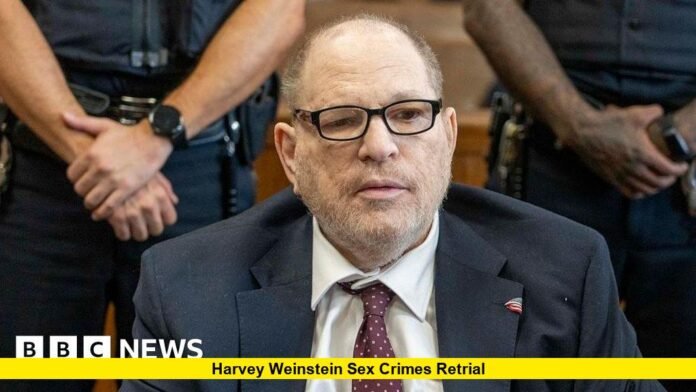

The legal drama surrounding the Harvey Weinstein sex crimes retrial took another dramatic turn after a Manhattan judge declared a mistrial when jurors failed to unanimously agree on one of the most serious charges against the former Hollywood producer. The outcome leaves prosecutors weighing whether to seek yet another courtroom battle in a case that has remained at the center of national debate for years.
The deadlocked jury spent days reviewing testimony, evidence, and conflicting arguments before informing the court that consensus could not be reached on the rape allegation involving aspiring actress Jessica Mann. With deliberations stalled and tensions reportedly mounting inside the jury room, the judge concluded that further discussion would not produce a unanimous decision.
The mistrial adds another layer of uncertainty to a case that has already reshaped public conversations about power, accountability, and sexual misconduct in the entertainment industry.
A Courtroom Divided Over Key Allegations
Jurors were tasked with deciding whether Weinstein committed third-degree rape during an encounter with Mann in 2013. Prosecutors argued the former film executive used his industry influence and personal power to manipulate and assault women seeking opportunities in Hollywood.
Defense attorneys presented a sharply different picture. They claimed the relationship between Weinstein and Mann was consensual and pointed to continued communication between the two after the alleged incident. According to courtroom arguments, the defense believed those interactions contradicted claims of criminal conduct.
The division among jurors reflected the complexity of the testimony presented during the retrial. Some members of the panel reportedly believed the prosecution had met the burden of proof, while others remained unconvinced beyond a reasonable doubt.
Once the jury informed the court it could not bridge those differences, the judge formally ended the proceedings without a final verdict on the rape count.
Why the Retrial Was Held
The latest trial only happened because Weinstein’s original New York conviction was overturned on appeal. The state’s highest court ruled that parts of the earlier proceedings were unfairly influenced by testimony unrelated to the specific criminal charges being tried at the time.
That decision stunned legal observers because the original conviction had become one of the defining moments of the #MeToo era. Weinstein had been sentenced to decades behind bars after multiple women accused him of sexual misconduct.
The appeals ruling forced prosecutors back into court to retry key allegations. Manhattan prosecutors maintained that the testimony from accusers remained credible and argued the evidence still justified conviction.
Weinstein’s legal team, meanwhile, insisted the retrial proved flaws existed in the original prosecution strategy.
Jessica Mann Again Took the Witness Stand
Jessica Mann became one of the central figures in the retrial as she once again described the emotional and psychological impact of her relationship with Weinstein.
During testimony, Mann alleged Weinstein sexually assaulted her in a Manhattan hotel room. She described feeling trapped by his influence in the film industry and said she feared the consequences of rejecting him.
Prosecutors argued that Weinstein exploited professional ambition and emotional vulnerability to control women around him. They portrayed Mann as someone who struggled with fear, confusion, and manipulation while navigating interactions with one of Hollywood’s most powerful figures.
Defense lawyers focused heavily on messages and meetings that occurred after the alleged assault. Attorneys questioned why Mann maintained contact with Weinstein if the encounter had been non-consensual.
The cross-examination became one of the most closely watched aspects of the trial because it highlighted the broader legal challenges involved in prosecuting sexual assault cases where the accuser and defendant maintained ongoing communication.
The Shadow of the #MeToo Movement
Weinstein’s downfall remains deeply tied to the rise of the #MeToo movement, which transformed workplace conversations across multiple industries.
In 2017, allegations against Weinstein triggered a global reckoning over sexual harassment and abuse of power. Dozens of women accused the producer of misconduct spanning several decades. Many of those accusations involved claims that Weinstein leveraged his influence over careers to pressure or intimidate women.
The public exposure of those allegations led to Weinstein’s removal from his production company and effectively ended his once-dominant Hollywood career.
Beyond the entertainment industry, the case inspired wider discussions about workplace protections, consent, and institutional accountability. Major corporations, studios, and media organizations revised harassment policies in response to the movement’s momentum.
Even years later, courtroom developments connected to Weinstein continue attracting national attention because of the case’s cultural and political significance.
Weinstein Remains Behind Bars Despite the Mistrial
Although the retrial ended without resolution, Weinstein is not expected to regain freedom.
The former producer is already serving a lengthy prison sentence linked to separate criminal convictions in California. Those convictions stemmed from allegations involving another woman and remain legally independent from the New York proceedings.
As a result, the mistrial primarily affects the unresolved Manhattan rape charge rather than Weinstein’s broader incarceration status.
Legal analysts say prosecutors now face a difficult strategic decision. Another retrial could extend the years-long legal saga even further while requiring witnesses to testify once again about deeply traumatic events.
At the same time, abandoning the unresolved charge could spark criticism from advocacy groups that view the case as symbolically important in the broader fight against sexual violence.
Juror Disagreements Reveal Challenges in High-Profile Cases
The inability of jurors to agree on a verdict underscores how difficult celebrity criminal cases can become, particularly when allegations involve complicated personal relationships and events that occurred years earlier.
Sexual assault prosecutions often depend heavily on witness credibility rather than physical evidence alone. In cases involving ongoing communication between the accuser and defendant, jurors can interpret behavior in dramatically different ways.
Legal experts say the Weinstein retrial demonstrated how modern juries continue wrestling with questions surrounding trauma, consent, memory, and power imbalance.
Some observers believe the mistrial reflects growing skepticism among jurors when testimony contains inconsistencies or emotional complexity. Others argue the deadlock reveals how societal attitudes toward sexual assault remain deeply divided despite years of public conversation following the rise of #MeToo.
The retrial also showed how celebrity defendants can attract extraordinary levels of media scrutiny, making jury deliberations even more complicated.
Hollywood’s Relationship With the Case Has Changed
When Weinstein was first accused publicly, the revelations shocked the entertainment world. The producer had long been considered one of the industry’s most influential power brokers, known for financing award-winning films and shaping Oscar campaigns.
Since then, Hollywood’s public response has evolved significantly.
Studios and talent agencies introduced stricter conduct policies. Intimacy coordinators became increasingly common on film sets. Corporate executives adopted expanded reporting systems for harassment complaints.
At the same time, some critics argue the entertainment industry still struggles with systemic issues involving power imbalance and career gatekeeping.
The ongoing legal battles involving Weinstein continue serving as a reminder of how dramatically the industry changed after the original allegations emerged.
What Prosecutors May Do Next
Manhattan prosecutors have not yet announced whether they will seek another trial.
Several factors are expected to influence that decision, including the emotional toll on witnesses, the cost of another prosecution, and the likelihood of achieving a unanimous verdict after repeated legal proceedings.
Defense attorneys are expected to argue that continued retrials would amount to unfair legal pressure after multiple juries failed to produce a clear outcome on the same allegations.
Prosecutors, however, may feel pressure to continue pursuing the charge because of the case’s high-profile nature and the broader message attached to it.
Court hearings connected to scheduling and procedural matters are likely in the coming weeks as both sides assess their next legal moves.
Public Debate Intensifies Again
The mistrial immediately reignited fierce debate online and across television panels, legal circles, and advocacy organizations.
Supporters of Mann expressed disappointment that the jury could not deliver a definitive conclusion after years of public scrutiny and testimony. Survivor advocacy groups warned that unresolved outcomes in high-profile cases may discourage victims from reporting abuse.
Others argued the deadlocked jury demonstrated the importance of maintaining high evidentiary standards in criminal proceedings regardless of public pressure or media attention.
The case has become larger than Weinstein himself for many observers. To supporters of the #MeToo movement, the proceedings symbolize long-standing issues involving abuse of authority. To critics concerned about due process, the mistrial highlights the difficulty of fairly evaluating emotionally charged allegations years after the events in question.
Those tensions are likely to continue shaping public reaction as prosecutors determine their next step.
An Unfinished Legal Story
The latest courtroom outcome ensures that the legal saga surrounding Weinstein remains unresolved in New York.
What once appeared to be a definitive conclusion has transformed into a prolonged sequence of appeals, retrials, and divided juries. Each new development continues drawing national attention because of the extraordinary cultural impact connected to the allegations.
For now, the Manhattan mistrial leaves one of the most closely watched criminal cases in recent American history without a final answer.
Whether prosecutors move forward with another attempt at conviction or decide to close the chapter entirely could shape the next phase of a legal battle that has already altered Hollywood and the broader national conversation around sexual misconduct.