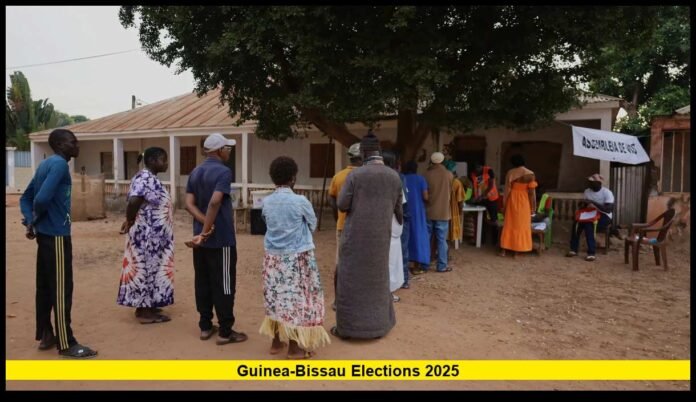

As the Guinea-Bissau elections 2025 draw near, anticipation and uncertainty are building in the small West African nation. The upcoming vote, scheduled for later this year, is shaping up to be one of the most consequential in the country’s recent history. For many citizens, this election represents both a chance for renewal and a test of Guinea-Bissau’s fragile democracy.
The government, opposition parties, and international observers are all preparing for a pivotal event that could either strengthen the nation’s democratic institutions or deepen its long-standing political divides.
Political Landscape Leading into the Election
Guinea-Bissau’s political environment remains complex and often unpredictable. Since gaining independence from Portugal in 1973, the nation has experienced frequent coups, contested elections, and unstable coalitions. These cycles of unrest have eroded public confidence in leadership and slowed economic growth.
As of 2025, President Umaro Sissoco Embaló, who took office in early 2020, continues to dominate the political scene. His administration has focused on promoting political reforms and combating corruption but faces criticism for alleged overreach and strained relations with parliament.
The political atmosphere has grown tense over the past two years, especially following Embaló’s controversial decision to dissolve parliament in 2022, citing persistent legislative gridlock. That move sparked protests and raised concerns about the country’s democratic trajectory.
With general elections approaching, many in Guinea-Bissau — and abroad — see the upcoming vote as a defining moment for the nation’s stability and credibility.
Key Political Parties and Their Positions
The election field is expected to include several major parties representing different ideological and regional factions.
1. PAIGC (African Party for the Independence of Guinea and Cape Verde)
One of the country’s oldest and most influential parties, the PAIGC has historically shaped Guinea-Bissau’s political landscape. The party is pushing for stronger democratic institutions, anti-corruption measures, and expanded social programs.
2. PRS (Party for Social Renewal)
A long-standing opposition group, the PRS draws significant support from the northern regions. It has emphasized economic recovery, infrastructure development, and greater regional equity.
3. Madem-G15 (Movement for Democratic Alternation)
Currently the ruling party and closely aligned with President Embaló, Madem-G15 promotes administrative modernization and promises to maintain stability. Its members claim the government’s policies have strengthened national unity and improved public services.
Newer political movements and independent candidates are also emerging, appealing to younger voters who are demanding transparency and economic opportunity.
Election Timeline and Organization
The National Election Commission has confirmed that both presidential and parliamentary elections will take place in late 2025. Preparations are already underway to ensure a fair and transparent process.
The Commission has expanded voter registration drives across rural and urban areas to boost participation. Updated voter ID systems and enhanced polling infrastructure are being implemented to reduce errors and prevent fraud.
Guinea-Bissau follows a two-round electoral system for presidential races, meaning that if no candidate secures over 50 percent of the vote in the first round, the top two contenders will face off in a runoff.
International partners, including the African Union and ECOWAS, are expected to send election observers to monitor polling and ensure the process adheres to democratic standards.
Social and Economic Backdrop
The political contest is unfolding against a backdrop of deep economic challenges. Guinea-Bissau remains one of the poorest countries in West Africa, with limited infrastructure, low industrial activity, and a heavy reliance on cashew nut exports.
The agricultural sector employs the majority of the population, yet fluctuating global prices and climate pressures have made livelihoods increasingly precarious.
Key issues dominating voter discussions include:
- Economic diversification beyond agriculture
- Employment opportunities for youth and women
- Public healthcare access
- Education quality
- Corruption and mismanagement within public institutions
Candidates are under intense pressure to address these concerns, particularly as younger voters express frustration with the country’s slow pace of progress.
Youth and Civic Engagement
Guinea-Bissau’s youth make up more than 60 percent of the population, making them a crucial voting bloc in the 2025 elections. Young citizens have grown increasingly engaged in political discussions, using social media to mobilize, share information, and challenge traditional power structures.
Civic organizations have been working to boost voter registration among first-time voters, particularly in remote regions. Their message is clear: participation is key to ensuring that the next government represents the country’s diverse voices.
This surge of youth involvement is one of the most hopeful signs for Guinea-Bissau’s political future, signaling a new generation ready to take part in shaping the nation’s destiny.
Security and Stability Concerns
Security remains a sensitive issue as Guinea-Bissau prepares for elections. The country has a long history of military interference in politics, which has destabilized governments and delayed reforms.
To prevent unrest, security forces and international peacekeepers have been coordinating with the government to maintain order throughout the electoral period. ECOWAS has expressed its commitment to supporting a peaceful process and discouraging any form of political violence or interference.
So far, no significant security incidents have been reported, though observers remain cautious as campaigning intensifies. The government has also pledged to ensure safety at all polling stations and to prosecute any cases of intimidation or disruption.
International Interest and Oversight
The upcoming election has attracted attention from across the globe, especially from regional blocs and development partners.
The African Union, ECOWAS, and United Nations are all involved in providing logistical and technical support to strengthen Guinea-Bissau’s electoral process. Their focus is on ensuring transparency, inclusivity, and credibility.
Western nations, including the United States and European Union, have also expressed interest in a free and fair election. They see stability in Guinea-Bissau as essential for broader regional security, particularly in West Africa’s ongoing efforts to combat political volatility and economic stagnation.
If this election proceeds peacefully, it could pave the way for renewed international cooperation and financial support for development initiatives in the country.
Economic Stakes of the Election
The 2025 vote is not just about leadership — it’s about Guinea-Bissau’s economic future.
For decades, the country’s reliance on cashew exports has left it vulnerable to market fluctuations. A new government will face pressure to invest in sectors such as:
- Tourism: Developing coastal infrastructure and eco-tourism projects.
- Fisheries: Expanding licensing and ensuring sustainable practices.
- Renewable energy: Reducing dependence on imported fuels.
- Transport: Improving road and port connectivity to boost trade.
Economic diversification, combined with political stability, could help Guinea-Bissau unlock regional investment opportunities and stimulate growth.
Women’s Participation in Politics
An increasing number of women are stepping into leadership roles and political candidacies ahead of the 2025 elections. Gender equality advocates have called for greater inclusion, pushing for legal reforms that guarantee more female representation in parliament and local government.
Women’s organizations are playing a central role in promoting voter education, peacebuilding, and civic engagement across the country. Their involvement is being hailed as a significant step toward a more inclusive democracy.
Challenges to Watch
While optimism surrounds the upcoming vote, several factors could complicate the process:
- Persistent political mistrust among major parties could lead to disputes over results.
- Limited media access in rural areas may hinder fair campaign visibility.
- Low literacy rates could affect voter understanding of the ballot.
- Economic hardship might reduce turnout in some regions.
Election authorities are working to address these issues through public outreach, transparency measures, and collaboration with civic organizations.
What’s at Stake for Guinea-Bissau
At its core, the 2025 election represents an opportunity for Guinea-Bissau to reset its democratic foundations. After years of political turbulence, citizens are eager for stability, accountability, and leadership that prioritizes the country’s development.
If the process remains peaceful and credible, Guinea-Bissau could usher in a new chapter defined by cooperation and reform. However, if disputes or unrest follow, the nation risks slipping back into the instability that has long hindered progress.
The path forward depends on the willingness of political actors to put national interests above personal ambition — a challenge that has defined Guinea-Bissau’s history for decades.
As Guinea-Bissau heads toward its 2025 elections, the world will be watching to see whether this small nation can deliver a peaceful and democratic vote that marks the beginning of lasting stability. Share your thoughts below and stay tuned for more developments.