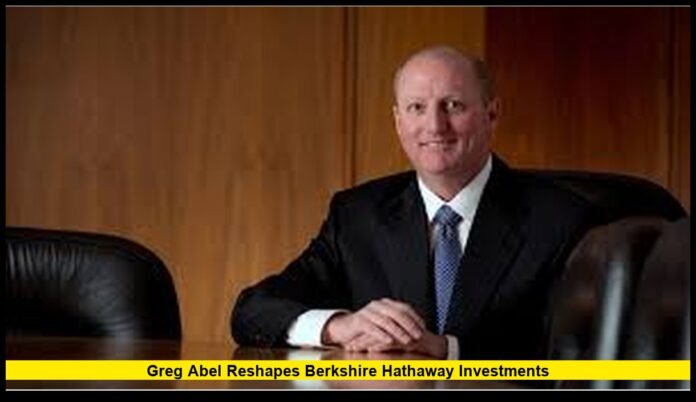

The spotlight on greg abel berkshire hathaway investments continues to intensify as Berkshire Hathaway enters a defining chapter under its new CEO. With Warren Buffett stepping back from day-to-day leadership while remaining chairman, Greg Abel now carries the responsibility of guiding one of the most influential companies in global finance. His early actions reveal a careful balance between preserving a proven philosophy and adapting to the realities of a rapidly evolving market.
Berkshire Hathaway stands as a unique powerhouse—part investment firm, part operating conglomerate—with a reputation built on long-term thinking and disciplined capital allocation. As Abel begins to shape the company’s direction, investors are paying close attention to how he plans to deploy capital, manage risk, and sustain growth at an unprecedented scale.
If you want to understand how one of the world’s largest investment engines is positioning itself for the future, this leadership transition offers critical insights into where markets—and long-term strategies—may be headed next.
A Leadership Shift Decades in the Making
Greg Abel’s rise to CEO is not a sudden change but the result of years of preparation. Having overseen Berkshire Hathaway Energy and played a key role in managing the company’s non-insurance businesses, Abel built a track record of operational excellence and disciplined decision-making.
His leadership style reflects a deep understanding of Berkshire’s decentralized structure. Unlike traditional corporations, Berkshire allows its subsidiaries to operate independently while relying on centralized capital allocation. Abel has emphasized that this structure will remain intact, preserving the entrepreneurial spirit that has defined the company for decades.
The transition also represents continuity. Warren Buffett’s influence remains strong, and the core principles that guided Berkshire’s rise—value investing, patience, and financial strength—are still at the heart of its strategy. However, Abel’s approach introduces a slightly more active tone, particularly in how capital is managed and communicated to shareholders.
Unmatched Cash Reserves: Opportunity at Scale
One of the most significant aspects of Berkshire Hathaway’s current position is its enormous cash reserve, estimated to exceed $370 billion in 2026. This level of liquidity is rare, even among the largest global corporations, and provides both flexibility and pressure.
For Abel, the challenge is not simply finding investments—it is finding investments large enough to make a meaningful impact. Smaller deals that might be transformative for other companies often have limited effect on Berkshire’s overall performance.
This reality reinforces the importance of patience. Abel has made it clear that Berkshire will not rush into investments simply to reduce its cash position. Instead, the company will wait for opportunities that align with its long-term value criteria.
At the same time, this financial strength positions Berkshire to act decisively during periods of market stress. When other companies face constraints, Berkshire can step in with significant capital, often securing favorable terms.
Stock Buybacks Reflect Confidence in Intrinsic Value
A notable development under Abel’s leadership is the renewed focus on stock buybacks. After a period of limited activity, Berkshire resumed repurchasing its own shares in early 2026.
This move signals management’s belief that the company’s stock is undervalued relative to its intrinsic worth. Buybacks provide a direct way to return capital to shareholders while increasing the ownership percentage of remaining investors.
Abel’s personal investment in Berkshire shares further reinforces this message. By purchasing stock with his own funds, he aligns his financial interests with those of shareholders, demonstrating confidence in the company’s future.
The return of buybacks also highlights a more flexible approach to capital allocation. While large acquisitions remain a priority, buybacks serve as an effective alternative when attractive deals are scarce.
A Focused Investment Portfolio with High-Conviction Holdings
The structure of Berkshire’s equity portfolio remains a defining feature of its strategy. Rather than spreading investments across hundreds of companies, Berkshire concentrates its capital in a select group of high-quality businesses.
This approach reflects a belief in deep understanding over broad diversification. By focusing on companies with strong competitive advantages, reliable earnings, and capable management teams, Berkshire aims to generate consistent long-term returns.
In the context of greg abel berkshire hathaway investments, this philosophy continues to guide decision-making. Abel has maintained a commitment to holding core positions for extended periods, allowing them to compound value over time.
These holdings span multiple sectors, including technology, financial services, consumer products, and energy. The diversity of industries provides stability, while the concentration of capital ensures meaningful exposure to each investment.
Addressing Underperformance with Greater Transparency
While Berkshire’s overall performance remains strong, not every investment has met expectations. Abel has shown a willingness to address these challenges directly, signaling a slightly more candid communication style.
The company’s investment in Kraft Heinz, for example, has faced difficulties over the years. Under Abel’s leadership, there has been a clearer acknowledgment of these challenges, along with a focus on long-term recovery strategies.
This transparency reflects a broader shift in how Berkshire communicates with investors. By openly discussing both successes and setbacks, Abel aims to build trust and provide a more comprehensive view of the company’s performance.
Operating Businesses: The Foundation of Berkshire’s Strength
Beyond its investment portfolio, Berkshire Hathaway’s true strength lies in its operating businesses. These subsidiaries generate substantial cash flow, creating a self-sustaining financial ecosystem.
Key areas include insurance, energy, transportation, and manufacturing. Each segment plays a critical role in supporting the company’s overall strategy.
Insurance operations, in particular, provide a unique advantage through the concept of float—the pool of funds generated from premiums that can be invested before claims are paid. This capital serves as a powerful engine for investment activity.
Energy and utility businesses offer stable, predictable returns, while transportation and manufacturing contribute to diversification and resilience. Together, these operations ensure that Berkshire remains financially strong across different economic conditions.
Balancing Tradition with Strategic Evolution
One of the most important aspects of Abel’s leadership is his ability to balance tradition with change. While the core principles of Berkshire Hathaway remain intact, there is a growing emphasis on adaptability.
This includes:
- A more active approach to capital allocation
- Increased use of buybacks as a strategic tool
- Greater transparency in communication
- Continued focus on high-quality, long-term investments
These adjustments reflect the realities of today’s market environment, where scale, competition, and economic uncertainty require careful navigation.
Investor Focus: What Comes Next
As Berkshire Hathaway moves forward under Greg Abel, investors are closely watching several key factors:
Capital Deployment
How and when the company uses its massive cash reserves will be a major driver of future performance.
Acquisition Strategy
Large-scale acquisitions could significantly impact Berkshire’s growth trajectory, but opportunities of this size are rare.
Portfolio Management
Adjustments to existing holdings will provide insight into Abel’s investment priorities and risk tolerance.
Market Positioning
Berkshire’s ability to adapt to changing economic conditions will determine its long-term success.
These factors will shape not only Berkshire’s future but also broader market trends, given the company’s size and influence.
If you’re tracking major shifts in the financial world, keeping an eye on Berkshire Hathaway’s next moves could offer valuable clues about where long-term investing is headed.
The Future of Berkshire Hathaway Under Greg Abel
Looking ahead, Berkshire Hathaway remains uniquely positioned. Its combination of financial strength, diversified operations, and disciplined investment strategy provides a solid foundation for growth.
Abel’s leadership will be defined by his ability to deploy capital effectively while maintaining the principles that made Berkshire successful. This includes resisting short-term pressures and focusing on sustainable value creation.
The scale of the company presents challenges, but it also offers opportunities that few others can match. With careful execution, Berkshire can continue to thrive in a complex and competitive market.
As this new chapter unfolds, one thing is clear: the legacy of Berkshire Hathaway is evolving, and Greg Abel is now at the center of that transformation.
What are your thoughts on Greg Abel’s strategy—will it redefine Berkshire Hathaway’s future or reinforce its legacy? Join the conversation and stay updated.