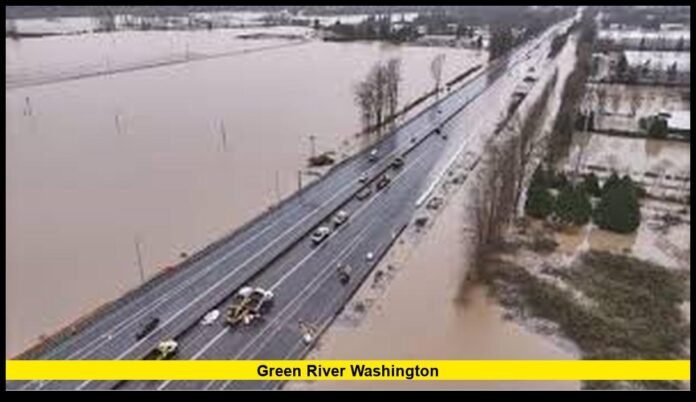

Green River Washington continues to face serious flooding challenges as elevated river levels, levee damage, and recent storms have placed communities across South King County under sustained pressure. As of today, conditions along the river remain closely monitored, with emergency crews, engineers, and local officials actively responding to protect lives, homes, and critical infrastructure.
Areas near Tukwila, Kent, Renton, Auburn, and neighboring floodplains have experienced the greatest impacts. While some conditions have stabilized, officials stress that risks remain due to saturated ground and ongoing river flow.
Flooding Along a Critical River Corridor
The Green River is a major waterway in western Washington, flowing through populated and industrial areas before reaching Puget Sound. During recent storms, the river rose quickly, pushing water beyond its banks in low-lying areas.
Heavy rainfall over several consecutive days caused runoff from surrounding hills and upstream basins to funnel rapidly into the river. With limited capacity to absorb additional water, floodplains filled quickly, prompting emergency alerts and swift action by authorities.
Levee Damage Sparks Emergency Actions
A key turning point occurred when damage was confirmed along the Desimone Levee near Tukwila. This levee plays a vital role in protecting nearby neighborhoods, businesses, and transportation routes from flooding.
The weakened section allowed water to spill into adjacent areas, triggering emergency response protocols. Crews moved quickly to stabilize the site using sandbags, heavy equipment, and temporary reinforcements.
Engineers continue to inspect the structure around the clock. While the breach has been partially contained, officials emphasize that the levee remains under stress and requires continued monitoring.
Evacuations and Community Alerts
Following the levee damage, evacuation orders were issued for parts of the Green River floodplain. Residents and businesses within designated zones were told to leave immediately due to rapidly changing conditions.
Emergency alerts were sent through multiple channels, including mobile notifications and local broadcast systems. First responders conducted patrols to ensure residents understood the urgency of the situation.
Shelters were established in nearby communities to provide temporary housing, food, and basic services. Some locations were equipped to accommodate pets, recognizing the challenges families face during sudden evacuations.
Impact on Transportation and Daily Life
Flooding along Green River Washington significantly disrupted transportation, especially in South King County. Portions of State Route 167 were temporarily closed as water levels approached the roadway.
These closures affected commuters, freight movement, and emergency response routes. Several on-ramps and off-ramps were also shut down as a precaution.
Local streets near the river experienced pooling water, debris, and limited access. Public works crews worked continuously to clear drains, remove debris, and assess road safety before reopening affected routes.
Current River Conditions and Monitoring
River gauges indicate that the Green River remains above seasonal norms. While water levels have shown signs of stabilizing, they remain high enough to pose a continued risk, especially if additional rain falls.
Upstream reservoir management has played a role in controlling downstream flow, but officials note that controlled releases combined with runoff keep pressure on the system.
Flood specialists are monitoring the river hourly, watching for changes that could require renewed evacuations or expanded safety zones.
Emergency Repairs and Stabilization Efforts
Repair operations along the damaged levee have remained active. Crews have reinforced vulnerable areas with additional sandbags and erosion control measures.
Key response actions include:
- Continuous inspection by structural engineers
- Reinforcement of weak sections to prevent widening
- Heavy machinery placement to support temporary barriers
- Coordination between city, county, and state agencies
Officials caution that these measures are designed to manage immediate risk. Long-term improvements will be addressed after the flood threat fully subsides.
Wider Weather Conditions in Western Washington
The flooding along the Green River is part of a broader weather pattern that has impacted western Washington. Repeated storm systems delivered sustained rainfall over an already wet region.
With soils saturated, even moderate rain resulted in rapid runoff. Several rivers across the region approached flood stage, leading to park closures and safety advisories beyond the Green River basin.
Meteorologists emphasize that winter storm patterns can shift quickly, making preparedness essential for communities near rivers and streams.
Role of Emergency Services and Support Teams
Local fire departments, law enforcement agencies, and emergency medical services have played a central role in managing the crisis. Crews assisted with evacuations, traffic control, and safety checks.
The Washington National Guard provided additional support, helping reinforce flood defenses and assist with logistics in affected areas.
Volunteer organizations and local nonprofits stepped in to help evacuees with food, supplies, and temporary shelter. Community coordination has been critical in maintaining order during the emergency.
Public Safety Guidance Remains in Effect
Officials continue to urge residents to take flood warnings seriously. Even areas not currently under evacuation orders are advised to remain alert.
Key safety reminders include:
- Never drive through flooded roads
- Stay away from riverbanks and levee areas
- Follow official alerts and instructions
- Prepare for rapid changes in conditions
Floodwaters can rise unexpectedly and may contain debris, making them dangerous even at shallow depths.
Environmental and Infrastructure Considerations
Beyond immediate flooding, officials are assessing impacts to infrastructure near the river. Utilities, industrial sites, and transportation corridors along the Green River are being evaluated for damage.
Environmental teams are also monitoring water quality and erosion along the riverbanks. Prolonged flooding can reshape channels and weaken protective structures, increasing future risk if repairs are delayed.
What Residents Can Expect Moving Forward
Recovery efforts will continue even after water levels fully recede. Cleanup, inspections, and repairs are expected to take weeks in some areas.
Officials are reviewing flood response strategies and infrastructure resilience to reduce vulnerability during future storms. Residents living near Green River Washington are encouraged to stay informed and prepared as conditions evolve through the remainder of the wet season.
Have you experienced flooding or noticed changes along the Green River Washington corridor? Share your perspective and stay connected as recovery efforts continue.