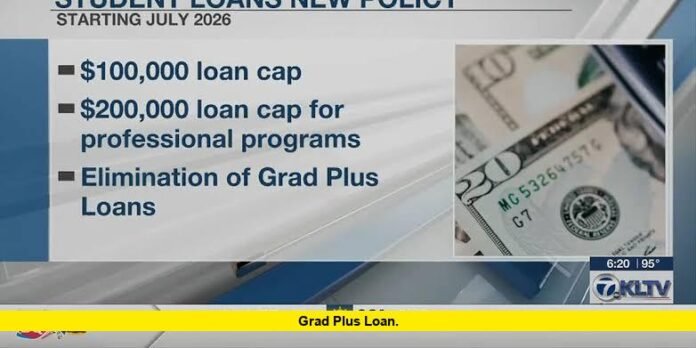

As of October 6, 2026, the grad plus loan program has undergone one of the biggest changes in federal graduate student financing. Beginning July 1, 2026, new borrowers generally can no longer receive federal Graduate PLUS Loans. However, a limited legacy exception allows certain students who were already enrolled and had received a qualifying federal Direct Loan for their current program before July 1, 2026, to continue borrowing under the previous rules for a limited period.
The change is important for graduate and professional students because Grad PLUS loans historically allowed eligible borrowers to finance the gap between their other financial aid and the school’s total cost of attendance. With the program now closed to most new borrowers, students entering graduate school must pay closer attention to federal Direct Unsubsidized Loan limits, scholarships, employer assistance, savings and other financing options.
What Is a Grad Plus Loan?
A Grad PLUS Loan, formally called a Direct Graduate PLUS Loan, was a federal student loan designed for graduate and professional students. Unlike Direct Unsubsidized Loans, which have annual and aggregate borrowing limits, Grad PLUS borrowing historically could cover the student’s remaining cost of attendance after other financial assistance was deducted.
The loan was issued in the student’s name by the U.S. Department of Education. It was a credit-based federal loan, meaning applicants were subject to a credit check and could face additional requirements if they had an adverse credit history.
Before the 2026 changes, a graduate student could generally borrow up to the school’s certified cost of attendance minus other financial aid. This made Grad PLUS particularly important for students attending expensive graduate, medical, dental, law and other professional programs.
That system has now changed substantially.
The Latest Grad Plus Loan Update for 2026
The major development is that the federal Grad PLUS program was eliminated for new borrowers effective July 1, 2026. The change was enacted through federal legislation and implemented through the Department of Education’s updated student-loan rules.
This means students starting a new graduate or professional program after the effective date generally cannot use a new Grad PLUS Loan to finance the remaining portion of their school’s cost of attendance.
The change does not mean every existing Grad PLUS borrower immediately loses access to the program. Federal Student Aid recognizes a limited exception for certain students who were already enrolled in their program and had received a qualifying Direct Loan before July 1, 2026.
For eligible borrowers, the previous borrowing rules can continue for the applicable transition period. The exception is generally tied to the student’s existing program and does not provide unlimited access to Grad PLUS loans for a new degree or a different program.
Who May Still Qualify for Grad Plus Loans?
The legacy provision is designed for students who were already established in their graduate or professional program before the new rules took effect.
Generally, a student must have been enrolled in the program of study at the institution as of June 30, 2026, and must have received a qualifying federal Direct Loan for that program before July 1, 2026. The student must also remain continuously enrolled in the same program at the same institution.
For students who meet the federal requirements, continued Grad PLUS eligibility may last for up to three academic years or the student’s remaining expected time to credential, whichever is shorter. The exception is not intended to extend indefinitely simply because a student remains eligible to complete a degree over a longer period.
Changing programs can be particularly important. A student who leaves the qualifying program or otherwise stops enrollment may lose the legacy protection and become subject to the new federal borrowing limits.
Because individual eligibility can depend on enrollment history, loan disbursement dates and the exact program, students should have their financial aid office confirm their status rather than assuming that a previous Grad PLUS loan automatically guarantees future eligibility.
New Federal Loan Limits for Graduate Students
The elimination of Grad PLUS is accompanied by new federal borrowing limits for graduate and professional students.
For graduate students who are not classified as professional students under the new federal definitions, the standard Direct Unsubsidized Loan limit is $20,500 per academic year, with a $100,000 aggregate graduate borrowing limit.
Professional students who qualify for the higher professional-student category can have access to $50,000 per year and a $200,000 aggregate limit for professional borrowing, subject to the applicable federal rules.
These limits represent a major change from the previous system because students can no longer generally turn to Grad PLUS borrowing to cover whatever remains between their federal Direct Unsubsidized Loan eligibility and the school’s cost of attendance.
A separate federal lifetime limit also applies to borrowing in the student’s own name. Current guidance establishes a $257,500 lifetime maximum for federal student loans, with the rules specifying how graduate, professional and other qualifying federal loans are counted.
Grad Plus Loan Interest Rate in 2026–27
For Direct PLUS Loans first disbursed from July 1, 2026, through June 30, 2027, the fixed interest rate is 9.07%. The rate applies to Direct PLUS Loans for parents as well as graduate and professional student borrowers.
The rate is fixed for the life of an individual loan. Future federal student-loan interest rates may be different because rates are established annually for new loans.
It is important to distinguish the interest rate from the loan fee. The loan fee is deducted from the amount disbursed to the borrower, while the borrower remains responsible for repaying the full amount borrowed.
For Direct PLUS Loans first disbursed on or after October 1, 2020, and before October 1, 2027, the applicable loan fee is currently 4.228%.
For a student who qualifies for the legacy Grad PLUS exception, these costs remain relevant when deciding how much to borrow.
How Much Could an Eligible Borrower Receive?
Before the 2026 change, Grad PLUS borrowing was generally based on the school’s certified cost of attendance.
For an eligible legacy borrower, the previous framework can continue during the applicable exception period. In broad terms, the maximum could reach the student’s cost of attendance minus other financial assistance.
This could include expenses such as tuition, fees, books, supplies, housing and other education-related costs included in the institution’s official cost-of-attendance calculation.
However, the amount a student can actually receive is determined through the federal aid process and the school. A student should not assume that the full published cost of attendance will automatically translate into an equivalent Grad PLUS award.
Grad Plus Loan Credit Requirements
Grad PLUS Loans have historically required a credit check. Federal PLUS eligibility generally focuses on whether the applicant has an adverse credit history rather than using the same type of credit-score underwriting commonly associated with private student loans.
A borrower with an adverse credit history may, under certain circumstances, still qualify through an approved process involving additional requirements, such as an endorser or an appeal.
Students who remain eligible under the 2026 legacy provision must still satisfy applicable federal eligibility requirements. The transition rule does not remove the underlying credit and federal student-aid requirements.
Enrollment Requirements Still Matter
Graduate and professional students generally must be enrolled at least half-time in an eligible program to receive federal student loans.
The 2026 federal changes also introduce more detailed rules concerning enrollment levels and annual loan amounts. Schools may be required to reduce annual loan eligibility when a student is enrolled below the applicable full-time level.
For legacy Grad PLUS borrowers, maintaining continuous enrollment is particularly important because the exception is connected to the student’s existing program and enrollment status.
A student considering a leave of absence, withdrawal, program change or transfer should understand the possible financial-aid consequences before making the change.
What Happens to Students Starting Graduate School in 2026 or Later?
Students beginning a new graduate or professional program after July 1, 2026, generally cannot use Grad PLUS loans.
Instead, federal borrowing is primarily structured around the new Direct Unsubsidized Loan limits. A standard graduate student may have access to up to $20,500 annually, while students in qualifying professional programs may have access to the higher $50,000 annual limit.
This creates a potentially significant funding gap for programs with high tuition and living costs.
Students may therefore need to combine several funding sources, including:
- Federal Direct Unsubsidized Loans
- Scholarships and grants
- University-based financial aid
- Employer tuition assistance
- Personal savings
- Assistantships or other school funding
- Private education loans
The appropriate combination will depend on the program’s total cost, the student’s financial circumstances and the terms available from each funding source.
How the Changes Could Affect Graduate Students
The end of Grad PLUS changes the financial planning process for graduate education.
Under the old system, an eligible graduate student could generally borrow federal loans up to the remaining cost of attendance. That structure gave students more flexibility to finance expensive programs through federal borrowing.
Under the new system, the federal government places clearer limits on how much a graduate student can borrow through Direct Loans.
For students entering lower-cost programs, the change may have little practical effect if the annual federal loan limit is sufficient to cover their eligible expenses.
For students attending high-cost programs, however, the difference may be substantial. They may need to identify additional funding before enrolling rather than relying on a Grad PLUS loan to fill the final financing gap.
The change also makes it increasingly important to compare the total cost of a graduate program with expected career earnings, repayment obligations and available non-loan financial aid.
Grad Plus Loan and Career Planning
The financing changes are especially relevant when choosing a graduate or professional program.
A student considering a program should look beyond the advertised tuition price. Housing, transportation, health insurance, books, fees and other living expenses can substantially increase the amount needed to complete a degree.
Because federal borrowing is now more restricted, prospective students may benefit from comparing:
- Total program cost
- Expected time to graduation
- Federal loan eligibility
- Scholarship and assistantship opportunities
- Employer education benefits
- Expected career opportunities
- Potential private-loan requirements
- Total debt at graduation
The loss of access to Grad PLUS does not automatically make a particular program unaffordable or unsuitable. It does, however, mean that students may need a more detailed financing plan before committing to enrollment.
Repayment Considerations for Existing Grad Plus Borrowers
Existing Grad PLUS debt does not disappear because the program stopped accepting most new borrowers.
Students who already borrowed Grad PLUS loans remain responsible for repayment under the terms applicable to their loans. Federal Student Aid states that graduate and professional PLUS borrowers generally receive an automatic deferment while enrolled at least half-time and for six months after graduating, leaving school or dropping below half-time enrollment.
The repayment options available to an individual borrower can depend on when the loan was first disbursed, the borrower’s loan types and changes in federal repayment rules.
Federal student-loan repayment rules have also changed in 2026. Borrowers should therefore review their current repayment information rather than relying on older descriptions of income-driven repayment programs.
Grad Plus Loan Compared With Direct Unsubsidized Loans
The two federal loan types historically served different purposes.
A Direct Unsubsidized Loan provides graduate and professional students with federal borrowing up to applicable annual and aggregate limits. Interest accrues while the student is in school.
A Grad PLUS Loan historically provided additional federal financing after other financial aid was considered, making it especially useful when the student’s remaining educational costs exceeded the Direct Unsubsidized Loan limit.
For loans first disbursed between July 1, 2026, and June 30, 2027, the fixed interest rate for graduate and professional Direct Unsubsidized Loans is 8.07%, compared with 9.07% for Direct PLUS Loans.
The difference is important for eligible legacy borrowers because Grad PLUS financing generally carries a higher interest rate and a larger loan fee than Direct Unsubsidized borrowing.
What Prospective Graduate Students Should Do Now
Anyone planning graduate or professional education should build a financing plan before accepting enrollment.
Start by completing the FAFSA and reviewing the school’s financial-aid offer. Then determine how much of the program can realistically be financed through federal Direct Unsubsidized Loans and other non-loan sources.
If a student expects a substantial funding gap, it is important to identify that gap before enrolling. Waiting until tuition bills arrive may leave fewer financing choices.
Students who believe they qualify for the Grad PLUS legacy provision should ask their school’s financial-aid office to verify the exception using their actual enrollment and federal loan history.
This is particularly important for students who changed programs, transferred schools, stopped enrollment or are considering a new degree.
Latest Outlook for Grad Plus Loans
As of October 6, 2026, the federal policy position is clear: Grad PLUS is no longer generally available to new graduate and professional borrowers. The program continues only for qualifying borrowers protected by the limited legacy provision.
The transition rules are expected to remain especially important through the 2026–27, 2027–28 and 2028–29 academic years. Federal guidance indicates that the legacy exception is limited by the applicable expected time to credential and does not provide permanent access to the old Grad PLUS system.
Students should also be aware that implementation details can depend on their specific program, enrollment history and loan records. Where eligibility is uncertain, the school’s financial-aid office remains the appropriate place to verify an individual student’s status.
Final Thoughts
The grad plus loan is no longer a standard federal financing option for students beginning new graduate and professional programs after July 1, 2026. The federal government has replaced the previous broad borrowing structure with new annual and aggregate limits for graduate and professional Direct Unsubsidized Loans.
For students who qualify for the legacy exception, Grad PLUS borrowing may continue for a limited period, subject to federal requirements and continued enrollment in the qualifying program. For new students, careful financial planning is now more important because federal loans may not cover the entire cost of an expensive graduate education.
The most important step is to verify current eligibility and borrowing limits with the school before making major enrollment or financing decisions, particularly because federal student-aid rules can affect students differently depending on their program and borrowing history.
Stay informed about the latest Grad Plus Loan rules and share your experience or questions in the comments to help other graduate students navigate the changing student-loan landscape.