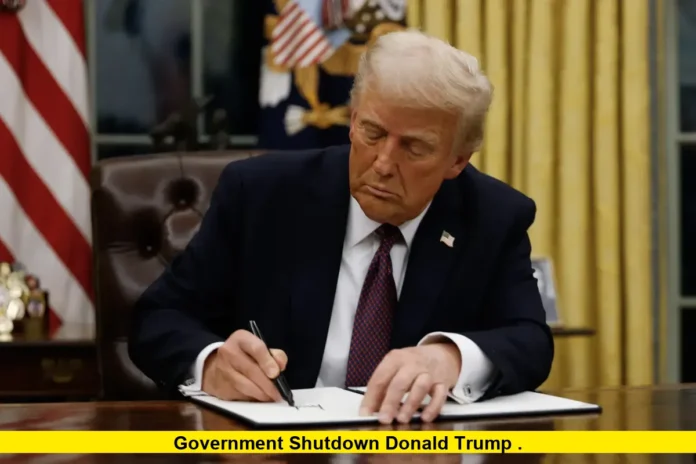

The government shutdown Donald Trump is now one of the longest and most consequential in recent U.S. history. As of October 30, 2025, the federal government has been partially closed for 29 days, with hundreds of thousands of federal workers affected, critical programs suspended, and the economy beginning to feel the strain. The political stalemate shows no immediate sign of resolution, raising deep concerns across Washington and beyond.
How the Government Shutdown Began
The current shutdown began on October 1, 2025, the start of the new fiscal year. Lawmakers failed to agree on a federal spending plan, triggering an automatic halt to many government operations. The conflict centers on major policy differences between the Trump administration and Congress over health care, entitlement funding, and spending caps.
The president has repeatedly called for a “clean” spending bill that maintains his administration’s budget priorities, while congressional Democrats have pushed for modifications to protect federal health programs and restore cuts to Medicaid. Neither side has budged, leading to a full-scale funding impasse.
Key Effects of the Shutdown
The effects of the government shutdown have rippled through nearly every layer of public life:
- Federal Workers: About 750,000 government employees have been either furloughed or required to work without pay. These include air traffic controllers, IRS agents, and members of various security agencies. Many face significant financial hardship as the shutdown drags on.
- Economic Impact: The Congressional Budget Office now estimates the cost to the U.S. economy could reach $7 billion to $14 billion depending on how long the shutdown lasts. Business contracts, research projects, and federal services have all slowed down or stopped entirely.
- Social Programs: Major assistance programs, such as the Supplemental Nutrition Assistance Program (SNAP), are on the verge of running out of funds. Millions of low-income Americans could be affected if new legislation does not pass soon.
- Federal Agencies: Departments such as the Environmental Protection Agency and the National Park Service are operating with skeletal staff. Some have furloughed up to 80–90 % of employees.
- Public Services: Passport processing, national park maintenance, and IRS support lines are all delayed or suspended. For ordinary Americans, the effects are increasingly visible.
Donald Trump’s Role and Response
President Trump has remained firm in his stance, emphasizing fiscal discipline and holding firm on his policy agenda despite public pressure to end the shutdown. He has argued that reopening the government without policy concessions would “reward political obstruction.”
While many of his critics argue that the shutdown is damaging the economy and morale of federal workers, Trump maintains that his administration is “protecting taxpayers” from what he calls “reckless spending.” He has continued his official duties, international visits, and campaign-style events while negotiations in Washington remain at a standstill.
The president also stated this week that the administration is looking for temporary solutions to restore SNAP benefits for November, signaling a narrow but significant effort to mitigate the most visible hardships caused by the shutdown.
Political Standoff in Congress
The Senate and House of Representatives have both failed to pass a compromise measure. Several continuing resolutions have been proposed but repeatedly blocked.
- Democratic lawmakers are pushing for new funding that includes health and welfare protections, as well as climate-related spending that was removed from the latest budget proposal.
- Republican leaders insist on passing a short-term funding bill first, followed by negotiations on individual policy issues.
- Both sides accuse the other of political posturing, and negotiations have stalled multiple times since the shutdown began.
In the meantime, bipartisan pressure is mounting. Business associations, governors, and federal employee unions have all urged lawmakers to reopen the government and resume normal operations before further economic damage occurs.
How the Shutdown Impacts the Economy
The effects of a prolonged shutdown reach far beyond Washington. The longer it continues, the more the ripple effects spread through the economy.
| Sector | Impact of Shutdown | Consequence |
|---|---|---|
| Federal Workforce | 750,000 unpaid or furloughed workers | Missed paychecks, reduced spending power |
| Small Businesses | Delayed loans and contract payments | Slower growth and cash flow issues |
| Economic Growth | GDP loss estimated between $7B–$14B | Lower Q4 growth forecast |
| Social Services | SNAP, WIC, and housing aid delayed | Increased hardship for low-income families |
| Tourism | National parks and museums closed | Regional tourism revenue down |
| Market Confidence | Uncertainty in Washington | Lower investor confidence and spending |
Experts warn that if the shutdown extends into November, quarterly growth could fall significantly, hurting both consumer confidence and the broader financial markets.
Growing Public Pressure
Public frustration is mounting. Federal workers have staged peaceful protests in major cities, demanding back pay and an immediate resolution. Many Americans are calling for both parties to prioritize reopening the government rather than using it as a political tool.
Public opinion polls suggest that the longer the shutdown continues, the more voters may hold both the president and Congress accountable. However, Trump’s core supporters appear to remain loyal, viewing the standoff as part of his broader campaign against wasteful government spending.
Possible Paths to Resolution
Several scenarios could end the shutdown:
- Short-Term Spending Bill: A temporary funding bill (continuing resolution) could reopen the government for 30–60 days while negotiations continue.
- Comprehensive Deal: A full-year budget compromise that includes partial concessions from both parties on health care and welfare spending.
- Executive Action: The president could issue temporary directives to restore limited services or delay certain cuts. However, this option carries political and legal risks.
As of this week, discussions between Senate leaders have reportedly increased, signaling faint progress toward a potential agreement. Still, both parties remain far apart on major issues, making a quick resolution uncertain.
What’s Next for the Trump Administration
For Donald Trump, the political impact of the shutdown is complex. On one hand, it demonstrates his commitment to fiscal discipline and policy consistency. On the other, it exposes his administration to criticism about governance and empathy toward affected workers.
If the shutdown continues into November, it could begin to affect Trump’s approval ratings and strain his relationships within Congress, particularly among moderate Republicans facing pressure from constituents.
Despite these challenges, Trump’s messaging remains consistent: he will not sign a funding bill that, in his view, “undermines responsible spending and national priorities.”
Conclusion
The government shutdown Donald Trump has evolved from a budget dispute into a national test of political endurance and leadership. With billions in economic losses, thousands of families under strain, and federal institutions at risk of dysfunction, the coming days will determine not only how soon the government reopens — but how Americans judge their leaders’ ability to govern effectively.
Stay tuned for continuing updates — and share your views below on how this shutdown has affected your community.