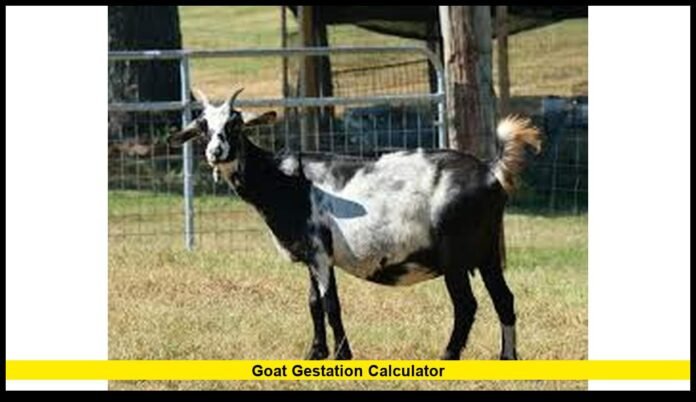

As of November 2025, the goat gestation calculator has become an essential digital tool for farmers, breeders, and homesteaders across the United States. This simple yet highly effective calculator helps predict the expected kidding date (the time a doe will give birth) by using the breeding date as a starting point.
For anyone managing goats — whether a small backyard herd or a commercial operation — knowing the due date is vital for proper preparation, nutrition planning, and safe delivery. The goat gestation calculator provides accuracy, convenience, and peace of mind for every stage of pregnancy management.
What Is a Goat Gestation Calculator?
A goat gestation calculator is a digital tool designed to estimate when a pregnant doe will give birth. By entering the breeding date, the calculator automatically adds the average gestation period of 150 days, giving an approximate due date.
This calculator is now available in multiple forms — including online calculators, farm management software, and mobile apps — making it accessible for both tech-savvy farmers and beginners.
The standard goat gestation period ranges from 147 to 155 days, depending on factors such as breed, age, and health. The calculator simplifies this process by instantly providing an expected date, helping farmers plan for labor, feeding, and veterinary care well in advance.
How the Goat Gestation Calculator Works
Using a goat gestation calculator takes only seconds, yet it can save farmers weeks of uncertainty. Here’s how it works step by step:
- Enter the Breeding Date: The date when the doe was successfully bred, either through natural mating or artificial insemination.
- Automatic Calculation: The tool adds 150 days (the average gestation period for goats).
- Display of Expected Kidding Date: It provides a due date and often includes a range for early or late births (usually ±5 days).
Example:
- Breeding Date: July 1, 2025
- Estimated Kidding Date: November 28, 2025
- Kidding Window: November 25 – December 3, 2025
Having this information allows farmers to schedule veterinary visits, prepare housing, and ensure the doe receives appropriate nutrition as the due date approaches.
Why Every Goat Farmer Should Use a Gestation Calculator
Managing a herd requires timing, organization, and accurate record-keeping. The goat gestation calculator offers several benefits that make it a must-have for modern farming:
- Predictability: Farmers can plan around the expected kidding date with confidence.
- Health Management: Knowing the timeline helps ensure proper diet adjustments, vaccinations, and prenatal care.
- Reduced Stress: With clear expectations, both the doe and farmer are better prepared for delivery.
- Productivity Tracking: Helps with breeding records, milk production planning, and herd management.
- Cost Efficiency: Prevents losses related to premature or unattended births.
For goat owners in the U.S., where both small-scale and commercial goat farming continue to grow, this calculator is now considered an essential management tool.
Average Gestation Periods by Goat Breed
While the average gestation period for most goats is about 150 days, some breeds may vary slightly. Understanding these differences helps fine-tune the use of the calculator.
| Goat Breed | Average Gestation Period (Days) | Notes |
|---|---|---|
| Alpine | 150 | Common dairy breed with stable gestation cycles. |
| Boer | 149–152 | Meat breed, often delivers within this window. |
| Nubian | 150–153 | Known for slightly longer gestation. |
| Nigerian Dwarf | 147–150 | Shorter cycle due to smaller body size. |
| LaMancha | 150 | Consistent gestation; minimal variation. |
| Saanen | 149–151 | Productive dairy breed with steady breeding patterns. |
Although calculators typically use 150 days as the baseline, it’s wise to start preparing several days before the earliest expected date.
The Rise of Digital Tools in Goat Farming
Modern farming has embraced technology, and the goat gestation calculator is part of that shift. Over the past few years, mobile-friendly applications and integrated farm management platforms have made goat breeding more efficient than ever.
Some of the latest tools available in 2025 offer features beyond simple due-date calculation. These include:
- Herd management integration: Store breeding and kidding records for multiple does.
- Custom alerts: Get notifications before the expected due date.
- Health tracking: Record veterinary visits and medication schedules.
- Data syncing: Access the same records across smartphones, tablets, and computers.
Farmers across the U.S. — from homesteads in Texas to dairy farms in Wisconsin — are increasingly relying on such tools to manage their livestock efficiently.
Importance of Accurate Breeding Records
For a goat gestation calculator to be effective, accurate breeding records are essential. A small error in recording the breeding date can shift the expected due date by days or even weeks.
To ensure accuracy:
- Record the exact breeding or insemination date immediately.
- Note the buck’s identification for lineage tracking.
- Use consistent record-keeping methods, whether digital or paper logs.
- If multiple does are bred in the same period, label them clearly to prevent confusion.
Many farmers now prefer using digital herd management tools that automatically log these details and sync them with the gestation calculator for seamless tracking.
Preparing for Kidding: What to Do Before the Due Date
Once the calculator provides a kidding estimate, farmers can take steps to ensure the doe’s safety and comfort. Preparation typically begins 3–4 weeks before the expected due date.
Here’s what to focus on:
- Nutrition:
Increase the doe’s energy intake with quality hay, grains, and supplements. Avoid overfeeding, which can cause birthing complications. - Housing:
Clean and sanitize the kidding area. Provide dry bedding, good ventilation, and privacy for the doe. - Health Checks:
Schedule a vet visit to ensure the pregnancy is progressing normally. Check for parasite control and administer necessary vaccinations. - Supplies:
Keep a kidding kit ready — gloves, towels, iodine, clean scissors, feeding bottles, and emergency supplies. - Observation:
As the due date nears, monitor the doe for signs of labor: restlessness, discharge, and udder enlargement.
Proper preparation can make the difference between a stressful delivery and a smooth one.
Signs That Labor Is Near
Farmers using a goat gestation calculator should start watching for these signs as the predicted date approaches:
- Restlessness: The doe may paw the ground or separate herself from the herd.
- Swollen Vulva: Increased swelling and discharge indicate labor is near.
- Full Udder: Milk production peaks about 1–2 days before kidding.
- Mucus Plug Release: A clear sign that labor will begin soon.
- Change in Appetite: Many does stop eating right before giving birth.
Knowing these signs, combined with the calculator’s timeline, helps farmers ensure someone is present during delivery to assist if needed.
Accuracy and Limitations
While highly reliable, even the best goat gestation calculator provides an estimate — not an exact prediction. Every doe is unique, and factors like breed size, number of kids, diet, and weather can slightly shift the due date.
In general:
- Most goats kid within five days of the predicted date.
- Twin pregnancies often result in slightly shorter gestation.
- Older does may carry slightly longer than average.
The calculator should be used as a guide, not an absolute rule. Regular observation remains key to successful kidding management.
Benefits Beyond Kidding Prediction
Beyond due-date tracking, using a goat gestation calculator supports broader herd management goals. Farmers use the data to:
- Schedule milk production cycles after birth.
- Plan rebreeding intervals for higher efficiency.
- Maintain records for genetic selection and performance tracking.
- Ensure nutritional timing aligns with pregnancy and lactation stages.
For commercial operations, these tools help maintain productivity while ensuring animal welfare remains a top priority.
Trusted Online Goat Gestation Calculators
Farmers in 2025 have several reliable online calculators and apps to choose from. These platforms are designed for ease of use and accuracy, supporting all common U.S. goat breeds.
Some popular options include:
- FarmTime Tools – A free online calculator with built-in reminders.
- GoatKeeper Pro App – Offers herd tracking, medical logs, and gestation predictions.
- AgriSmart Systems – Integrates kidding prediction with weather-based farm alerts.
Each platform follows the same core principle — using the breeding date to calculate a 150-day gestation while offering extra features for organization and planning.
The Future of Goat Breeding and Technology
As U.S. goat farming continues to expand, digital innovation will play an even bigger role. Future goat gestation calculators may integrate AI to analyze breeding history, environmental factors, and nutrition to predict kidding dates with near-perfect accuracy.
Farmers can expect tools that automatically connect to wearable sensors for goats, tracking temperature changes and early signs of labor in real time. This kind of precision will make herd management more efficient and humane.
Final Thoughts
The goat gestation calculator has become one of the most practical innovations in modern livestock management. By providing quick and reliable due-date estimates, it allows goat owners to plan ahead, reduce stress, and improve the health outcomes of both does and kids.
For U.S. farmers, these calculators are more than just convenience tools — they represent a smarter, more data-driven approach to animal care and productivity.
Do you use a goat gestation calculator on your farm or homestead? Share your experiences and tips in the comments below.