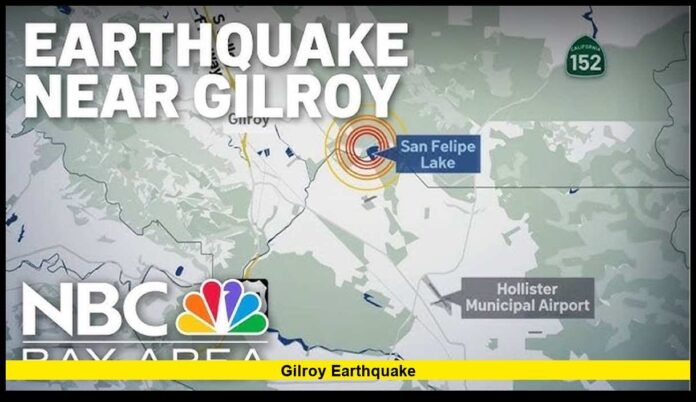

The gilroy earthquake that shook parts of the South Bay early Wednesday has drawn widespread attention due to its strength, timing, and the number of people who felt it across multiple counties. The quake struck shortly after sunrise, creating a sharp jolt that reached communities well beyond Santa Clara Valley. Verified monitoring reports confirmed the magnitude, location, and aftershock sequence within minutes, offering a clear and factual picture of what unfolded.
This event has become one of the most discussed regional quakes of the month, not because of damage but because of how widely it was felt and how quickly residents reacted. With updates continuing through the day, this detailed report breaks down what residents experienced, the scientific data confirmed so far, and what the region can expect next.
Morning Shaking That Captured Immediate Attention
The morning began with a sudden burst of movement that startled many who were starting their day. The quake struck at 6:16 a.m., delivering a short but sharp jolt. Most described it as a quick hit — strong enough to rattle windows, shake wall hangings, and wake light sleepers.
Within moments, monitoring agencies confirmed the magnitude at 4.0. Early readings had briefly displayed a higher number, but those stabilized as additional sensors verified the data. The epicenter was located several miles east of the city, placing it along a known stretch of active faulting.
The shaking wasn’t isolated to Gilroy. Reports came in from residents across the Bay Area, including:
- South San Jose
- Morgan Hill
- Santa Cruz County
- Campbell
- Cupertino
- Palo Alto
The widespread reach aligned with the earthquake’s shallow depth, which tends to amplify surface-level shaking over a larger radius.
Follow-Up Aftershocks and What They Signify
Minutes after the initial tremor, two aftershocks struck the same region. Both were smaller, but noticeable to those living near the epicenter.
- Aftershock 1: 2.7 at 6:18 a.m.
- Aftershock 2: 3.6 at 6:20 a.m.
The quick sequence was typical of earthquakes along this segment of Calaveras Fault. Aftershocks following a main jolt generally reflect the fault adjusting after the initial slip. In this case, they remained modest and did not indicate a developing swarm.
No additional significant quakes were confirmed throughout the day, pointing to a short-lived event rather than an extended sequence.
Why This Particular Quake Was Felt So Widely
While magnitude 4.0 quakes are not uncommon in California, this one stood out because of how many people felt it. Several factors contributed to this widespread perception.
Shallow Depth
The quake occurred at a shallow depth, which allows seismic waves to travel along the surface more intensely. This type of shaking tends to extend farther from the epicenter and deliver a more abrupt sensation.
Fault Line Orientation
The fault segment east of Gilroy sits within an active corridor that connects to several other well-known faults in Northern California. When motion occurs here, it often transmits energy efficiently across the region.
Timing
Early morning hours amplify seismic awareness. The quiet environment allows people to feel motion more sharply than during daytime noise and activity.
Together, these factors created a situation where many across the region felt the quake, even those living 30–40 miles away.
How the Gilroy Earthquake Compares to Recent Bay Area Activity
This week marked an uptick in seismic movement across Northern California. In addition to the Gilroy quake, the Bay Area recorded:
- A moderate quake in Santa Rosa earlier this week
- Dozens of smaller quakes in the San Ramon Valley cluster
- Light shaking near Hollister and Pinnacles on multiple days this month
The Gilroy event fits within this broader pattern of fall seismic activity. While none of these quakes signal a larger event ahead, they collectively highlight the region’s constant tectonic motion.
Recent Activity Snapshot (Verified This Week)
| Region | Magnitude | Date | Notes |
|---|---|---|---|
| East of Gilroy | 4.0 | Nov. 27 | Felt widely across South Bay |
| Santa Rosa | 4.1 | Earlier this week | Strong jolt, North Bay reports |
| San Ramon | Multiple small events | Ongoing Nov. | Shallow cluster |
| Hollister | 2–3 range | Multiple days | Normal pattern |
Scientists emphasize that occasional moderate shaking is normal for these fault lines. The Gilroy event serves as a reminder rather than a warning sign.
Community Impact and Local Response
Despite the early-morning intensity, the quake caused no verified structural damage. Residents experienced jarring movement, but inspections through the morning confirmed that homes, businesses, and public buildings remained structurally sound.
What People Reported
Residents described:
- Rattling windows
- A loud rumble
- Sharp jolt lasting 1–2 seconds
- Pets reacting immediately
- Hanging objects swaying
Some woke up instantly from the sudden shake. Others were preparing for work or school and experienced the jolt while standing or walking.
Emergency Services Activity
Local emergency departments monitored the situation but reported no injury-related calls tied to the quake. Fire crews conducted quick routine assessments, and police departments confirmed no disruptions to response operations.
Schools and Businesses
Morning school schedules continued without change. Businesses opened normally. Public transportation, including Caltrain, VTA light rail, and regional bus lines, operated on schedule.
At San Jose Mineta International Airport, inspections confirmed:
- No runway issues
- No terminal damage
- No flight delays tied to the quake
The quake’s limited impact reinforced the region’s preparedness for moderate seismic events.
Understanding This Part of the Fault System
The area east of Gilroy sits along the Calaveras Fault, a well-documented strike-slip fault that forms part of the larger San Andreas system. It is among the more active faults in Northern California and produces moderate quakes regularly.
Characteristics of This Fault Segment
- Frequent moderate quakes
- Long, shallow rupture potential
- Part of a network connected to Hayward and San Andreas faults
- High stress transfer during active periods
While the calaveras segment does not commonly produce large earthquakes, it remains capable of moderate activity that can be felt across several counties.
The gilroy earthquake reflects the kind of motion historically seen in this area — short, sharp events that release localized stress.
Why Preparedness Remains Essential
Even though Wednesday’s quake caused no damage, events like this reinforce the importance of maintaining readiness. Californians living near active fault lines benefit from consistent preparedness habits.
Below are reminders that professionals recommend reviewing after any noticeable tremor:
Safety Checklist for Residents
- Inspect your home for fallen items.
- Confirm emergency kits are stocked with water, food, and batteries.
- Check that heavy furniture is secured to walls.
- Ensure gas and water shutoff tools are accessible.
- Discuss household communication plans.
These steps can reduce risk during future events and contribute to family safety.
Public Reaction Across Social Platforms
Shortly after the main jolt, social platforms filled with posts from residents describing their experience. Many shared the moment their homes shook, while others checked whether the movement had been felt by friends or coworkers in other counties.
Common sentiments included:
- Surprise at how strong and fast the jolt felt
- Relief that it passed quickly
- Curiosity about whether more aftershocks would follow
- Appreciation for the rapid alert notifications
The online response demonstrated how quickly communities come together during regional events, helping each other confirm details until official information is released.
What to Expect Moving Forward
While aftershocks are always possible, the pattern following Wednesday morning’s activity suggests a short-lived event rather than a prolonged sequence. Aftershocks generally decrease in size and frequency over several hours or days.
Experts note that California experiences thousands of small earthquakes throughout the year. Most go unfelt. However, moderate events like this one serve as reminders that the region remains tectonically active.
For residents, the most important action moving forward is maintaining earthquake readiness — not out of alarm, but out of steady, practical preparation.
Final Perspective on This Week’s Event
The gilroy earthquake delivered a sharp wake-up call for many across the South Bay and beyond. While it produced no damage, its strength and reach highlighted the importance of awareness and preparedness in a region defined by active geology. With verified data now available and the sequence stabilizing, residents can move forward with a clear understanding of what occurred and how quickly the region responded.
If you felt the shaking or have observations to share about the morning jolt, feel free to add your thoughts below and stay informed as new updates emerge.