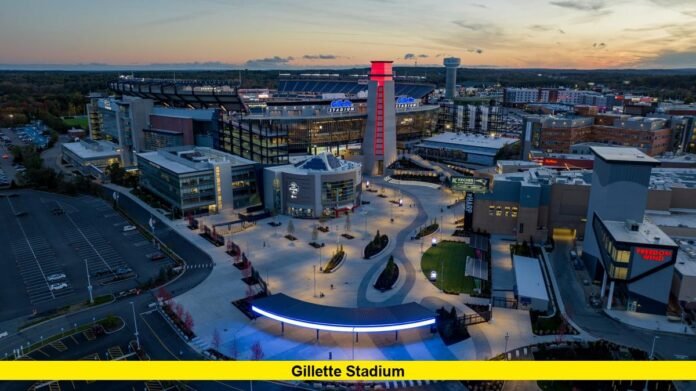

The newly completed commuter rail platform at Gillette Stadium is now open to riders, introducing a series of major upgrades designed to improve accessibility, reduce boarding times, and support the growing volume of passengers who travel to the area for both everyday commuting and large-scale events. This long-awaited enhancement marks a notable investment in regional transit infrastructure and is already shaping how thousands of people move through Foxborough.
A Modern Platform Designed for Today’s Riders
The upgraded platform represents a complete transformation of the station layout, expanding boarding capacity and eliminating previous bottlenecks caused by limited access points. Riders now have access to a full-length, high-level platform, which aligns with every train door to allow seamless boarding from end to end. This is especially important for event days, when trains arrive packed and large groups of passengers need to get on and off with minimal delay.
Before this upgrade, boarding was often congested. Only a handful of train doors aligned with the older platform design, forcing riders to cluster near specific cars and slowing down the movement of crowds. The new design opens all doors simultaneously, more than doubling the effective boarding surface and creating a smoother overall flow.
Built with Accessibility at the Center
A core focus of the new platform is accessibility. Level boarding eliminates the need for step boxes, lifts, and awkward car-to-platform transitions. Passengers using wheelchairs, mobility aids, walkers, or strollers now have direct, even access across every train car. This improved accessibility supports a broader regional push toward modern, inclusive transit infrastructure.
The platform also features tactile safety strips, wider waiting zones, and newly installed guidance markers to assist travelers with visual impairments. Lighting has been upgraded to enhance visibility during early morning and late evening travel, and newly adjusted signage offers clearer directions between the platform, parking lots, and the stadium’s pedestrian walkways.
A Strategic Upgrade for a Growing Regional Hub
Gillette Stadium has long been more than a sports venue. It’s a major entertainment and tourism destination, drawing millions of visitors throughout the year. From professional football games and global concert tours to seasonal festivals and international competitions, the surrounding area has become one of the region’s largest traffic generators. The new commuter rail platform is designed to meet both the current demand and the dramatic increases expected over the next several years.
Meeting the Surge of 2026 Events
The timing of the platform’s completion is especially important. The region is preparing for an exceptionally busy 2026, with major international sports events and high-attendance stadium programs expected to draw record-breaking crowds. Transportation planners deliberately accelerated the project to ensure that rail service could help reduce roadway congestion, shorten travel times, and ease the strain on local infrastructure.
With the platform now open, transit providers are better positioned to run additional trains, increase frequency during events, and move large numbers of passengers without the delays that plagued earlier years. The full-length design allows continuous, rapid boarding and reduces the spacing needed between trains, making it easier to keep service moving on busy days.
Supporting Daily Commuters Beyond Event Season
While event days often draw the most attention, the platform upgrade is equally beneficial for everyday commuters. Foxboro Station serves a growing number of workers traveling to and from Boston and other regional employment centers. The improvements offer:
- More reliable boarding during peak hours
- Reduced train dwell times
- Safer and more efficient platform operations
- An overall smoother travel experience
These enhancements contribute to long-term ridership growth and support economic development throughout the region.
How the New Platform Improves Passenger Experience
The new platform wasn’t designed as a cosmetic addition — it directly addresses years of traveler feedback and operational challenges. The upgrades provide several practical, measurable benefits.
1. Faster Boarding and Shorter Train Delays
The most immediate improvement is speed. With level boarding and every door available:
- Trains spend less time stopped
- Platforms clear faster
- Service becomes more predictable
This is particularly useful during large events when thousands of people exit the stadium at once. The ability to load multiple trains in quick succession helps prevent crowd buildup and keeps passengers moving safely.
2. Enhanced Crowd Management
The expanded platform width gives security teams, station staff, and event operations personnel more room to manage crowds. Pedestrian flow is more organized, helping reduce the jamming that previously occurred when passengers attempted to reach a handful of boarding zones at once.
Stadium officials have noted that the new layout allows for better coordination between pedestrian walkways and platform entrances, leading to a smoother transition from the stadium environment to the rail system.
3. Improved Comfort and Safety
The new platform includes a number of passenger-focused improvements:
- Brighter LED lighting for nighttime visibility
- Non-slip surfaces to reduce fall risk
- Updated wind protection in waiting areas
- Enhanced speaker systems for clearer announcements
- Emergency call stations placed strategically along the platform
Together, these upgrades foster a safer and more welcoming environment for travelers.
4. Better Integration With Stadium Operations
Because the platform sits close to the main pedestrian routes leading into and out of the stadium, riders benefit from a streamlined connection between train service and stadium entrances. The redesign improves crowd routing, reduces backtracking, and maintains separation between vehicular and pedestrian traffic during peak hours.
Why the Upgrade Matters for Regional Transit
Beyond its immediate benefits, the new platform is a critical component of regional transportation planning. As more communities look to reduce highway congestion and promote sustainable travel, rail infrastructure investments like this become key drivers of long-term success.
A Step Toward Modernizing Commuter Rail
The platform aligns with a broader regional shift toward modern, high-efficiency rail systems. Level boarding is a common standard in newer transit networks, and its introduction here is viewed as a step toward improving regional service overall.
Transportation planners anticipate that this type of infrastructure could eventually support:
- More consistent train frequencies
- Faster travel due to reduced station dwell times
- Greater reliability during peak demand periods
- Better integration with other transit services
The improvements position the station as a model for future upgrades across the system.
Reducing Traffic and Environmental Impact
With more people choosing the train over driving, the region is better equipped to reduce emissions and roadway congestion. Large stadium events often lead to hours of traffic on surrounding roads. The new platform encourages rail usage by making the experience faster, safer, and more convenient.
This shift supports sustainability goals and provides a practical transportation alternative for visitors unfamiliar with the area.
Looking Ahead: What Riders Can Expect
The opening of the new platform marks a notable milestone, but it is also the beginning of a longer-term plan to strengthen the station’s overall capacity. Riders can expect several ongoing developments as transit agencies analyze travel patterns and adjust schedules based on demand.
Potential for Increased Service Frequency
With boarding times reduced and platform movement improved, rail operators may be able to add more trains during peak periods, particularly before and after major stadium events.
Opportunities for Additional Upgrades
Future enhancements could include:
- Expanded passenger amenities
- Additional shelters
- Larger waiting areas
- More integrated wayfinding systems
- Technology upgrades such as real-time crowd notification tools
These additions would further improve the passenger experience and support increasing ridership.
A More Reliable Travel Option All Year Long
Even outside of stadium event days, daily commuters will benefit from:
- Improved operational consistency
- Shorter delays
- Clearer boarding zones
- A more comfortable waiting environment
This helps strengthen public confidence in commuter rail as a reliable alternative to driving.
Why This Upgrade Matters to the Community
The new platform is more than a construction project — it is a long-term investment in mobility, economic opportunity, and the overall quality of life for residents and visitors. Improved accessibility ensures that people of all abilities can move through the station with dignity and ease. Faster boarding helps reduce stress for commuters rushing to work. Enhanced safety features provide peace of mind for families traveling to events.
This platform will also play a critical role in supporting the region during the massive events scheduled for 2026, when international visitors, sports fans, and concertgoers will depend heavily on public transit to reach the stadium. The addition of the new commuter rail platform has already become a significant talking point among local residents and travelers who recognize how transformative such infrastructure can be.
The project’s success demonstrates how strategic transit upgrades can serve both local communities and global-scale events, ensuring that the region is prepared for the heavy demand ahead. With smooth operations and a modernized layout, the new rail platform at this major hub is already proving to be a valuable asset for daily riders as well as visitors from around the world.
Share your thoughts below and let others know how the new platform has improved your travel experience.