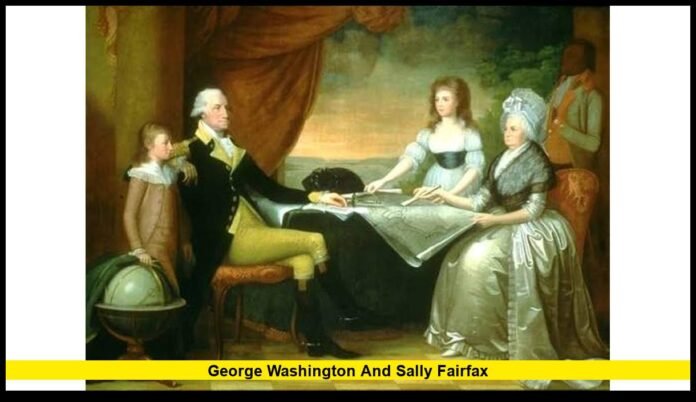

George Washington and Sally Fairfax remain a subject of strong public interest in 2026 as Americans continue exploring the personal life of the nation’s first president. Renewed attention from historical films, museum exhibits, and educational discussions has introduced many people to the story of Sally Fairfax, an influential woman in Washington’s early life. Although historians continue to study their surviving correspondence, the historical record remains consistent: Washington admired Sally Fairfax deeply, but there is no verified evidence that the relationship became a romantic affair. Instead, their connection offers a fascinating look into the emotions, friendships, and social customs of colonial Virginia.
Why George Washington and Sally Fairfax Continue to Draw Attention
George Washington is remembered as the commander of the Continental Army, the president of the Constitutional Convention, and the first President of the United States. Yet his life before those achievements continues to attract growing interest.
Many Americans are curious about the young Washington before he became a national hero. Historians have spent decades examining the people who influenced him during his formative years, and Sally Fairfax remains one of the most important figures in that story.
Recent historical productions and public exhibits have introduced this relationship to a wider audience. While no new historical discoveries have changed the accepted facts, renewed public attention has encouraged many readers to revisit the surviving letters exchanged between Washington and Sally Fairfax.
Who Was Sally Fairfax?
Sally Fairfax was born Sarah Cary into one of Virginia’s respected colonial families. She received an education uncommon for many women of her era and became known for her intelligence, grace, and interest in literature and conversation.
She married George William Fairfax, a wealthy Virginia landowner who became one of George Washington’s closest friends.
The Fairfaxes lived at Belvoir Plantation on the Potomac River, only a short distance from Mount Vernon. Because of this proximity, Washington spent considerable time with the Fairfax family throughout his early adulthood.
Sally Fairfax was admired within Virginia society not only for her social standing but also for her thoughtful personality and cultural interests. Those qualities helped create a friendship with Washington that historians continue to examine today.
How George Washington Entered the Fairfax Circle
Washington became closely connected to the Fairfax family during the early 1750s.
After the death of his half-brother Lawrence Washington in 1752, George assumed greater responsibilities at Mount Vernon while continuing his work as a surveyor and militia officer.
The Fairfax family played a significant role in his personal and professional growth.
Their household exposed Washington to:
- Refined social customs
- Political discussions
- Literature and philosophy
- Influential colonial leaders
- Formal etiquette among Virginia’s elite
William Fairfax served as a trusted adviser, while Sally Fairfax became one of the people Washington admired most during these important years of his life.
A Friendship That Left a Lasting Impression
Historical records show that Washington visited Belvoir Plantation regularly.
The gatherings included dinners, horseback riding, dancing, music, card games, and conversations that reflected the culture of Virginia’s upper class.
Washington was still developing his confidence and public reputation. Spending time with educated and influential families helped shape many aspects of his character.
Sally Fairfax appears to have made a particularly strong impression on him. Their surviving correspondence suggests mutual respect and intellectual companionship that extended beyond ordinary social interactions.
Although historians cannot know every detail of their conversations, the letters indicate that Washington valued her opinions and friendship.
The Letter That Sparked Centuries of Debate
One document continues to attract more attention than any other.
On September 12, 1758, George Washington wrote a letter to Sally Fairfax that has fascinated historians for generations.
By that point, Washington had already become engaged to Martha Dandridge Custis.
Within the letter, Washington expressed deeply personal emotions and reflected on memories they had shared together.
His language included references to love, affection, and treasured moments from the past.
Because the letter was addressed directly to Sally Fairfax, many historians believe it reveals an emotional attachment that went beyond ordinary friendship.
However, Washington never directly stated that he loved Sally Fairfax in the way modern readers sometimes assume. The wording remains carefully written, leaving room for interpretation while clearly showing that she occupied an important place in his thoughts.
The letter survives today as one of the most closely examined pieces of personal correspondence from colonial America.
Did George Washington Love Sally Fairfax?
This question continues to generate discussion among historians and readers alike.
The available historical evidence confirms that Washington admired Sally Fairfax and expressed strong emotions in his letters.
At the same time, the historical record does not establish that they were involved in a romantic relationship.
No surviving documents prove that:
- They had an affair.
- They planned a future together.
- They exchanged secret romantic letters.
- They violated the expectations of colonial society.
Instead, historians generally describe their relationship as one built upon friendship, admiration, and emotional closeness.
Washington’s personality also provides important context.
Throughout his life, he earned a reputation for discipline, honor, and careful attention to public conduct. Those qualities make it difficult for historians to conclude that he pursued a secret relationship with the wife of one of his closest friends without clear evidence.
Read More – Did George Washington Have a British Accent? Here’s What Historians Believe Today
George William Fairfax’s Role
An important part of this story often receives less attention.
George William Fairfax remained one of Washington’s trusted companions for many years.
The friendship between the two men extended beyond social visits.
They shared interests in land management, politics, agriculture, and colonial affairs.
Washington maintained his friendship with William Fairfax throughout their lives.
This enduring relationship further supports the historical view that Washington respected the Fairfax family and understood the importance of loyalty within Virginia society.
The Marriage That Changed Washington’s Life
On January 6, 1759, George Washington married Martha Dandridge Custis.
The marriage marked the beginning of a partnership that lasted for nearly four decades.
Martha brought experience, stability, and significant wealth to the marriage. Together they transformed Mount Vernon into one of the leading estates in colonial America.
Their home became a center of political, agricultural, and social activity.
Throughout the Revolutionary War and Washington’s presidency, Martha remained an important source of support.
Although historians continue discussing Washington’s earlier admiration for Sally Fairfax, the surviving evidence demonstrates that his marriage to Martha became one of the defining relationships of his life.
Why So Few Letters Survive
One reason the story remains surrounded by questions is the limited number of surviving documents.
Several letters written by George Washington still exist.
Most replies from Sally Fairfax have not survived.
The loss of these letters leaves historians with only part of the conversation.
Without Sally’s complete correspondence, researchers cannot determine exactly how she interpreted Washington’s words or how she described their friendship.
The disappearance of personal papers was common during the eighteenth century.
Letters were often discarded, destroyed, or lost through inheritance, relocation, fires, and changing family ownership.
As a result, historians must rely on the documents that remain available today.
The 1798 Letter and Washington’s Reflections
Another important letter appeared decades later.
In 1798, George Washington wrote once again to Sally Fairfax after many years had passed.
The letter reflected warmly on earlier memories and acknowledged the happiness he associated with the time they spent together during their youth.
Many readers interpret these remarks as evidence that Washington never forgot his friendship with Sally Fairfax.
Others believe he was expressing appreciation for an important chapter of his early life rather than lingering romantic feelings.
Because the wording allows different interpretations, historians continue approaching the letter with caution while recognizing its historical importance.
Separating Historical Fact from Popular Myths
Over time, numerous stories have appeared online about George Washington and Sally Fairfax.
Some articles exaggerate the available evidence.
Others present speculation as established history.
The historical record remains much more straightforward.
The following facts are well supported:
| Historical Record | Verified Status |
|---|---|
| George Washington knew Sally Fairfax well | Yes |
| They exchanged personal letters | Yes |
| Washington expressed deep admiration | Yes |
| Sally Fairfax remained married to George William Fairfax | Yes |
| Washington married Martha Dandridge Custis | Yes |
| Evidence confirms a romantic affair | No |
| Surviving documents prove mutual romantic declarations | No |
Understanding these distinctions helps readers appreciate the genuine history rather than fictional interpretations.
How Museums Present the Story Today
Historic sites associated with George Washington continue to present the relationship responsibly.
Rather than encouraging sensational claims, museum exhibits explain that Washington’s letters reveal sincere emotion while stopping short of proving a romantic relationship.
This balanced interpretation reflects the consensus among modern historians.
Visitors are encouraged to read Washington’s own words and understand them within the customs of eighteenth-century Virginia rather than through modern expectations.
Why Americans Still Find the Story Compelling
George Washington often appears in history books as a confident military commander and national leader.
His correspondence with Sally Fairfax reveals another side of his personality.
Readers discover a younger man experiencing ambition, uncertainty, admiration, friendship, and personal reflection.
Those qualities make Washington feel more relatable without changing his place in American history.
The story also illustrates the values that shaped colonial society.
Marriage, friendship, family honor, and public reputation carried enormous importance during the eighteenth century.
Understanding those expectations helps explain why historians remain careful about drawing conclusions that extend beyond the available evidence.
The Historical Legacy of George Washington and Sally Fairfax
More than 250 years after their friendship began, George Washington and Sally Fairfax continue to represent one of the most intriguing personal stories from America’s colonial period.
Their surviving letters provide a rare opportunity to examine Washington’s private thoughts before he emerged as the leader who guided the nation through war and the creation of a new government.
While many questions will likely remain unanswered, the historical evidence paints a clear picture of a meaningful friendship built on admiration and respect.
That enduring connection continues to interest historians, educators, and readers because it reminds us that even the most celebrated leaders experienced complex personal relationships long before history remembered them as national icons.
The story has become an important part of understanding Washington’s early life, offering valuable insight into the people who influenced his character, ambitions, and emotional development during the years that shaped his remarkable future.
What are your thoughts on the friendship between George Washington and Sally Fairfax? Share your perspective in the comments and stay connected for more stories from American history.