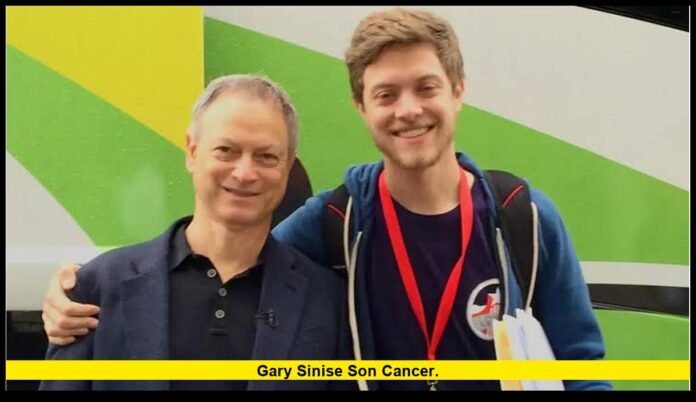

The Gary Sinise son cancer story is a deeply personal account of a family’s fight against a rare and aggressive cancer. McCanna Anthony “Mac” Sinise, the son of actor Gary Sinise, died on January 5, 2024, at the age of 33 after battling chordoma for more than five years. His diagnosis in 2018 changed the lives of his parents and sisters, bringing years of medical treatment, difficult decisions, and emotional challenges.
Mac was a talented musician and composer who continued pursuing his creative ambitions even as cancer increasingly affected his physical abilities. His father shared details of the family’s experience through public tributes and, most recently, his memoir, Graceful Warrior: The True Story of a Son, a Father, and a Family Who Carried Each Other Through, released on November 10, 2026.
The story of Mac Sinise is not only about the devastating effects of cancer. It also highlights the importance of family support, faith, perseverance, and the memories that remain after losing someone to a serious illness.
Who Was Mac Sinise, Gary Sinise’s Son?
Mac Sinise was born in 1990 to Gary Sinise and his wife, actress Moira Harris. He grew up alongside his two sisters, Sophie and Ella, in a family that valued creativity, close relationships, and helping others.
While his father became widely recognized for acting roles in films such as Forrest Gump and Apollo 13, Mac developed his own interests in music. He studied at the University of Southern California’s Thornton School of Music and pursued work as a musician, composer, and recording artist.
Music remained an important part of his identity throughout his life. Mac played several instruments and developed original compositions that reflected his creative interests.
He also contributed to his father’s charitable work. In 2017, he joined the Gary Sinise Foundation, supporting projects connected to the organization’s mission of serving military veterans, service members, first responders, and their families.
His work combined his interest in music with a desire to contribute to something meaningful. However, his life took a dramatic turn when doctors diagnosed him with chordoma the following year.
When Was Mac Sinise Diagnosed With Cancer?
Doctors diagnosed Mac with chordoma on August 8, 2018, when he was 27 years old.
The diagnosis followed a period of persistent pain that had initially been associated with an earlier tailbone injury. The underlying problem proved to be far more serious than the family had expected.
Chordoma is a rare cancer that develops in bones along the spine or at the base of the skull. Because these areas contain important nerves and other sensitive structures, tumors can create significant medical complications.
Mac’s diagnosis also came during a difficult time for the family because his mother was dealing with breast cancer. Moira Harris received a stage 3 breast cancer diagnosis in June 2018 and underwent extensive treatment.
Facing two serious illnesses within a short period placed enormous pressure on the family. Gary had to help his wife navigate her treatment while supporting his son through a newly diagnosed cancer.
The family hoped that medical treatment would allow both of them to recover. Although Moira’s breast cancer treatment was successful, Mac’s illness followed a much more difficult course.
What Is Chordoma, the Rare Cancer That Affected Mac Sinise?
Chordoma is an uncommon cancer that develops from remnants of the notochord, a structure involved in the development of the spine before birth.
It most often appears near the skull base, along the spine, or in the sacrum, which sits at the bottom of the spine near the tailbone.
Although chordomas frequently grow slowly, their location can make them dangerous. A tumor can press against nearby nerves, damage surrounding structures, and cause significant pain or disability.
Common symptoms depend on where the tumor develops. They may include persistent pain, headaches, numbness, weakness, or problems involving bladder and bowel function.
Mac’s cancer affected the sacral region. The location contributed to the complexity of his treatment and the physical challenges he experienced as the disease progressed.
Doctors typically evaluate chordoma patients using imaging, tissue analysis, and specialist assessments. Treatment may involve surgery, highly focused radiation therapy, and additional approaches depending on the tumor’s characteristics.
Removing a chordoma completely can be difficult because surgeons must consider the surrounding nerves and other vital structures. Even after treatment, the cancer can return.
Mac’s experience illustrates these challenges, but individual outcomes vary. His illness should not be viewed as a prediction of what will happen to every person diagnosed with chordoma.
Mac Sinise’s Cancer Treatment and Medical Challenges
Following his diagnosis, Mac underwent surgery to remove the initial tumor in September 2018. His family hoped the procedure would help control the disease and allow him to return to his normal activities.
However, a follow-up scan in May 2019 revealed that the cancer had returned. The recurrence marked the beginning of further medical challenges and additional treatment.
Mac underwent multiple spinal operations and explored numerous treatment options during his illness. His family continued searching for ways to control the cancer while helping him manage its effects.
Over time, the disease and complications associated with treatment increasingly affected his mobility. He eventually became paralyzed from the chest down and required a wheelchair and substantial assistance.
These changes represented a profound adjustment for someone whose life had previously revolved around music, independent movement, and creative work.
Despite his physical limitations, Mac continued looking for ways to enjoy life. He remained interested in music, spent time with loved ones, and pursued personal activities whenever his condition allowed.
Gary later described the years of treatment as a period marked by uncertainty and repeated setbacks. The family continued hoping for improvement, even when the medical situation became increasingly difficult.
Mac’s experience also demonstrated how a rare cancer can affect an entire household. Medical appointments, surgeries, rehabilitation, and caregiving became central parts of the family’s daily life.
How Gary Sinise Supported His Son During His Cancer Battle
Gary Sinise devoted considerable time to caring for Mac as the cancer progressed. The actor has spoken about the difficulty of watching his son endure years of treatment and physical decline.
In 2020, Sinise stepped away from regular acting work to prioritize his family. His decision reflected the growing demands of caring for Mac and supporting Moira through her own health challenges.
The experience changed his daily responsibilities. Rather than concentrating primarily on acting projects, he spent more time managing appointments, helping his family, and being present during difficult periods.
Sinise had spent years supporting veterans and military families through his foundation. Yet facing cancer within his own family brought an intensely personal dimension to his understanding of hardship.
He also tried to maintain meaningful moments with Mac despite the circumstances. Music offered one way for father and son to connect, and their shared experiences became an important part of Mac’s final years.
Throughout the illness, the family continued to support Mac’s interests and encourage him to pursue projects that mattered to him.
Their experience was not without grief or uncertainty. Still, Gary has emphasized the importance of remaining close as a family and finding strength in the time they had together.
Mac Sinise’s Final Days and Death
Mac Sinise died on January 5, 2024, at 33 years old.
In his memoir, Graceful Warrior, Gary describes the final hours of his son’s life and the circumstances that led the family to gather at the hospital.
During the early hours of January 5, Mac lost the ability to breathe independently and required mechanical assistance. His condition continued to deteriorate, and Gary realized that his son might not recover.
He contacted family members and asked them to come to the hospital. As relatives arrived, they gathered around Mac during an extraordinarily painful period.
A priest administered the last rites. The family held Mac’s hands, prayed together, and remained beside him.
Although doctors indicated that Mac might no longer be able to hear those around him, Gary believed his son understood that his loved ones were present.
Mac died at 3:25 p.m. with his family surrounding him.
Gary later described the experience as difficult to comprehend. After years of supporting his son through treatment, he faced the loss he had spent so long hoping to prevent.
The family announced Mac’s death publicly in February 2024. Gary’s tribute described his son’s courage, faith, musical talent, and determination throughout his illness.
His death marked the end of a long medical struggle, but it did not end the family’s connection to his work or memory.
Gary Sinise’s Memoir Shares New Details About His Son’s Illness
One of the latest developments in the story is the publication of Gary Sinise’s memoir, Graceful Warrior: The True Story of a Son, a Father, and a Family Who Carried Each Other Through, on November 10, 2026.
The release date coincides with Mac’s birthday. He would have turned 36 on that day.
The memoir recounts the family’s experiences with illness, caregiving, grief, and faith. It provides a more personal account of the challenges they faced during Mac’s cancer battle and the lasting effects of his death.
Recent interviews surrounding the book have brought renewed attention to Mac’s final days and the family’s efforts to cope with their loss.
Sinise has presented the story as more than a record of medical treatment. It explores the ways family members supported one another, maintained hope, and continued finding meaning during an exceptionally painful chapter of their lives.
For readers looking for the latest update on Gary Sinise’s son, the memoir provides an important account of what the family endured and how Mac’s life continues to influence them.
Mac Sinise’s Music Lives On Through Resurrection & Revival
Mac continued working on music during the final months of his life, determined to complete compositions that had personal significance.
One of his projects grew from Arctic Circles, a composition he had begun during his college years. Revisiting the piece inspired further creative work and contributed to the development of his album Resurrection & Revival.
The project brought together Mac’s original compositions and other music that reflected his interests. Musicians collaborated on the recordings, helping bring his ideas to completion despite the limitations imposed by his illness.
In November 2023, Mac celebrated his birthday during a recording session in Nashville. Gary joined him on bass for a performance of the traditional song Red River Valley, while Mac played harmonica.
The recording became a meaningful memory for the family because it captured their shared love of music during Mac’s final months.
The album went to press shortly before his death. Following his passing, Gary continued helping preserve and release his son’s musical work.
Additional releases followed, including later installments of Resurrection & Revival. Proceeds from the music support the Gary Sinise Foundation in keeping with Mac’s wishes.
These recordings provide a lasting connection to his creativity. They also allow listeners to discover the musical work he continued developing while facing a life-threatening illness.
How Mac Sinise’s Story Brings Attention to Chordoma Research
Mac’s experience has helped more people learn about chordoma, a rare cancer that receives less public attention than many common forms of cancer.
Because the disease is uncommon, patients and their families may need specialized medical expertise to understand treatment options and make decisions about care.
Research organizations, including the Chordoma Foundation, work to improve patient support, advance scientific understanding, and encourage the development of better treatments.
Researchers continue investigating the biology of chordoma and potential approaches to treating it. However, research progress does not mean that a universal cure is available.
Treatment remains highly dependent on each patient’s circumstances, including tumor location, disease progression, and overall health.
Mac’s story underscores the importance of research funding, access to specialists, and clear information for people facing rare cancer diagnoses.
His experience also reminds families that a diagnosis can affect far more than physical health. It can reshape relationships, work, financial priorities, and everyday life.
Remembering Mac Sinise Beyond His Cancer Diagnosis
Mac’s life cannot be defined solely by his battle with chordoma. He was a son, brother, musician, composer, and charitable contributor whose interests extended well beyond his illness.
Even as cancer reduced his physical independence, he continued working on music and maintaining relationships with the people closest to him.
His family has also found meaning in the personal items he left behind, including letters, religious keepsakes, and musical compositions.
These memories have helped them preserve a connection to Mac while learning to live with grief. His creative work also provides a way for others to appreciate his talents and the determination he showed throughout his illness.
Gary Sinise’s decision to share these experiences has made the family’s private struggle part of a broader conversation about rare cancer, caregiving, and bereavement.
His memoir brings together the painful realities of Mac’s illness and the lasting lessons his family draws from his life.
The story of Gary Sinise’s son Mac is ultimately a reminder that a person’s legacy can endure beyond illness and loss. Through his music, his family’s memories, and greater awareness of chordoma, Mac continues to make an impact. Share your thoughts in the comments and stay updated on developments honoring his life and legacy.