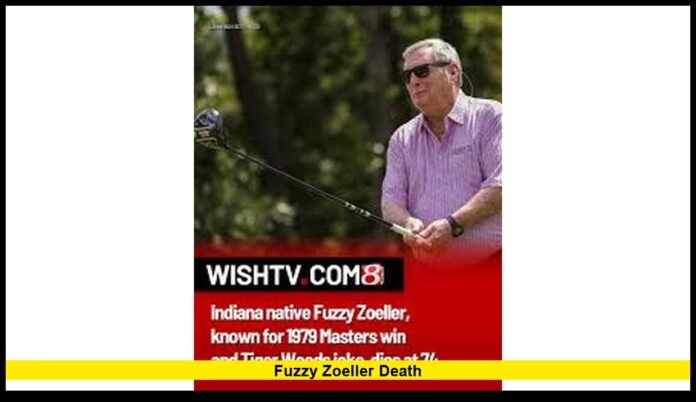

The announcement of Fuzzy Zoeller death on November 27, 2025 sent ripples of shock and sorrow across the global golf community. Frank Urban “Fuzzy” Zoeller Jr., one of the game’s most talented and charismatic players, passed away at the age of 74. As the news spread, fans and fellow golfers alike began reflecting on a life and career that combined incredible triumphs, unforgettable charm, and deeply regretted mistakes.
Early Life and Rise to Stardom
Fuzzy Zoeller was born November 11, 1951, in New Albany, Indiana. He picked up golf early and honed his skills through his youth and high school days. After a stint at Edison Junior College in Florida, he transferred to the University of Houston, a prominent collegiate golf program. In 1973 he turned professional, launching a career that would span decades and leave a lasting mark on the sport.
Zoeller’s talents, both on and off the course, were evident from the start. He played with a rare blend of precision, energy, and flair. His reputation as a fast-paced, congenial player — often whistling between shots — helped him stand out in an era filled with serious competitors.
Career Highlights: Majors, Playoffs, and Big Wins
Few golfers can say they captured the sport’s biggest titles — but Zoeller did this not once, but twice.
- 1979 Masters Tournament: In his very first appearance at the Masters, Zoeller shocked the golfing world. Entering a dramatic three-man playoff, he edged out two formidable competitors to win the green jacket. To this day, he remains among the last golfers to win the Masters on their debut.
- 1984 U.S. Open at Winged Foot: Zoeller returned to fight another major war — this time at the U.S. Open. Facing off against a strong field and particularly a tough contender in Greg Norman, he played with resilience and nerve. When a late putt by Norman gave many reason to believe Zoeller was defeated, he raised a white towel in lighthearted resignation. Instead of conceding defeat, he parred the final hole to force an 18-hole playoff the next day — then delivered one of the greatest playoff performances in U.S. Open history. His 67 in that playoff remains the lowest round ever recorded in a U.S. Open playoff.
Beyond these two monumental victories, Zoeller collected a total of 10 PGA Tour wins over his career. He later transitioned to senior golf, where he also found success — including capturing the 2002 Senior PGA Championship.
He represented the United States in multiple editions of the Ryder Cup. In addition, in 1985 he received the highest honor from the U.S. Golf Association, the Bob Jones Award, recognizing his sportsmanship and contributions to the game.
Persona On — And Off — The Course
Part of what made Zoeller such a beloved figure was his personality. He played quickly, often with a smile or whistle between shots. He brought a sense of fun and lightheartedness to tournaments, making him a fan favorite during his peak years and long after.
He had a kind of natural ease — not arrogant, but confident; not flashy, but memorable. Many younger golfers and fans felt drawn to his relaxed approach and his humble roots in Indiana.
Even as he aged and stepped back from full-time competition, Zoeller remained an enduring figure in the golf world — one whose stories, victories, and antics were passed around clubhouses and gathered into grateful memories.
The Controversy That Shadowed Legacy
No life — even one full of brilliance — comes without mistakes. For Zoeller, the most troubling moment came in 1997. Around the time another legendary golfer made history at the Masters, Zoeller made a comment that was widely recognized as racially insensitive. In the moment, the remark sparked outrage and criticism across the sport and beyond.
In the years that followed, Zoeller apologized — many times. He admitted the joke was “the worst thing I’ve ever done,” and said the backlash, including death threats and emotional anguish, haunted him for years.
That comment left a stain on his public image. For many, it became inseparable from the rest of his legacy. For others — teammates, friends, or fans over the years — they continued to remember him as a talented competitor, a sportsman, and a man who had at least acknowledged his mistake and expressed remorse. The dichotomy remains: championship glory and heartfelt regret, linked in the same life.
Final Years and Passing
On November 27, 2025, the world learned that Zoeller had died at age 74. The news came when his daughter informed tournament officials — a moment that still feels surreal to many in the golf community. No official cause of death has been made public. The silence around the details left many fans mourning not just the man, but the mystery of his final days.
Tributes arrived swiftly from organizations and individuals who knew or admired him. An official statement from golf’s governing bodies acknowledged Zoeller as “a true original,” applauding both his extraordinary golf talent and his unmistakable personality. Teammates, rivals, and fans shared memories — of long drives, quiet putts under pressure, good-humored banter, and moments when he seemed to play simply for love of the game.
A Legacy of Complexity: Triumph, Charisma, Regret
Fuzzy Zoeller’s life and career resist neat categorization. On the one hand, he was a golfer who achieved greatness: two major championships, ten PGA Tour wins, senior titles, top-level honors, Ryder Cup appearances. On the other hand, his public reputation always carried the weight of a serious personal mistake — a racist remark that many felt overshadowed subsequent goodwill.
In many ways, his legacy is a portrait of contradictions:
- A gifted champion whose victories were earned under pressure, in playoffs, and with nerves of steel.
- A player whose style brought joy, laughter, and a sense of spontaneity to a sport often formal and serious.
- A figure who lashed out mistakenly in a moment of ill judgment — then spent years expressing regret and navigating the aftermath.
- A human being whose life reminds us that success on the field does not preclude flaws off it.
For fans who remember the roars at Winged Foot in 1984, or the stunned silence in Augusta after his debut Masters win, Zoeller’s name will always evoke memory of those highs. For those who recall the controversy of 1997 — and the subsequent apologies — his story offers a cautionary note about fame, sensitivity, and the long shadow cast by words.
Why His Death Resonates
News of Zoeller’s passing underscores the transient nature of athletic greatness and the enduring weight of legacy. Golf today looks different than it did when Zoeller burst onto the major-championship stage in the 1970s and 1980s. Competitors are younger, technology is faster, media exposure broader. Yet among that evolution, characters like Zoeller stand out — not just because of titles, but because they brought presence, personality, and unpredictability.
For longtime followers, his death feels like the end of an era: of bold shot-making, of carefree confidence, of a time when golf could make you hold your breath and smile at once. For newer fans, his story becomes a taught lesson: greatness and guilt, talent and accountability — sometimes walking hand in hand.
A Tribute and a Closing Thought
As the world of golf reflects on Fuzzy Zoeller’s life, one truth stands clear: no single headline — whether celebration or condemnation — can fully capture a human life. His victories and charisma earned him admiration and respect; his mistake and remorse earned disappointment and questions.
Yet in the end, he remains part of golf’s history: a major champion, a character, a human being. The fairways and greens where he played will now bear witness to a legacy shaped by brilliance and blemish alike.
May we remember Fuzzy Zoeller not only for his wins, but for the laughter he brought, the lessons he left, and the complicated legacy he carried.
Feel free to share your memories or thoughts on Fuzzy Zoeller — his story is worth remembering.