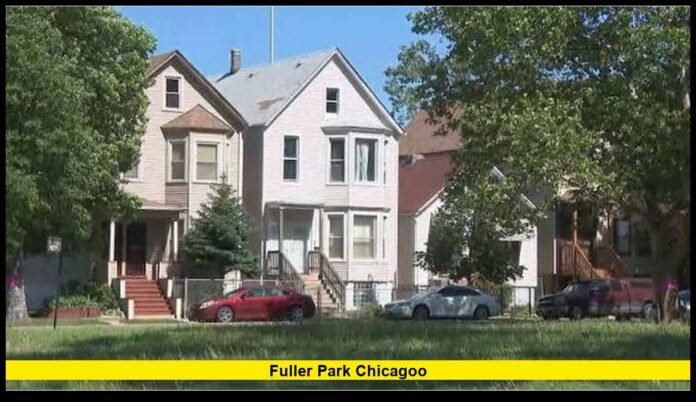

The future of fuller park chicago is being shaped by several developments at once, from continued investment in recreation and industrial property to changing housing conditions and long-running neighborhood revitalization efforts. The South Side community remains small in size but significant in Chicago’s urban history.
A Small Community With a Big History
Fuller Park is designated as Chicago Community Area 37 and occupies a compact section of the South Side. Its identity has long been influenced by the nearby Stockyards, rail infrastructure, residential development and major transportation corridors.
The community grew during Chicago’s rapid industrial expansion. Working-class families settled in the area as factories, railroads and the Union Stock Yard economy created employment opportunities. That industrial legacy remains visible today, even though the economic landscape has changed dramatically.
Modern Fuller Park combines residential streets with industrial properties and community facilities. The result is a neighborhood where Chicago’s past and current redevelopment efforts can be seen within a relatively small geographic area.
The Park Remains a Central Community Asset
At the heart of the area is Fuller Park, a public recreation space that continues to serve residents of surrounding neighborhoods.
The roughly 11-acre park includes both indoor and outdoor facilities. Residents can access athletic fields and courts, a playground, a swimming pool and a track, while the fieldhouse provides additional space for fitness, meetings and recreational activities.
The park’s programming is particularly important for children and families. Seasonal activities provide opportunities for sports, exercise and organized recreation without requiring residents to travel far from home.
Public parks can play an important role in neighborhood development because they provide gathering places that remain accessible regardless of a household’s income. In Fuller Park, the recreation center and outdoor facilities form an important part of the community’s public infrastructure.
Industrial Investment Is Changing the Economic Picture
Fuller Park’s industrial identity is receiving renewed attention as developers bring modern facilities into the broader Stockyards area.
A major example is a newly completed industrial building on South Princeton Avenue. The more than 180,000-square-foot facility is designed for industrial users and adds contemporary space to a corridor historically associated with manufacturing, transportation and warehousing.
The development reflects a broader trend across Chicago’s South Side. Older industrial districts are increasingly being repositioned for modern logistics, manufacturing and distribution operations.
For Fuller Park, that could create new opportunities for employment and commercial activity. At the same time, industrial growth raises familiar questions about traffic, environmental impacts, land use and the relationship between businesses and nearby residential blocks.
The long-term effect will depend on which companies occupy the available space and how effectively new investment connects with residents and surrounding businesses.
Housing Activity Draws Attention
Residential real estate is another part of the neighborhood’s changing picture.
Recent 2026 market figures indicate that home sales have remained active, with the median sale price reaching approximately $279,000 for the three months ending in August. The market remains relatively small, however, so individual transactions can have a greater influence on statistics than they would in a larger Chicago community.
Properties range from older homes and multifamily buildings to renovated residences. Buyers considering the area need to account for the condition of individual properties, neighborhood location, access to transportation and future development plans rather than relying solely on median prices.
For homeowners, rising property values can represent an opportunity to build equity. For longtime residents, however, neighborhood investment can also bring concerns about affordability and displacement.
Community-Led Environmental Work Continues
Some of the most distinctive revitalization efforts in the area have focused on land rather than conventional construction.
Eden Place Farms has become an example of how neglected urban property can be transformed into a productive community resource. The site emerged from efforts to clean up land that had been affected by illegal dumping and convert it into an urban agriculture and environmental education destination.
Urban farms can provide more than locally grown food. They can create educational opportunities, encourage neighborhood participation and give residents a direct role in improving vacant or underused land.
That approach is especially relevant in communities where redevelopment has historically been uneven. Rather than relying exclusively on outside investment, community-based projects can help residents participate directly in shaping their surroundings.
Transportation Remains a Defining Factor
Fuller Park benefits from its proximity to major transportation routes, but those same infrastructure corridors have helped define the neighborhood’s physical character.
The Dan Ryan Expressway is a major feature along the eastern side of the community, while rail lines and industrial routes have historically supported commercial activity.
Transportation access can make industrial property attractive to businesses that need efficient connections to other parts of Chicago and the regional freight network. For residents, however, major highways and rail infrastructure can create noise, pollution concerns and barriers between sections of a neighborhood.
The balance between economic connectivity and neighborhood livability will remain an important issue as new projects move forward.
Public Recreation and Youth Programs Matter
The availability of structured recreation is another important component of local quality of life.
Fuller Park’s fieldhouse provides space for indoor activities, while outdoor facilities accommodate organized sports and casual recreation. Seasonal programming gives young people additional opportunities during periods when school is not in session.
These services can have an impact beyond recreation. Parks and community centers can provide places where residents build social connections, develop skills and spend time in supervised environments.
As Chicago continues to evaluate how public resources are distributed across neighborhoods, maintaining and improving existing recreation facilities can be as important as constructing new ones.
Public Safety Remains Part of the Conversation
Safety continues to be a significant concern for people who live in and around the community.
Like other South Side neighborhoods, Fuller Park has experienced violent incidents, including shootings. Such events influence how residents, prospective buyers and businesses view the area.
At the same time, crime statistics and individual incidents provide only one measure of neighborhood conditions. Community organizations, public facilities, residential stability and economic investment also contribute to the broader picture.
Efforts to improve safety increasingly intersect with youth programming, vacant-land redevelopment, economic opportunity and access to neighborhood services.
What Comes Next for Fuller Park
The next stage of development will likely depend on whether investment can produce benefits for existing residents while preserving the community’s character.
Industrial construction could bring employment and additional economic activity. Housing-market growth could increase property values and encourage rehabilitation. Park programming and community projects can strengthen neighborhood connections.
But successful revitalization requires more than new buildings. Infrastructure, environmental quality, affordability, public safety and resident participation will all influence whether investment produces lasting improvements.
For fuller park chicago, the coming years are likely to be defined by that balance. Its industrial heritage gives the community a distinctive economic foundation, while its park, residential blocks and grassroots organizations provide the social infrastructure needed to support long-term change.
The neighborhood remains a work in progress, but its combination of location, historic significance, public recreation and new investment gives it an increasingly important place in discussions about Chicago’s South Side future.