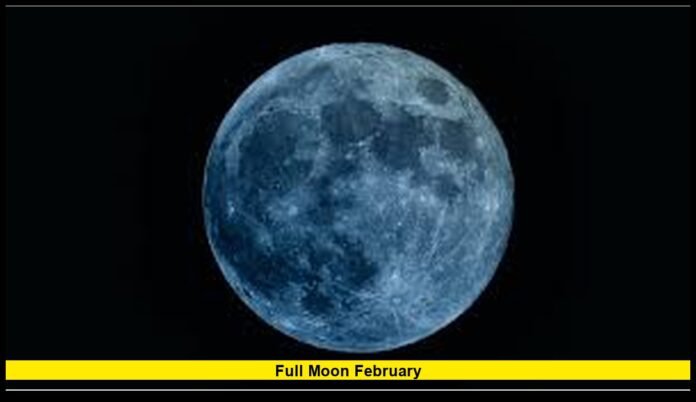

Full moon February 2026 arrives in early winter, with confirmed astronomical data showing the Moon reaching full illumination on February 2, 2026, visible across the United States. The event follows the normal lunar cycle and offers long nighttime viewing hours, making it one of the most accessible sky events of the season for casual observers and astronomy enthusiasts alike.
Cold winter air and extended darkness often create excellent conditions for lunar viewing, especially outside major city centers.
Confirmed Date and Timing in the United States
Astronomical calendars currently show that the Moon reaches its full phase on February 2, 2026. On this date, the Moon and Sun align on opposite sides of Earth, allowing the lunar surface facing our planet to reflect maximum sunlight.
For U.S. viewers, the Moon will appear fully illuminated for the entire night. While the precise moment of peak fullness occurs at a specific hour, the visual effect lasts from moonrise through moonset.
Because Earth has multiple time zones:
- The Moon will rise at different local times
- Illumination will still appear complete nationwide
- Viewing does not require observing at a precise minute
Most people experience the event simply by looking up after sunset.
Why February’s Full Moon Is Known as the Snow Moon
February’s full moon carries the traditional name “Snow Moon,” a label rooted in seasonal patterns rather than astronomy. Historically, February brought the deepest snowfall in many parts of North America, making travel and food access more difficult for early communities.
The name reflects:
- Heavy winter snowfall
- Harsh mid-winter conditions
- Long, cold nights
While the name has cultural origins, it remains widely used in modern lunar calendars and media.
What Makes the February 2026 Moon Unique in Timing
This particular full moon occurs early in the month, leaving nearly the entire rest of February to progress through the waning phases. Early-month full moons often feel more prominent because they arrive soon after the calendar turns.
Winter full moons also:
- Stay visible longer overnight
- Rise higher in the sky
- Appear brighter due to atmospheric clarity
These factors combine to make February’s lunar display especially striking.
Scientific Definition of a Full Moon
A full moon occurs when the Moon completes half of its orbit around Earth relative to the Sun. At that point, the side facing Earth receives direct sunlight.
Key scientific details include:
- The lunar cycle lasts about 29.5 days
- Full moons occur once each cycle
- Timing can be predicted decades in advance
The February 2026 event fits precisely within this predictable pattern.
How the Moon Will Look to Observers
During a full moon, surface features such as craters and plains remain visible, though shadows appear less dramatic than during partial phases.
Observers can expect:
- A bright, white lunar disc
- Subtle gray patterns across the surface
- Strong contrast against winter skies
Even without equipment, the Moon’s details are visible to the naked eye.
Weather and Viewing Conditions by Region
February weather varies widely across the U.S., but winter often brings clearer air due to lower humidity.
General regional expectations:
- Northern states may see crisp, clear skies with cold temperatures
- Southern regions often experience milder evenings
- Coastal areas may deal with cloud cover or wind
Because the Moon is so bright, brief breaks in cloud cover still allow viewing.
Impact on the Night Sky
A full moon brightens the sky significantly, affecting what else can be seen at night.
Skywatchers may notice:
- Dimmer stars becoming harder to spot
- Reduced visibility of faint constellations
- Strong shadows cast on snowy landscapes
This brightness makes the Moon itself the main attraction.
Tidal Effects Along U.S. Coastlines
The gravitational pull of the Moon contributes to predictable tidal patterns. During full moons, tides reach greater extremes, known as spring tides.
During this period:
- High tides rise higher than average
- Low tides fall lower than usual
- Coastal currents strengthen
These effects are normal and expected during every full moon cycle.
Is There an Eclipse or Special Classification?
The February 2026 full moon does not coincide with a confirmed lunar eclipse. It also does not fall under special distance-based classifications.
This means:
- It is not a supermoon
- It is not a micromoon
- Its apparent size remains average
Its appeal comes from seasonal conditions rather than rarity.
Cultural Importance of Winter Full Moons
Across cultures, winter full moons have symbolized endurance, reflection, and preparation for change. In the U.S., February’s lunar event often marks the midpoint between the new year and early spring.
Seasonal associations include:
- Peak winter conditions
- Gradual lengthening of daylight
- Anticipation of seasonal transition
These meanings continue to resonate today.
How Long the Moon Appears Fully Lit
Although the full phase occurs at one precise moment, the Moon looks full for about three nights.
Observers can enjoy:
- A nearly full Moon the night before
- Peak brightness on February 2
- Slightly waning illumination the following night
This extended window helps accommodate weather and schedules.
Best Times to Watch
The most visually striking moments often occur shortly after moonrise or just before moonset.
Helpful viewing tips:
- Watch near the horizon for the size illusion
- Choose open areas with clear sightlines
- Use binoculars to explore surface textures
Photography enthusiasts often pair the Moon with winter scenery.
Common Myths and Misunderstandings
Despite long-standing folklore, scientific research does not support claims that full moons cause unusual human behavior.
What is proven includes:
- Predictable lunar cycles
- Gravitational influence on tides
- Increased nighttime illumination
The February 2026 Moon follows the same natural laws as all others.
How This Lunar Event Fits Into the 2026 Calendar
This is the second full moon of the year and sets the tone for upcoming spring lunar events. After February, the Moon continues its cycle toward longer daylight seasons.
Its place in the year:
- Early winter calendar position
- Occurs well before the spring equinox
- One of the brightest winter moons
Many people use it as a reference point for seasonal change.
Why Public Interest Continues to Grow
Interest in lunar events remains strong due to their predictability and accessibility. Unlike rare celestial phenomena, full moons require no equipment or expertise.
People follow these events for:
- Night sky photography
- Educational activities
- Personal enjoyment
The February 2026 lunar display fits perfectly into this tradition.
Planning Around the Event
Because the date is known well in advance, individuals and communities often plan activities around it.
Common plans include:
- Evening walks or hikes
- Photography sessions
- Educational observations
Winter settings often enhance the visual experience.
What Makes This Event Worth Watching
Even without rare features, winter full moons stand out due to clarity and duration. Snow-covered ground can reflect moonlight, making nights feel brighter and more dramatic.
That natural effect often surprises first-time observers.
Final Perspective for Skywatchers
The full moon February 2026 offers a reliable and visually impressive opportunity to experience the winter night sky across the United States. With its early-month timing, long visibility, and seasonal significance, it stands as one of the most noticeable lunar moments of the year.
Will you be watching the February full moon from your area? Share your thoughts and stay connected for more upcoming sky events.