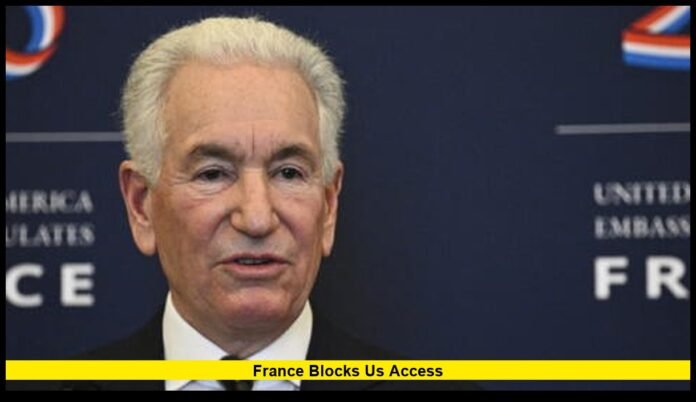

France blocks US access became a widely discussed issue as Jonte Richardson resigned from the BAFTA emerging-talent jury following backlash over an unedited slur broadcast in BAFTA-related programming. The resignation triggered industry debate about accountability, representation, and how regional distribution limits affect public transparency during high-profile controversies.
The discussion around “France blocks US access” emerged when certain BAFTA-related content circulated under European distribution rights that restricted viewing for audiences in the United States. As interest in the controversy surged, these access limitations drew attention and added another dimension to the unfolding industry conversation.
Understanding France Blocks US Access
The phrase “France blocks US access” refers to geo-blocking — a common practice in digital media where content availability depends on licensing agreements tied to specific regions.
Entertainment content is frequently sold territory by territory. As a result, viewers in France may see material unavailable in the United States.
In this situation, programming connected to the BAFTA controversy appeared under regional rights structures that limited U.S. access. That limitation became notable because audiences were actively trying to view the same footage circulating internationally.
Why geo-blocking happens:
- Territory-based licensing deals
- Platform distribution agreements
- Legal compliance across markets
- Multiple ownership structures for the same content
These rules are standard across the industry but often become visible during major news events.
Jonte Richardson’s Resignation Explained
Jonte Richardson stepped down from the BAFTA emerging-talent jury after criticism surrounding the airing of an unedited slur in BAFTA-associated material.
Richardson said the academy failed Black creatives in its handling of the situation. The resignation quickly became a central development in the story because emerging-talent programs influence early career pathways.
The move signaled concern about institutional trust and editorial safeguards.
Industry reaction focused on:
- Editorial review standards
- Crisis response procedures
- Support for affected creatives
- Long-term diversity commitments
Richardson’s departure intensified scrutiny of BAFTA’s internal processes and leadership approach.
Why Access Restrictions Became Part of the Story
Geo-blocking rarely dominates headlines. However, when audiences want direct context, access limitations can shape public perception.
As viewers searched for the original material tied to the controversy, some encountered regional viewing barriers. That experience amplified discussion about transparency and distribution control.
Three factors drove attention:
- The controversy itself
- Richardson’s resignation
- Limited availability of primary footage
Together, they pushed “France blocks US access” into wider industry conversation.
Pressure on BAFTA and Institutional Accountability
BAFTA faced renewed pressure to address editorial oversight and strengthen safeguards around sensitive broadcast material.
Awards organizations operate under intense reputational scrutiny. Incidents involving language or representation can quickly influence credibility.
Key areas under discussion include:
- Pre-broadcast content checks
- Internal escalation processes
- Communication strategy after incidents
- Meaures supporting underrepresented creatives
The controversy highlighted how institutional response can become as significant as the original incident.
Geo-Blocking and the Streaming Era
The “France blocks US access” debate reflects a broader structural challenge. Streaming has globalized audiences, yet licensing remains regional.
This creates friction between viewer expectations and distribution realities.
Common outcomes of geo-blocking in controversies:
- Fragmented information across regions
- Increased reliance on commentary instead of primary content
- Faster spread of partial context
- Heightened frustration among audiences
For U.S. viewers, the situation illustrates how international rights agreements influence access to cultural conversations.
Implications for Emerging Talent Initiatives
Richardson’s resignation placed particular focus on programs designed to support early-career creatives. These initiatives carry symbolic importance because they represent industry entry points.
When controversy touches those programs, the impact extends beyond one organization.
Concerns raised in industry discussions include:
- Confidence among applicants
- Perceptions of program safety and fairness
- Mentorship trust
- Institutional credibility
The resignation therefore became a signal about broader structural expectations within talent development.
Social Media’s Role in Amplification
Digital platforms accelerated the spread of reactions, commentary, and partial clips. At the same time, regional restrictions prevented universal access to original material.
That contrast intensified interest in the “France blocks US access” narrative.
Modern media cycles often follow a similar pattern:
- A controversy emerges
- Social media drives rapid global awareness
- Licensing limits shape who can view original context
- Debate expands beyond the initial incident
This dynamic continues to redefine how entertainment news unfolds.
A Wider Industry Conversation
Richardson’s decision fits into a larger shift across awards bodies and creative institutions. Editorial responsibility and representation remain central industry priorities.
Resignations frequently trigger reviews and policy discussions. They also influence how organizations communicate during sensitive moments.
Major themes emerging from the conversation:
- Preventive editorial safeguards
- Transparent decision-making
- Leadership accountability
- Ongoing diversity evaluation
These themes extend beyond one organization and reflect industry-wide expectations.
What Comes Next
The situation remains active as industry attention continues. Organizations typically conduct internal evaluations following public criticism tied to broadcast content.
Potential next steps may include:
- Updated editorial guidelines
- Program reviews
- Structural changes within talent initiatives
- Additional statements from involved parties
Meanwhile, geo-blocking practices are unlikely to change quickly, meaning similar access debates will continue to surface.
Why the Story Matters for U.S. Readers
For U.S. audiences, the story combines institutional accountability with digital access challenges. Awards organizations influence global creative careers, including American talent.
At the same time, regional licensing determines how quickly U.S. viewers can engage with international controversies.
The “France blocks US access” discussion demonstrates how technical distribution decisions can shape public understanding, especially when transparency becomes part of the narrative.
Richardson’s resignation shows how individual actions can prompt broader industry reflection and policy debate.
How do you view access restrictions during major entertainment controversies? Join the conversation and check back for the latest developments.