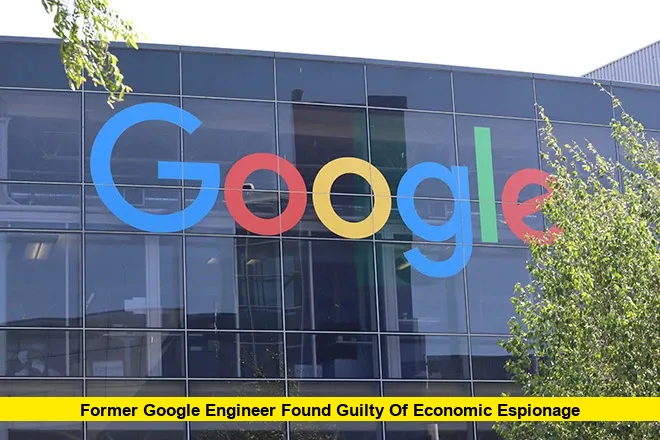

A federal jury in San Francisco on Thursday delivered a decisive verdict in a case that has captured national attention in tech and legal communities alike. The jury found a former Google software engineer guilty of economic espionage and theft of trade secrets after he unlawfully obtained and transmitted thousands of pages of proprietary artificial intelligence (AI) technology information. This high-profile case, centered on sensitive AI infrastructure secrets, has underscored the increasing risks associated with the protection of cutting-edge technology. Former Google Engineer Found Guilty of Economic Espionage and Theft of Confidential AI Technology represents a major turning point in how U.S. authorities pursue and prosecute espionage involving advanced technology.
If you follow tech and national security news, you’ll want to read on to understand the full scope and implications of this stunning verdict.
Keep reading to uncover details about the charges, the stolen technology, and what this means for U.S. competition and security in AI.
Share your thoughts on how this outcome might shape the future of tech security policies.
A Historic Verdict in the Heart of Silicon Valley
In a rare and consequential federal trial, a jury found former Google engineer Linwei Ding, also known as Leon Ding, guilty on seven counts each of economic espionage and theft of trade secrets after an 11-day trial in the U.S. District Court for the Northern District of California. The charges stemmed from Ding’s actions while employed at Google, where federal prosecutors allege he accessed, copied, and stored thousands of pages of confidential documentation containing Google’s most sensitive AI research and infrastructure details for the benefit of entities linked to the People’s Republic of China.
This case is widely reported as the first U.S. conviction on economic espionage charges tied directly to artificial intelligence technology, signaling a heightened legal emphasis on safeguarding critical tech innovations.
Who Is Linwei Ding and What Was He Accused Of?
Linwei Ding, 38, was a software engineer at Google from 2019 through late 2023. While he worked on aspects of Google’s AI infrastructure—specifically systems involved in designing and operating supercomputing centers used to train and run large AI models—he allegedly began secretly siphoning off internal documents as early as May 2022.
A superseding indictment described Ding’s actions in detail, including:
- Stealing more than 2,000 pages of confidential documentation related to Google’s AI technology and supercomputing infrastructure between May 2022 and April 2023.
- Uploading the stolen data to his personal Google Cloud account, used as a secure repository outside Google’s systems.
- Affiliating with China-based technology companies while still employed at Google, and even negotiating to serve as chief technology officer for at least one such company.
- Lying to his employer and investors about his intentions and access, while seeking financial support for ventures that would purportedly use the stolen technology.
Before resigning in December 2023, Ding downloaded the stolen AI trade secrets to his personal computer, prosecutors said.
Details of the Stolen Technology
The stolen materials were not merely general information, but highly specialized and proprietary content providing deep insight into Google’s AI infrastructure. Prosecutors described the documents as including:
- Hardware specifications for Google’s custom AI chips, including Tensor Processing Units (TPUs) and Graphics Processing Units (GPUs) used to power large neural networks.
- Architecture designs and software for coordinating computing clusters, which are essential to training and operating complex machine learning models.
- Systems for network communication within AI compute clusters, such as SmartNICs and other high-speed interfaces.
These technologies represent some of the most valuable intellectual property in modern computing, and access to them could confer a significant advantage to competitors both domestically and abroad.
The Trial and Jury Findings
Ding’s trial was presided over by U.S. District Judge Vince Chhabria in San Francisco. Over the course of the proceedings, prosecutors built their case by demonstrating Ding’s unauthorized downloads, false representations to his employer, and secret affiliations with foreign tech interests.
The jury deliberated following an 11-day presentation of evidence and testimony, ultimately convicting Ding on all 14 counts—seven counts of economic espionage under federal law and seven counts of theft of trade secrets.
This dual conviction reflects both the intentional nature of Ding’s actions and the gravity of the harm associated with stealing strategic technological assets.
Penalties and Legal Consequences
Following his conviction, Ding faces serious federal penalties. Under U.S. law:
- An economic espionage conviction can carry up to 15 years in prison per count.
- A conviction for theft of trade secrets can carry up to 10 years per count.
Given that he was convicted on seven counts of each offense, the theoretical maximum penalties are substantial, though the final sentence will be determined by the court at a later date, with consideration of federal sentencing guidelines. Ding is scheduled to appear at a status conference in early February 2026.
National Security and Technology Protection
Federal officials emphasized that this prosecution sent a message about the importance of protecting American innovation and safeguarding technological leadership. Leaders from the Department of Justice and the FBI highlighted the collaboration between government agencies and private sector partners like Google to investigate and bring the case to trial.
The verdict comes at a time of heightened global competition in AI, with countries and corporations alike making significant investments to advance machine learning, compute power, and next-generation technologies. The theft of sensitive AI infrastructure details could have far-reaching implications in that competitive landscape.
Industry and Government Perspectives
Tech professionals and security experts have weighed in on the outcome, noting that the case underscores the vulnerability of proprietary systems and the need for robust internal monitoring and cybersecurity protocols. It also reinforces the expanding scope of federal laws like the Economic Espionage Act in addressing digital threats.
The DOJ’s actions in this case may prompt other companies working on critical technologies to review and strengthen their protections against insider threats, especially as AI becomes ever more central to economic and national security.
A Turning Point in AI Security Enforcement
As the first major espionage conviction tied to AI technology, this case could shape how future violations are pursued and prosecuted. Companies and governments alike are likely watching closely, as the verdict highlights both the consequences of mishandling sensitive data and the legal tools available to hold individuals accountable when they cross the line into criminal theft.
The implications reach far beyond a single defendant, touching on broader themes of trust, corporate responsibility, and national competitiveness in a rapidly evolving technological era.
What do you think this verdict means for the future of AI development and cybersecurity? Share your views or stay tuned for more updates on this groundbreaking case.