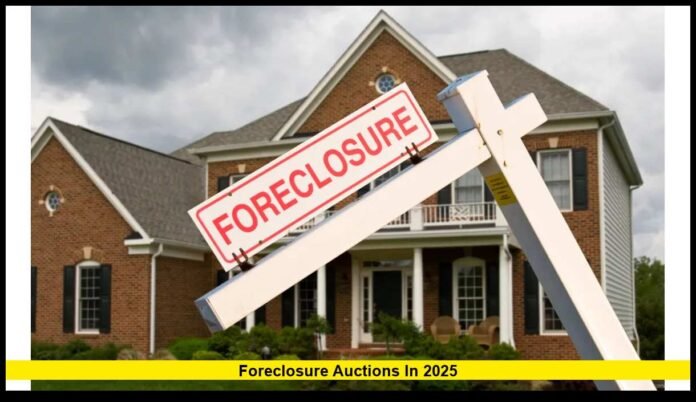

Foreclosure auctions are playing a larger role in the U.S. housing market in 2025. With rising mortgage defaults, more properties are being sold under the hammer. For investors, these auctions represent a chance to buy real estate quickly, often at discounted prices. For communities, they reflect both economic stress and the recycling of housing inventory back into active use.
This guide takes a detailed look at foreclosure auctions today: what they are, why activity is increasing, how the process works, and what buyers need to succeed.
What Is a Foreclosure Auction?
A foreclosure auction is a public sale of real estate repossessed by a lender after a borrower defaults on their mortgage. At the auction, the property goes to the highest bidder.
Key features:
- Homes and commercial buildings sold “as is.”
- Auctions move fast; deposits are due immediately.
- Many sales are cash-only or require proof of funds.
- Titles may come with liens, taxes, or unresolved legal issues.
For lenders, foreclosure auctions reduce losses by turning non-performing loans into liquid assets. For buyers, they offer potential bargains compared to traditional sales.
Why Foreclosure Auctions Are Increasing in 2025
Several economic and market shifts explain why foreclosure auctions are trending upward:
Higher Loan Defaults
Rising interest rates and inflation have left many households struggling. Adjustable-rate mortgage resets are hitting borrowers harder, and payment delinquencies are climbing.
End of Pandemic-Era Relief
Foreclosure moratoria and emergency assistance programs are gone. Loans that were in forbearance or modified are now flowing into foreclosure pipelines.
Increased Repossessions
More lenders are completing the foreclosure process rather than extending modifications, adding properties to auction lists.
Regional Hotspots
Foreclosure auctions are not evenly distributed. States like Florida, Texas, Nevada, Illinois, and California are seeing larger volumes compared to others.
Together, these factors mean foreclosure auctions are once again a normal—if challenging—part of the housing landscape.
How Foreclosure Auctions Work
While every state has its own foreclosure laws, the basic structure is similar.
Step 1: Notice of Default
The lender issues a formal notice that the borrower has defaulted. The property is scheduled for auction.
Step 2: Public Posting
Auction details—date, time, location, and property terms—are posted in legal notices or online auction platforms.
Step 3: Bidding Process
Auctions may take place at a courthouse, trustee’s office, or online. Bidders compete openly, with incremental bid increases until a winner emerges.
Step 4: Deposit Requirement
Winning bidders typically must pay a deposit immediately, often between 5% and 10% of the purchase price.
Step 5: Final Payment
The remaining balance must be paid within a short period, usually between 7 and 30 days.
Step 6: Title Transfer
Ownership transfers to the winning bidder after payment clears. In some states, a redemption period allows the original homeowner to reclaim the property by paying the debt in full.
Judicial vs. Nonjudicial Foreclosures
The type of foreclosure auction depends on state law.
- Judicial Foreclosures – Court-supervised, lengthier, and more common in states like Florida, New Jersey, and Illinois.
- Nonjudicial Foreclosures – Managed by a trustee without court involvement, faster and common in states like California, Texas, and Arizona.
Buyers should always know which type applies in the state where they’re bidding.
Benefits of Buying at Foreclosure Auctions
- Speed – Properties change hands quickly, avoiding long negotiations.
- Discount Potential – Buyers may acquire real estate below market value.
- Transparency – Public auctions ensure clear competition among bidders.
- Diverse Inventory – Foreclosure auctions include single-family homes, multifamily properties, commercial assets, and vacant land.
Risks of Buying at Foreclosure Auctions
- Unknown Condition – Buyers often cannot inspect homes before purchase.
- Title Issues – Liens, taxes, or unpaid fees may carry over.
- Cash Pressure – Few financing options exist because payment deadlines are tight.
- Occupancy Problems – Some homes remain occupied, requiring legal eviction.
- Competitive Bidding – Investor demand can drive up prices.
How Buyers Can Prepare for Foreclosure Auctions
Success depends on preparation.
- Research Property Records – Check for liens, unpaid taxes, or HOA dues.
- Set a Budget Limit – Establish your maximum bid and avoid overspending.
- Inspect When Possible – Even a drive-by or external viewing offers insights.
- Understand State Rules – Redemption rights, payment deadlines, and eviction laws differ.
- Secure Funding Early – Auctions typically require cash or certified funds.
- Budget Repairs – Assume extra costs for deferred maintenance or damage.
- Plan an Exit Strategy – Know whether you’ll flip, rent, or hold long term.
Types of Buyers at Foreclosure Auctions
- Investors – Focused on flipping homes or building rental portfolios.
- First-Time Buyers – Hoping to find affordable entry into a competitive market.
- Developers – Seeking distressed properties or land for future projects.
- Businesses – Acquiring commercial properties at reduced costs.
Current Trends in Foreclosure Auctions
Online Expansion
Digital platforms are becoming the norm, allowing nationwide participation and broader competition.
More Inventory
Rising foreclosure filings mean more properties are entering auctions, especially in major metro areas.
Institutional Investors
Large-scale investors are returning, creating competition for smaller buyers.
Regional Variations
States with higher housing costs and judicial processes tend to see larger spikes in foreclosure activity.
Market Impact
The increase in foreclosure auctions adds supply, which may pressure prices in certain neighborhoods.
Regional Hotspots for Foreclosure Auctions
- California – Nonjudicial foreclosures dominate, with high volumes in urban counties.
- Florida – Judicial foreclosures lead to large auction pipelines.
- Texas – Frequent trustee sales occur monthly across counties.
- New York – Lengthy court-supervised processes feed auction activity.
- Illinois – Consistently high foreclosure auction activity due to legal timelines.
Strategies to Win in Today’s Market
- Focus on markets you know best.
- Work with title companies and attorneys to avoid hidden risks.
- Avoid emotional bidding; discipline wins over impulse.
- Diversify across property types for long-term growth.
- Monitor housing market conditions—auction volumes rise and fall with local economies.
Common Mistakes to Avoid
- Not checking title status before bidding.
- Ignoring repair and rehab costs.
- Missing strict payment deadlines.
- Believing all foreclosure auctions are bargains—many sell at or above market prices.
Future Outlook for Foreclosure Auctions
The foreclosure auction market will likely stay active into 2026. Mortgage stress, economic uncertainty, and high borrowing costs will keep foreclosure filings elevated.
Expect:
- Continued online growth – More auctions will move digital.
- Tighter regulation – Some states may strengthen homeowner protections.
- Investor competition – Rising demand from both individuals and institutions.
- Adaptive reuse – More foreclosed properties repurposed as rentals or commercial conversions.
Three Short FAQ
Q1: Can you finance a foreclosure auction purchase?
Usually no. Most auctions require cash or certified funds because timelines are short.
Q2: Are foreclosure auctions always cheaper than the market?
Not always. Competitive bidding sometimes drives prices close to or above market levels.
Q3: Do homeowners have rights after the auction?
In some states, yes. Redemption laws give previous owners a limited time to reclaim property by paying the debt in full.
Conclusion
Foreclosure auctions in 2025 reflect the current pressures in the U.S. housing market. They provide speed, transparency, and opportunities for buyers but also come with risks like unknown property conditions and hidden debts.
With careful preparation, discipline, and clear strategies, foreclosure auctions can be a pathway to valuable real estate investments. But success requires knowledge and caution.
Have you ever taken part in a foreclosure auction? Share your story or tips in the comments below.
Disclaimer – This article is for informational purposes only and should not be considered legal or financial advice.