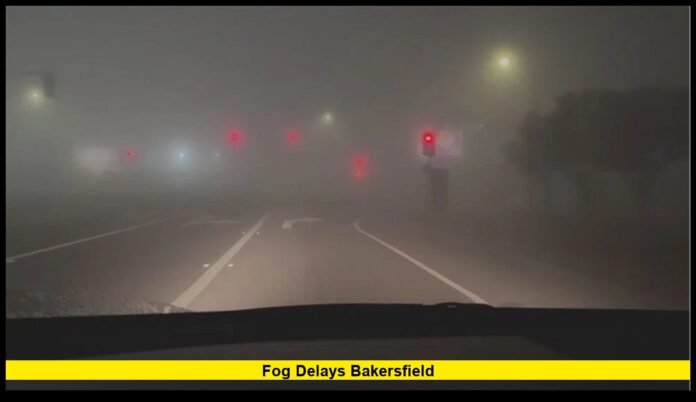

Fog delays Bakersfield once again as thick winter Tule fog settles over the southern San Joaquin Valley, creating hazardous visibility, slowing traffic, and forcing changes to school schedules across Kern County. Early morning conditions have brought reduced sight distance on highways, neighborhood streets, and rural roads, affecting thousands of drivers, students, and workers as the region moves through another day of winter weather disruption.
The fog formed overnight under calm winds and high moisture levels, spreading across low-lying areas and remaining trapped near the surface. By dawn, visibility in parts of Bakersfield and surrounding communities dropped to dangerously low levels, prompting travel advisories and operational changes for schools and transportation services.
A Familiar Winter Pattern Returns
Every winter, Bakersfield experiences periods of dense ground fog, but the current episode stands out for its coverage and persistence. The flat valley floor, recent moisture, and stable atmospheric conditions have combined to produce a classic Tule fog event. This type of fog forms when cold air settles near the ground and becomes trapped beneath warmer air above, preventing normal air circulation.
Once established, the fog can linger for hours, sometimes well into the late morning. In some cases, it reforms night after night, creating a cycle of repeated disruptions. Residents are accustomed to the pattern, yet each event brings renewed safety concerns and schedule adjustments.
Visibility and Road Conditions
Fog delays Bakersfield traffic during the busiest hours of the day. Morning commuters encounter sharply reduced visibility, especially along highways, farm roads, and suburban connectors. In certain stretches, drivers can see only a few car lengths ahead, making it difficult to react to sudden stops or lane changes.
Key challenges on the roads include:
- Limited sight distance at intersections and merging points
- Slower traffic flow on major routes
- Increased risk of rear-end collisions
- Difficulty spotting pedestrians, cyclists, and animals
- Reduced visibility of traffic signals and road signs
Law enforcement and transportation officials urge drivers to slow down, use low-beam headlights, and increase following distance. High beams can reflect off the fog and worsen visibility, while sudden braking in low-visibility conditions raises the risk of chain-reaction crashes.
School Schedules and Transportation Adjustments
One of the most direct impacts of fog delays Bakersfield families experience is the effect on school operations. When visibility drops below safe levels for student transportation, districts take precautionary steps to protect children and staff.
Common actions during dense fog mornings include:
- Two-hour delays for school start times
- Adjusted bus pickup schedules
- Temporary suspension of early-morning activities
- Modified attendance policies for weather-related lateness
School buses travel long routes that include rural highways and narrow neighborhood streets. Operating in near-zero visibility poses a serious risk, so administrators monitor conditions closely before allowing routes to begin.
Parents often receive alerts in the early hours, giving them time to adjust work schedules, childcare arrangements, and transportation plans. For many households, fog-related delays create a ripple effect that extends beyond the classroom.
Impact on Working Families
Fog delays Bakersfield commuters who rely on early-morning travel for work in agriculture, healthcare, logistics, and education. Many employees begin their shifts before sunrise, the very time when fog is thickest.
Consequences for the workforce include:
- Longer commute times
- Increased stress due to hazardous driving
- Late arrivals caused by slowed traffic
- Adjustments to shift schedules in safety-sensitive jobs
Delivery drivers and commercial transport operators also face challenges. Slower speeds and reduced visibility can disrupt supply chains and service schedules, particularly in a region where agriculture and distribution play a major economic role.
Why Tule Fog Is So Dense
Tule fog is different from the light coastal fog seen near the ocean. It is heavier, closer to the ground, and often more opaque. Several factors make it especially intense in the Bakersfield area:
- Moist soil and irrigation increase near-surface humidity
- Clear winter nights allow rapid cooling of the ground
- Surrounding mountains trap cold air in the valley
- High pressure aloft limits vertical air movement
This combination creates a stable layer of cold, saturated air that condenses into thick fog. Without strong winds or incoming weather systems, the fog can remain in place for extended periods.
Public Safety Concerns
Fog delays Bakersfield emergency response times in some cases, as reduced visibility affects both motorists and first responders. Ambulances, fire engines, and patrol vehicles must navigate the same hazardous conditions as the general public.
Safety officials emphasize the importance of:
- Using hazard lights only when stopped or moving very slowly
- Avoiding sudden lane changes
- Pulling over safely if visibility becomes too poor to continue
- Staying alert for stopped vehicles on road shoulders
Pedestrians are also at risk. In foggy conditions, drivers may not see people crossing streets or walking along roadways until they are very close. Wearing reflective clothing and using caution near traffic becomes especially important.
Agricultural and Rural Impacts
Kern County’s vast agricultural areas are particularly affected by dense fog. Farm workers often begin their day before sunrise, traveling along unlit rural roads where fog can be thickest. Equipment transport, field operations, and early harvest activities may be delayed until visibility improves.
Rural school routes, which can span many miles, face additional challenges. Narrow roads, irrigation canals, and limited lighting increase the danger when fog settles in.
Air Quality and Health Considerations
While fog itself is not a pollutant, it can trap airborne particles near the surface. During prolonged fog events, air quality can decline, especially in a valley environment where circulation is limited.
Some residents may experience:
- Increased respiratory irritation
- Difficulty for those with asthma or chronic lung conditions
- Reduced outdoor activity during the morning hours
Health officials advise sensitive individuals to limit prolonged outdoor exposure during heavy fog and to monitor local conditions.
Daily Life Slowed by Weather
Fog delays Bakersfield routines in subtle but widespread ways. Morning errands take longer. School drop-offs run behind schedule. Business openings may be staggered. Even routine tasks such as jogging, cycling, or walking the dog become more challenging when visibility is low.
The community adapts by shifting schedules, allowing extra travel time, and staying informed through local alerts. While the fog usually clears by late morning, its early impact can shape the entire day’s rhythm.
Short-Term Outlook
Weather patterns indicate that calm winds and stable air will continue to support fog formation during the overnight and early morning hours. Daytime sunshine may gradually thin the fog, but nighttime redevelopment remains likely as long as moisture and temperature inversions persist.
Residents should be prepared for:
- Repeated early-morning visibility reductions
- Possible additional school delays
- Continued cautious driving conditions
- Gradual improvement as seasonal patterns shift
The arrival of stronger winds or a change in pressure systems would help disperse the fog, but until then, winter conditions remain a defining feature of daily life in the valley.
Staying Prepared During Ongoing Fog Events
To navigate continued fog delays Bakersfield residents can take practical steps:
- Check school and district announcements before leaving home
- Allow extra travel time for all morning trips
- Keep vehicle lights, defrosters, and windshield wipers in good condition
- Drive at safe speeds and avoid distractions
- Remain alert for changing conditions along the route
Preparation and patience are key during prolonged fog periods.
Community Resilience in Seasonal Weather
Dense fog is part of the Central Valley’s winter identity. While it disrupts schedules and travel, it also highlights the importance of coordination between schools, transportation agencies, employers, and families.
Each foggy morning reinforces the need for caution, communication, and flexibility. From delayed school bells to slower commutes, the community adjusts, prioritizing safety over speed.
Fog delays Bakersfield yet again, but with awareness and preparation, residents continue to navigate these conditions responsibly, keeping roads safer and daily routines moving forward despite the challenges of winter weather.