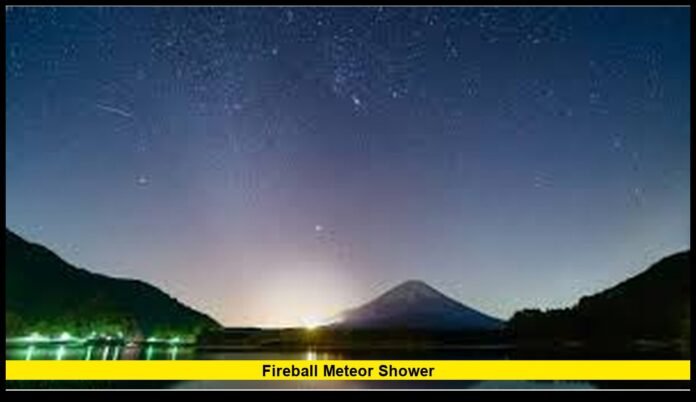

The fireball meteor shower has emerged as one of the most talked-about night-sky events in the United States as 2026 gets underway, delivering brilliant flashes of light that have been visible across wide regions of the country. From rural backroads to suburban neighborhoods, skywatchers have reported bright meteors streaking overhead, some glowing intensely enough to stand out even against moonlit skies.
This early-January celestial event has drawn attention not only for its visual intensity but also for its timing. Occurring just days into the new year, it has given many Americans their first astronomical highlight of 2026, sparking renewed interest in stargazing during winter nights.
What Defines a Fireball Meteor Shower
A fireball meteor shower refers to a period of meteor activity in which exceptionally bright meteors, known as fireballs, appear more frequently than usual. These are not ordinary shooting stars. Fireballs are produced by larger fragments of cosmic debris entering Earth’s atmosphere at tremendous speeds, generating intense heat and light as they burn up.
Unlike faint meteors that disappear in an instant, fireballs often:
- Shine brighter than most stars
- Travel longer distances across the sky
- Leave glowing trails that linger briefly
- Draw attention even in areas with light pollution
Because of their brightness and dramatic appearance, fireballs tend to leave lasting impressions on those who witness them, even if they appear unexpectedly for only a few seconds.
The Meteor Activity Behind the Current Fireballs
The fireball meteor shower observed in early January is closely tied to one of the most intense annual meteor events. This meteor activity occurs when Earth moves through a concentrated stream of debris left behind by an object that orbits the Sun.
As Earth passes through this region of space, countless tiny particles collide with the upper atmosphere. Most burn up quickly, creating faint streaks. Some, however, are large and dense enough to produce powerful fireballs visible across vast distances.
This particular debris stream is known for producing fast-moving meteors that enter the atmosphere at extreme speeds, increasing the likelihood of bright flashes and vivid colors.
Timing and Duration of the 2026 Event
The fireball meteor shower activity spans several weeks, but its most intense period occurs over a very short window. In 2026, the strongest activity concentrated around the first few days of January.
Key characteristics of this timing include:
- A rapid rise to peak activity
- A brief but intense maximum
- A gradual decline rather than an abrupt end
While the peak window is narrow, fireballs can appear both before and after it, making the overall viewing period longer than many people expect.
Moonlight and Viewing Conditions This Year
One of the most defining aspects of the 2026 fireball meteor shower has been its overlap with a bright full Wolf Moon. The strong moonlight created challenging conditions for seeing faint meteors but also played an unexpected role in highlighting fireballs.
Under bright lunar conditions:
- Dim streaks fade into the background
- Only the brightest meteors remain visible
- Fireballs appear more dramatic by contrast
Many observers noted that although fewer meteors were visible overall, the ones that did appear were strikingly bright, often drawing gasps or cheers from those watching.
Fireball Sightings Across the United States
Reports of fireballs have come from widely separated regions of the country, suggesting that the activity has been broad rather than localized. Observers described sudden flashes that briefly illuminated the sky, sometimes casting shadows or reflecting off surfaces.
Sightings were noted in:
- Northeastern states during evening and overnight hours
- Midwestern regions where clear winter skies allowed long viewing sessions
- Southern areas where milder temperatures encouraged extended observation
The wide geographic spread of these reports highlights how powerful some of these fireballs were, with single events visible across multiple states.
Why Fireballs Occur More Frequently During This Event
Fireballs are more likely during certain meteor showers because of the nature of the debris involved. In this case, the debris stream contains a higher proportion of larger particles compared to many other annual meteor events.
Several factors contribute to fireball formation:
- Larger meteoroid size
- High atmospheric entry speed
- Dense composition that resists rapid disintegration
When these elements combine, the result is a meteor that burns intensely and remains visible for longer than average.
Color and Brightness Variations
One of the most visually captivating aspects of the fireball meteor shower has been the range of colors reported by observers. While many fireballs appear bright white, others display shades of green, yellow, or even bluish tones.
These colors are influenced by:
- The chemical composition of the meteoroid
- Interaction with atmospheric gases
- Speed and angle of entry
Color variation adds another layer of fascination to fireball sightings, turning each event into a unique visual experience.
Where Fireballs Appear in the Sky
Although fireballs can appear almost anywhere overhead, understanding general sky patterns can improve viewing success. During this event, many meteors seem to radiate from the northern sky, especially as night transitions into early morning.
Important viewing tips include:
- Avoid focusing on one fixed point
- Scan wide sections of sky
- Look higher in the sky as the night progresses
Fireballs often appear suddenly and without warning, so maintaining a relaxed, wide-angle view is key.
Best Times to Watch
While fireballs can occur at any hour of darkness, certain periods tend to be more productive. During this event, the hours before dawn have consistently offered the best chances.
Reasons for this include:
- Earth’s rotation placing the observer into the direction of motion
- Higher encounter rates with debris
- Improved radiant positioning
That said, several bright fireballs have also been spotted earlier in the night, proving that patience at any hour can be rewarded.
Why This Fireball Meteor Shower Stands Out
The 2026 fireball meteor shower is notable for several reasons that set it apart from many past events.
First, the combination of an intense debris stream and a bright moon created conditions where only the most powerful meteors dominated the sky. This selective visibility made fireballs the stars of the show.
Second, the frequency of reports from across the country indicates that this was not an isolated phenomenon. Instead, it was a widespread event that captured attention far beyond traditional astronomy circles.
Finally, its timing at the very start of the year gave it symbolic weight, offering a dramatic reminder of Earth’s ongoing interaction with its cosmic environment.
Fireballs and Public Interest
Fireballs often generate heightened public interest compared to typical meteor activity because of their sudden brilliance and widespread visibility. Unlike many astronomical events that require advance planning or specialized equipment, fireballs appear unexpectedly and can be seen with the naked eye, making them accessible to people who may not normally follow space or astronomy news. Their intense brightness, sometimes rivaling the glow of nearby planets, captures attention instantly and prompts immediate reactions from anyone who happens to witness one.
During this fireball meteor shower, shared experiences have played a major role in amplifying public engagement. Neighbors compared sightings, families stepped outside together, and local conversations quickly formed around reports of bright flashes seen within minutes of one another. In many communities, the event became a spontaneous point of connection, with people realizing that others across towns and even states had witnessed the same celestial moment. This collective sense of awe helped transform the fireball meteor shower from a series of isolated sightings into a nationwide experience, uniting observers through wonder rather than technical knowledge or formal astronomy expertise.
What Happens After the Peak
Even though the most intense activity has passed, the fireball meteor shower does not end abruptly. Earth continues to pass through less dense regions of the debris stream for days afterward.
During this period:
- Meteor rates decline gradually
- Occasional fireballs remain possible
- Clear skies still offer rewards
Persistent observers may still catch memorable flashes during the nights following the peak, especially in the hours before sunrise.
Winter Stargazing Challenges and Rewards
Watching a fireball meteor shower in winter comes with a unique mix of obstacles and advantages. Cold temperatures, biting winds, and unpredictable weather systems can limit viewing opportunities and shorten observation sessions, especially during overnight and pre-dawn hours. Cloud cover and sudden changes in conditions are common in many parts of the United States during winter, requiring flexibility and patience from skywatchers.
Despite these challenges, winter stargazing offers some of the best sky conditions of the year. Clear, crisp air often follows cold fronts, reducing atmospheric haze and allowing stars and planets to appear sharper and more defined. Lower humidity levels improve transparency, making bright meteors and fireballs stand out more clearly against the dark sky. Longer nights also provide extended viewing windows, increasing the chances of catching sudden, unpredictable fireball events.
For those willing to bundle up and plan around weather breaks, winter observation can be especially rewarding. Quiet nights, fewer insects, and reduced outdoor light activity create a calmer environment for skywatching, turning cold evenings into memorable encounters with the night sky and its fleeting bursts of light.
Fireballs as a Reminder of Earth’s Place in Space
Fireballs serve as vivid reminders that Earth is not isolated but constantly moving through a dynamic cosmic environment. As our planet travels around the Sun, it repeatedly passes through streams of debris shed by ancient comets and rocky objects, some of which have been orbiting the solar system for thousands of years. When Earth intersects these invisible trails, even tiny fragments can produce dramatic effects as they collide with the atmosphere at extreme speeds.
Each fireball represents a fragment of space history, often no larger than a pebble, yet carrying immense energy due to its velocity. As it burns up harmlessly high above the ground, it briefly transforms cold, empty space into light and motion visible from Earth’s surface. These fleeting flashes offer a powerful reminder that our planet is part of a much larger system in constant motion, where interactions between Earth and cosmic material continue to shape both scientific understanding and human wonder.
Why Events Like This Matter
Beyond their visual beauty, fireball meteor showers spark curiosity, connection, and shared experience at a national scale. Unlike many astronomical events that require special equipment or careful planning, fireballs appear suddenly and can be witnessed by anyone who happens to look up, making them uniquely accessible. During this early-January event, countless Americans paused mid-routine — stepping outside after dinner, walking pets, or driving home — and unexpectedly encountered a moment of cosmic drama overhead.
For many people, this was their first time seeing a true fireball rather than a faint shooting star. The brightness, speed, and unpredictability of these meteors transformed an ordinary winter night into something memorable, often prompting conversations with family members, neighbors, or friends who saw the same flash moments apart. In a time dominated by screens and schedules, the fireball meteor shower offered a rare reminder of the shared sky above and reinforced how brief encounters with natural phenomena can inspire wonder, reflection, and a deeper appreciation for the universe that surrounds us.
Looking Ahead
While this fireball meteor shower gradually fades from U.S. skies, the year ahead promises no shortage of celestial moments worth watching. Meteor activity will continue at lower levels in the weeks following the peak, with occasional bright streaks still possible on clear winter mornings. Beyond this event, 2026 features a steady calendar of sky highlights, including additional meteor showers, planetary alignments, and lunar events that will draw attention throughout the seasons. The strong public response to this early-January fireball activity underscores how quickly interest can ignite when rare and vivid sights appear overhead. For now, the opening days of 2026 have delivered a powerful reminder that extraordinary astronomical displays can unfold without warning, turning an ordinary night into a moment of wonder. The night sky remains active, dynamic, and full of surprises for those willing to look up.
A Moment to Remember
The fireball meteor shower that opened 2026 has left a lasting impression across the United States, marking the year’s first major shared night-sky experience. From quiet rural roads to suburban backyards, observers paused to watch brilliant streaks cut through the darkness, some flaring brightly enough to momentarily light up the landscape. These sudden flashes, often appearing without warning, created moments of collective awe as people across different regions witnessed the same celestial phenomenon within hours of one another. Despite winter cold and challenging moonlit conditions, the visibility of powerful fireballs turned ordinary nights into memorable encounters with the cosmos. For many Americans, the event served as a reminder that even brief moments in the sky can inspire curiosity, reflection, and a deeper sense of connection to the universe above.
If you witnessed a fireball or plan to keep watching the skies, share your experience and stay alert for what the night sky brings next.