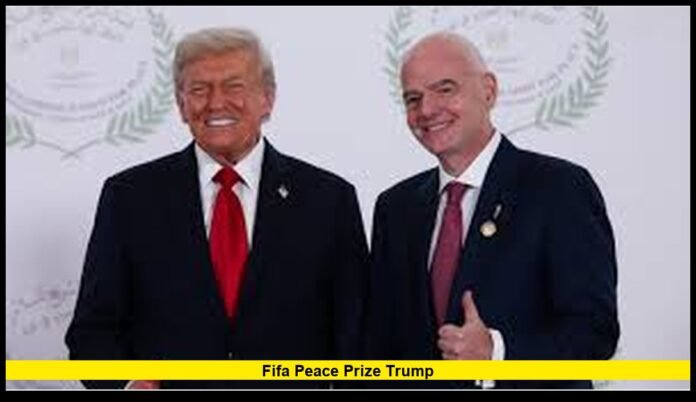

FIFA Peace Prize Trump became a widely discussed subject after FIFA presented its first-ever Peace Prize to former President Donald Trump during the 2026 World Cup draw in Washington, D.C. The event instantly shifted the spotlight from the tournament’s logistics to the surprise recognition delivered on one of world football’s biggest stages. This new article provides a fully new, detailed, and richly developed narrative suitable for publication on a major U.S. news site.
A Landmark Moment During the 2026 World Cup Draw
When the World Cup draw took place at the Kennedy Center, global audiences were expecting team placements, tournament commentary, and updates related to the expanded 48-team format. Instead, one of the most talked-about developments of the night came when FIFA President Gianni Infantino stepped on stage to introduce a newly created honor known as the FIFA Peace Prize.
The award was presented directly to Donald Trump as part of a scripted ceremony within the draw program. The decision was notable not only because the award was new but also because FIFA chose to reveal and present it live during one of its most watched international events. The gesture added an unexpected diplomatic layer to what is traditionally a strictly sports-focused occasion.
This moment quickly became the central headline of the evening, overshadowing even the draw results. Social media, news outlets, and sports analysts began dissecting the award’s implications, its timing, and what it signaled for both FIFA and the broader global conversation around peace-building initiatives.
The Creation of the New FIFA Peace Prize
FIFA introduced the Peace Prize as part of its commitment to recognizing individuals who contribute toward unity and peace across borders. The organization highlighted that the award is meant to honor impact-driven leadership and the promotion of global cooperation.
By positioning this prize within the broader “Football Unites the World” campaign, FIFA underscored its vision of extending the role of football beyond stadiums and competitive events. The campaign itself has been used in recent years to promote messages of inclusion, solidarity, and human development.
Introducing the award at the World Cup draw helped amplify its debut. FIFA is aware that few events receive as much international attention as the draw for the men’s World Cup, which reaches millions of viewers across continents. The choice to attach the new award to such a platform suggested a strategic effort to build credibility and visibility for the Peace Prize from the beginning.
Why the Award Was Presented During the Draw
The draw ceremony is a celebrated event known for its cultural performances, VIP appearances, and ceremonial importance. By incorporating the Peace Prize presentation into the program, FIFA made a deliberate effort to elevate the award.
Several factors made the draw an attractive setting:
- Global visibility: With representatives from participating nations, media outlets, and football officials present, the audience was both influential and international.
- Symbolic timing: The 2026 World Cup marks the first time the tournament will be hosted across three countries—United States, Mexico, and Canada—making unity an underlying theme.
- Diplomatic positioning: The presentation connected global football to international cooperation, aligning with FIFA’s ambitions to play a larger role in global outreach beyond sports.
The ceremony itself featured a video montage and a prepared announcement, presenting the Peace Prize as a long-term initiative intended to continue in future years.
A Closer Look at the Ceremony
The onstage moment between Infantino and Trump was carefully structured. Infantino introduced the award by emphasizing football’s role in connecting people around the world. He explained that the new Peace Prize honors individuals whose contributions go beyond political and cultural boundaries.
When Trump walked onto the stage, the applause indicated both surprise and strong engagement from the audience. Trump delivered brief remarks recognizing the honor and highlighting the significance of receiving the award during a globally televised event.
The ceremony’s design appeared intended to symbolize collaboration and international appreciation. The trophy itself became a focal point as cameras centered on the exchange between the two figures. The visual moment circulated rapidly online and became one of the most shared images of the draw.
Wider Public Reaction and Immediate Discussion
Following the ceremony, conversations surged on multiple platforms. Many supporters praised the recognition, viewing it as a meaningful acknowledgment of diplomatic efforts. Critics questioned whether the selection aligned with FIFA’s stated commitments to global unity and human rights.
The diverse reactions underscored how the Peace Prize instantly became more than just an internal FIFA announcement. It turned into a discussion point on national and international politics, sports diplomacy, and the evolving identity of FIFA.
What made the reaction particularly intense was the heightened visibility of the World Cup draw, which guaranteed that the award would reach an enormous global audience. Television broadcasts, online news platforms, and social channels replayed the ceremony repeatedly in the hours and days that followed.
FIFA’s Public Messaging and Mission
In the hours after the draw, FIFA focused its messaging on the principles behind the award. Central themes included global cooperation, unity through sport, and acknowledgment of contributions to peace.
FIFA emphasized that football is one of the few cultural forces capable of bridging divides. It stressed that recognizing individual efforts for peace aligns with its philosophy that sport carries social responsibility beyond competition.
The organization’s messaging also highlighted that the Peace Prize will continue to be awarded annually. FIFA intends to position it as an honor that reflects long-term commitments to harmony, inclusion, and international goodwill.
Symbolism Connected to the 2026 World Cup
The 2026 World Cup is already shaping up to be one of the most significant events in football history due to its tri-nation hosting format. The United States, Mexico, and Canada jointly represent a vast geographic region with diverse cultures, languages, and histories.
Presenting the Peace Prize during preparations for this tournament aligned with the broader message of unity. FIFA’s decision reinforced the idea that football can serve as a diplomatic bridge, especially when hosted across multiple countries.
The symbolism also extended to the host city. Washington, D.C. is home to global institutions, international embassies, and major policy organizations. Hosting the draw there added a layer of political relevance that made the award even more prominent.
Understanding What the Prize Represents
The FIFA Peace Prize is purely symbolic. It does not carry legal authority, political power, or official international status outside FIFA’s structure. It functions similarly to other organizational awards intended to highlight values, vision, and leadership aligned with a specific mission.
It does not intersect with existing major global awards, nor does it claim to. Instead, the Peace Prize was created by FIFA to recognize contributions the organization believes are noteworthy within its framework.
This distinction is important as it clarifies the objective nature of the award: a recognition shaped by FIFA’s criteria and values.
How the Award Fits Into FIFA’s Broader Goals
FIFA has been steadily expanding its influence in areas such as social development, gender equality, youth programs, and humanitarian outreach. The Peace Prize adds another dimension to this portfolio by linking football to global diplomacy.
Key elements of FIFA’s strategy include:
- Positioning football as a force for unity.
- Engaging global leaders through initiatives beyond competition.
- Building a legacy of social impact connected to major tournaments.
The introduction of the Peace Prize reflects FIFA’s intention to be seen not only as a sports regulator but as a global organization capable of driving dialogue and recognition in international affairs.
The Role of Football in Global Diplomacy
Football has historically played a significant role in cultural diplomacy. International matches, major tournaments, and cross-border partnerships often create opportunities for collaboration between nations.
FIFA has increasingly leaned into this concept, using its platforms to highlight shared values and promote cooperation. The Peace Prize reinforces this approach by acknowledging individuals whose actions contribute to a more harmonious global community.
The award also signals FIFA’s intention to use football as a medium for messaging about unity during turbulent times. By presenting it during the World Cup draw, FIFA made a statement that resonates far beyond the sport.
Public Interest Beyond the Sports World
While the World Cup draw itself attracts a huge audience, the Peace Prize presentation extended interest to those who typically follow political news rather than sports. The crossover audience created a larger conversation, capturing attention from:
- Policy analysts
- Diplomacy experts
- Academic institutions
- Social commentators
- Advocacy groups
This wider engagement reinforced the significance of the announcement and ensured the story remained in the news cycle far longer than many expected.
What Comes Next for the Peace Prize
FIFA has confirmed the Peace Prize will return annually. The organization is expected to formalize a process for determining future honorees, selecting committee members, and establishing criteria for evaluation.
Observers will watch how FIFA chooses future recipients and how the award integrates into major football events. The reaction to the inaugural ceremony suggests that future selections will likely receive close attention and questioning as well.
The award’s long-term credibility will depend on transparency, consistency, and FIFA’s continued commitment to the principles it claims to uphold through the prize.
A Transformational Moment for FIFA
The presentation of the first Peace Prize reflected FIFA’s determination to expand its image. By creating a new global award and attaching it to the world’s most-watched sporting event, FIFA signaled its intention to take a more visible role in global discussions about peace and unity.
Whether praised or criticized, the decision successfully placed FIFA at the center of an important international conversation.