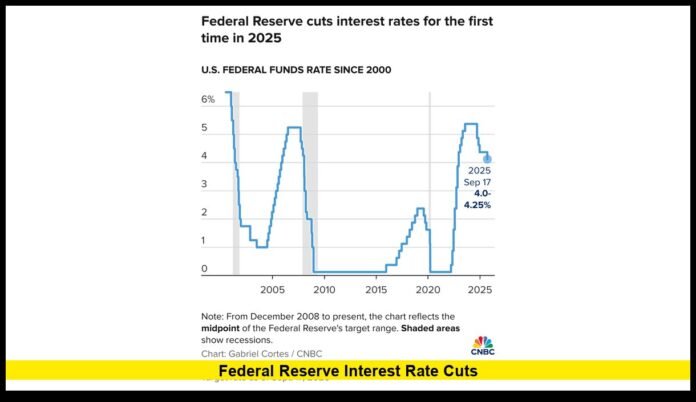

Federal Reserve interest rate cuts moved back into focus after the central bank lowered the federal funds target range to 3.50%–3.75% on December 10, 2025. This latest adjustment came during a period of economic cooling, ongoing inflation moderation, and growing concerns about slowing job growth. As one of the most followed decisions in the financial world, the cut marked an important change in direction for policymakers working to balance both stability and long-term sustainability in the economy.
The final meeting of the year added clarity to the central bank’s approach, but it also revealed the complexity of the current landscape. While easing financial conditions is designed to strengthen economic momentum, policymakers face a delicate task. They must support the labor market without reigniting inflation. That careful effort defined the tone of the December gathering.
Why the Fed Moved Toward Another Cut
Throughout 2025, economic data pointed to a softening labor market and a gradual easing in price pressures. Job growth slowed compared to the high levels seen earlier in the recovery, and wage growth began cooling as well. These adjustments signaled that the economy was responding to earlier tightening measures.
Inflation continued to trend downward, though it remained above the central bank’s preferred 2 percent target. This steady—yet incomplete—progress allowed officials to consider easing without risking a quick rebound in price growth. The December reduction followed earlier cuts in the same year, reflecting a consistent theme: the economy needed support, but not an overly aggressive push.
Officials believed a modest 25-basis-point move was the most responsible approach. It offered breathing room for borrowers and businesses without creating conditions that could fuel excess demand. Their comments reflected confidence in the downward direction of inflation but acknowledged uncertainty in the speed at which it would continue.
The Economic Backdrop Heading Into December
By the time policymakers arrived at the meeting, several key indicators had shifted:
- Hiring had cooled, particularly in interest-sensitive industries.
- Consumer spending remained steady, though slower than earlier in the year.
- Wage growth moderated, reducing pressures that might keep inflation elevated.
- Business investment showed mixed trends, influenced by both borrowing costs and long-term planning concerns.
The combination of slowing job creation and easing inflation produced an environment supportive of rate cuts. Still, the Fed’s messaging made clear that policymakers were proceeding carefully due to risks on both sides. They needed to avoid over-tightening the economy, but they also had to navigate the threat of stubborn price increases.
Committee Debate Revealed Deeper Concerns
One of the most notable elements of the December decision was the presence of internal disagreement. Some members pushed for a larger rate cut, citing signs of weakening demand. Others argued for no cut at all, believing the inflation fight required patience.
This split offered insight into how complicated the current moment has become. The economy is neither strong enough to justify tight policy nor weak enough to require aggressive easing. That middle ground often sparks debate, and the December meeting was no exception.
The discussion also underscored how important incoming data has become. With the economy showing mixed signals, any shift—positive or negative—could influence the direction of future meetings.
What the New Rate Range Means for Borrowers
The new federal funds target range affects a wide range of financial products. When the central bank adjusts this rate, borrowing costs throughout the economy often follow suit.
Mortgage Market Effects
Mortgage rates tend to respond gradually to monetary policy moves. While the December cut does not immediately shift long-term borrowing costs, it contributes to a downward trend that supports homebuyers. Lower rates can help households qualify for larger mortgages or reduce monthly payments.
Higher borrowing costs earlier in the year created challenges for the housing market. Builders, sellers, and buyers all felt the impact. With a continued easing path, activity could strengthen in the coming months, though improvements will depend on broader market dynamics.
Credit Cards and Consumer Loans
Borrowers carrying credit card balances often experience changes more quickly. Because these products are frequently tied to variable rates, a Fed rate cut can help reduce monthly interest costs. Even a modest shift can provide relief to households managing debt.
Auto loans also respond to shifts in funding costs. Lower rates can boost demand in the vehicle market, encouraging both new purchases and refinancing activity.
Savings Accounts and CDs
Savers benefited from higher yields during the tightening cycle. With cuts returning, banks may begin adjusting deposit rates downward. While yields will likely remain higher than earlier periods, changes may become noticeable over time. Consumers who prefer fixed returns might turn to longer-term products to lock in higher rates before additional adjustments occur.
Market Reaction to the December Decision
Market behavior before the December meeting reflected heavy anticipation. Investors debated how far the central bank was willing to go and whether internal disagreements would influence the pace of policy changes.
Once the cut was announced, stock markets gained momentum, reflecting optimism that conditions would ease in the months ahead. Treasury yields fell, aligning with expectations for a more supportive interest rate environment. Corporate bond markets also responded positively, as lower borrowing costs can help companies pursue new investments and refinancing plans.
Market confidence strengthened as investors gained clarity on the central bank’s near-term direction. However, the tone remained cautious, as the economic outlook still contains areas of uncertainty.
How This Cut Fits Into the Broader Policy Strategy
The December reduction continued the central bank’s measured easing strategy. Earlier cuts had already shifted policy from restrictive to more neutral territory. The latest move added to that effort, but policymakers signaled that future steps would not be automatic.
Instead, the strategy rests on several guiding principles:
- Closely tracking inflation trends to ensure progress continues.
- Monitoring job growth closely to assess whether the labor market slows further.
- Avoiding rapid changes that could confuse markets or create instability.
- Keeping policy flexible, allowing adjustments to be made at any meeting if necessary.
The result is an approach designed to stabilize the economy without triggering new inflation risks. This cautious style has become a hallmark of the central bank’s strategy in the post-tightening period.
What Comes Next: Key Data to Watch
The path forward will depend heavily on upcoming inflation and employment reports. If inflation continues its downward movement, more supportive measures may become appropriate. If inflation stalls, policymakers might pause to reassess.
Several factors will shape decisions in 2026:
Labor Market Trends
If hiring slows more dramatically, pressure may build for additional rate cuts. Weak employment conditions typically call for more accommodative policy, especially when inflation is not rising.
Consumer Spending
A drop in consumer activity would be another sign that easing could be necessary. Because spending represents a major portion of the economy, shifts in household behavior carry significant weight.
Business Investment
Companies are highly sensitive to borrowing costs. Monitoring investment levels can reveal how confident businesses feel about the economic environment.
Long-Term Inflation Expectations
Stable expectations help prevent inflation from rising again. Policymakers watch these indicators closely when deciding how fast to move.
The Broader Impact of Federal Reserve Interest Rate Cuts
Federal reserve interest rate cuts influence nearly every sector of the economy. They shape decisions made by homebuyers, corporations, governments, and financial markets. They also affect everyday choices, from when to purchase a car to how much to save each month.
The central bank’s December action reinforces its commitment to supporting economic stability through careful, steady adjustments. While uncertainties remain, policymakers aim to guide the economy toward a healthier balance between growth and price stability.
The journey ahead will require continued attention to shifting trends. But the December decision provides a clear signal: the central bank intends to move deliberately, staying responsive to data while avoiding abrupt changes that could disrupt financial conditions.
Final Thoughts
The latest cut marks an important moment at the end of a transitional year for the economy. As the nation enters 2026, the central bank will continue evaluating every shift in employment, inflation, and financial conditions. Households, investors, and businesses will be watching closely, knowing each new development has the potential to shape policy direction.
What do you think the next few months of economic data will reveal, and how should policymakers respond? Share your perspective below and join the discussion.