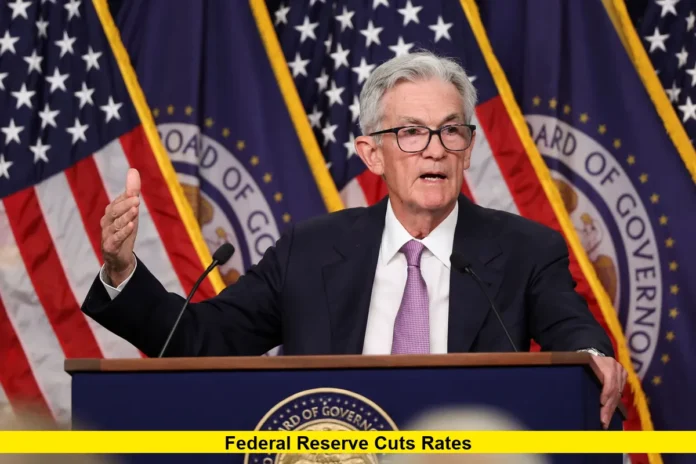

The federal reserve interest rate cuts announced this week mark a major development in U.S. monetary policy. On October 29, 2025, the Federal Open Market Committee (FOMC) voted to lower the federal funds rate by 25 basis points, bringing it to a target range of 3.75% to 4.00%. This is the second rate cut of 2025, following a year of economic uncertainty marked by slowing job growth, persistent inflation, and disruptions to government data reporting.
Why the Federal Reserve Cut Rates Again
A Slowing Labor Market
The Federal Reserve’s decision reflects growing concerns about a weakening labor market. Job growth has cooled compared to earlier in the year, with unemployment creeping higher. While employment levels remain relatively stable, policymakers are increasingly focused on protecting economic momentum and avoiding a deeper slowdown.
Chair Jerome Powell emphasized that the job market’s softening trend was one of the key reasons for the rate cut. The Fed aims to sustain employment gains while maintaining progress toward its 2% inflation goal.
Inflation Still Elevated
Inflation remains slightly above the Federal Reserve’s target, hovering near 3%. The Fed noted that although inflation pressures have moderated since 2023, prices for services and housing continue to rise. This mix—stubborn inflation and weakening job data—presents a delicate challenge, prompting the central bank to take a cautious but supportive approach.
Data Uncertainty Due to Government Disruptions
The recent federal government shutdown delayed critical economic reports such as the monthly employment and inflation data. This data gap left policymakers with limited visibility into near-term trends, further reinforcing the case for a small, measured rate cut.
Key Details at a Glance
| Indicator | Update (October 2025) |
|---|---|
| Federal funds rate | 3.75% – 4.00% |
| Change | − 0.25% |
| Cuts in 2025 | 2 (March and October) |
| Balance sheet policy | Fed to end balance sheet reduction (QT) on December 1, 2025 |
| Next FOMC meeting | Scheduled for December 17–18, 2025 |
The end of balance sheet reduction—often referred to as quantitative tightening (QT)—means the Federal Reserve will stop shrinking its asset holdings and instead reinvest maturing Treasury and mortgage-backed securities. This move is intended to maintain stability in the financial system and support liquidity in credit markets.
Impact of Federal Reserve Interest Rate Cuts on Americans
1. Borrowers
The immediate beneficiaries of rate cuts are borrowers. Over the coming months:
- Auto loan rates are expected to ease slightly, making vehicle financing more affordable.
- Credit card interest rates could stabilize or dip, providing modest relief for consumers with revolving balances.
- Adjustable-rate mortgages (ARMs) may see reductions in monthly payments as benchmark rates shift lower.
However, fixed-rate mortgages may not move much right away since they are more influenced by long-term Treasury yields than by short-term Fed policy.
2. Savers
For savers, rate cuts can have the opposite effect. Banks tend to reduce yields on savings accounts, money market funds, and certificates of deposit (CDs). After two years of rising returns, deposit rates could now begin trending lower through the end of 2025. Consumers seeking strong yields may need to shop around or consider longer-term fixed-rate CDs.
3. Businesses
Lower borrowing costs can help businesses manage debt and finance expansion. Small-business loan rates are expected to decline modestly, easing pressure on owners facing higher input costs. However, if economic demand continues to slow, some firms may still hesitate to invest despite cheaper credit.
4. Stock Market and Investments
Equity markets initially reacted positively to the rate cut, viewing it as a sign of the Fed’s willingness to support growth. Technology and real-estate stocks gained, while bank stocks remained mixed due to the outlook for lower lending margins. Bond yields fell as investors anticipated slower tightening ahead, lifting Treasury prices and supporting corporate bonds.
How This Fits into the Broader Economic Picture
The October 2025 decision highlights the Federal Reserve’s shift from a strictly inflation-fighting stance to one more balanced between price stability and employment.
Key trends shaping this outlook include:
- Cooling consumer spending as households feel the impact of higher living costs.
- Steady but uneven wage growth, with some sectors showing strength while others slow.
- Easing global supply pressures, helping moderate goods prices.
- Cautious optimism among investors that the economy may achieve a “soft landing”—slower growth without a full-scale recession.
Still, the Fed remains clear: it is not committing to a cycle of cuts. Policymakers will assess future decisions based on upcoming inflation and employment data. Another cut in December 2025 remains possible, but only if economic conditions weaken further.
What to Watch Next
1. Upcoming Economic Data
Over the next several weeks, markets will closely track delayed federal reports once they resume publication. These include:
- The October jobs report
- The latest Consumer Price Index (CPI) and Producer Price Index (PPI) data
- Updated GDP growth figures for Q3 2025
Clearer data will help confirm whether the slowdown is temporary or more sustained.
2. December Fed Meeting
The Fed’s next policy meeting in mid-December will determine whether more easing is needed. Market forecasts currently show divided expectations—some anticipate one final 25-basis-point cut, while others expect the Fed to pause to evaluate economic momentum.
3. Market Reactions and Consumer Behavior
If borrowing rates decline further, consumer confidence could strengthen heading into the 2025 holiday season. However, if inflation fails to ease meaningfully, the Fed may hold rates steady to avoid fueling renewed price pressures.
Conclusion
The latest federal reserve interest rate cuts demonstrate how the central bank is adjusting its approach amid economic crosscurrents. With inflation still above target and job growth slowing, the Fed is trying to safeguard the recovery without reigniting price pressures. While the move provides some relief to borrowers and markets, its ultimate impact will depend on whether the economy stabilizes in the coming months.
Do you think the Fed made the right move by cutting rates again? Share your thoughts below and stay tuned for more economic updates.