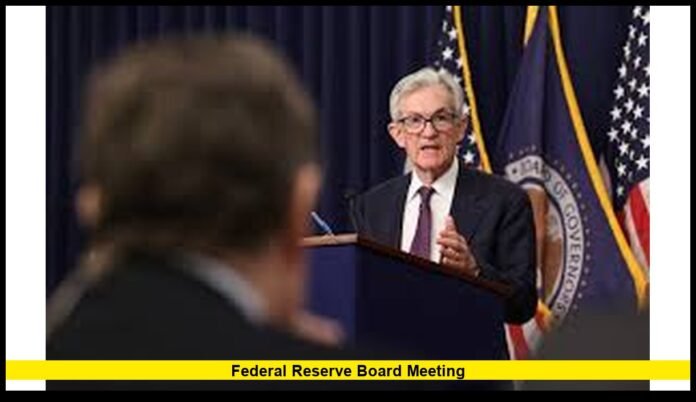

The December policy decision delivered at the Federal Reserve Board meeting marked one of the year’s most closely followed developments for financial markets, businesses and households. The central bank lowered the federal funds target range to 3.50%–3.75%, released new economic projections and outlined adjustments to its operating framework designed to keep financial conditions stable. The move comes at a moment when the U.S. economy continues to grow but faces mixed signals in hiring, inflation and consumer demand.
This article provides an in-depth, newly written breakdown that stands entirely on its own while presenting a clear view of how the decision shapes the path ahead for the U.S. economy.
A major policy shift as the year ends
The rate cut marks the third consecutive reduction this year. While modest in size, the decision signals a shift toward a more supportive stance after a long period of restrictive policy aimed at containing inflation. Policymakers determined that economic conditions warranted additional easing, citing slower job growth, rising unemployment and price pressures that remain somewhat elevated.
Short paragraphs of the reasoning appeared across the official communication, but the overarching message was straightforward: the economy is expanding, yet not as rapidly as before, and signs of cooling justify careful adjustments.
The committee emphasized that the cut should not be interpreted as the start of a rapid downward path. Instead, it reflects the balance of risks facing the U.S. economy—risks that include the pace of hiring, consumer spending, business investment and how inflation behaves over the next several months.
Why policymakers saw room for a rate cut
The Fed’s decision was rooted in several observable economic patterns.
Slowing job gains
Hiring has decelerated compared with the brisk pace seen in prior years. Employers are still adding jobs, but not at levels that suggest overheating. A cooler labor market reduces wage pressure, which is a key factor affecting inflation.
A slight uptick in unemployment
The unemployment rate has edged higher, signaling a shift in employer demand. Although still low by historical standards, the rise provides an early indication that businesses are becoming more cautious about staffing.
Inflation no longer accelerating
Inflation has moved off its peak, but progress has been uneven. Some categories such as housing costs and services remain firm. Policymakers aim to guide inflation toward the 2% target while avoiding unnecessary strain on the labor market.
Moderate economic growth
Consumer spending continues to support GDP, but higher borrowing costs over the past two years have slowed momentum in housing, durable goods and certain business-investment categories. A rate cut may help ease some pressures without inviting new inflation risks.
These factors helped shape the final vote, although it was not unanimous. Some policymakers argued that softening economic signals justified a larger reduction, while others believed the data did not call for any change at this meeting. The split offers insight into the complexities of setting national monetary policy during a transition period.
New projections outline the Fed’s economic expectations
A major feature of the December meeting was the release of updated economic projections. These forecasts serve as a directional indicator, offering a glimpse into what policymakers believe may unfold if current trends continue.
While projections are not commitments, they provide transparency into how officials view the country’s economic health.
Growth outlook
The forecast anticipates steady but moderate growth. Consumer spending remains resilient, though interest-sensitive sectors like real estate may take longer to recover. Business investment varies by industry, with technology and energy showing strength while other sectors remain cautious.
Inflation expectations
Inflation is projected to move closer to 2% over time, supported by easing supply constraints, slower wage acceleration and steadier demand. Officials remain focused on ensuring inflation expectations do not drift higher.
Labor market view
Policymakers expect the labor market to continue cooling. Job openings have declined, and turnover is lower, which can help slow wage increases while keeping employment levels relatively strong.
Interest rate path
The new forecasts suggest that future adjustments will depend heavily on incoming data rather than a predetermined schedule. This data-dependent approach means the Fed will observe how inflation and employment unfold before considering additional cuts.
These projections help households and businesses understand the direction of policy, even though the central bank avoids offering promises about future decisions.
A key operational change: purchasing short-term Treasuries
Beyond the headline rate cut, another important decision emerged from the meeting: the Fed plans to purchase short-term Treasury securities to maintain ample reserves in the banking system.
This policy is not a stimulus program but a technical move to ensure the financial system has enough liquidity to function smoothly.
Why reserves matter
Banks rely on reserves to meet daily obligations. When reserves fall too low, short-term interest rates can swing unpredictably. Treasury purchases help stabilize this environment by ensuring banks maintain the necessary cushion.
Impact on money markets
The decision supports orderly trading in overnight funding markets, where institutions borrow and lend short-term cash. Stability in these markets is essential for transmitting the Fed’s policy decisions across the financial system.
Not a return to past asset-purchase programs
Unlike large-scale bond purchases used years ago, these targeted operations are meant only to maintain smooth market functioning, not to stimulate the broader economy. The distinction is important because it shows the Fed aims to support operational consistency without altering its broader stance.
This shift signals a commitment to keeping the financial plumbing of the economy strong, which indirectly benefits consumers and businesses relying on predictable borrowing costs.
A divided vote reveals different views on the economy
One striking feature of the meeting was the range of opinions reflected in the final vote. Some policymakers expressed the view that economic momentum is weakening more quickly than previously expected. They argued for more immediate easing, believing it could help support hiring and investment.
Others felt the economy still shows resilience and preferred to hold rates steady. They pointed to continued consumer strength, steady wage gains and the risk that inflation could remain above target.
The diversity of opinions highlights the complexity of evaluating nationwide conditions. The U.S. economy is large and varied, with different regions and industries experiencing distinct challenges. Policymakers factor all of this into their decisions, leading at times to divided outcomes.
How the decision fits into this year’s policy landscape
The December adjustment continues a trend of modest easing that began earlier in the year. After an extended period of elevated interest rates, the committee shifted toward gradual reductions. These moves reflect the central bank’s belief that restrictive policy has accomplished much of its goal of cooling inflation.
However, cautiousness remains. Officials are aware that inflation progress could stall, that labor markets might weaken faster than expected, or that global economic conditions may create new pressures. As a result, they have avoided signaling a predetermined sequence of rate cuts.
The road ahead will depend on:
- The pace of inflation decline
- Stability in the labor market
- Consumer and business spending
- Global financial conditions
- Market reactions to policy adjustments
This approach allows the central bank to respond quickly if conditions change, providing flexibility that can help maintain economic stability.
What households should expect
For American families, the effects of the rate cut will show up gradually across various aspects of financial life.
Credit cards and personal loans
Interest rates on revolving credit lines and certain personal loans may ease slightly. These products adjust more quickly to changes in short-term interest rates than mortgages or auto loans.
Mortgage market
Mortgage rates do not move in lockstep with the federal funds rate, but broader financial conditions influenced by Fed policy can shape mortgage pricing. Homebuyers and homeowners assessing refinance opportunities may see small adjustments over the coming weeks depending on bond-market movements.
Savings accounts and CDs
Some deposit rates may decline, as banks adjust earnings expectations in response to lower short-term rates. However, competition among institutions can moderate this effect.
Household budgets
Lower rates can ease debt burdens for some families, especially those with variable-rate loans. Stable employment conditions also remain essential, underscoring why policymakers monitor the labor market closely.
What businesses should expect
Businesses across the country will also feel the effects of the decision, though impacts vary based on size, industry and financing needs.
Lower borrowing costs
Companies with short-term financing arrangements may benefit from reduced interest expenses. This can help support investment plans, hiring decisions and inventory expansion.
Investment planning
Uncertainty over inflation and growth has made some firms cautious. A clearer policy direction can help executives gain confidence in planning for capital expenditures or expansion.
Labor-market adjustments
Businesses continue to adapt to moderating labor demand. While talent remains valuable, wage pressures have eased from recent highs. Companies may find it easier to balance staffing levels without the intense competition seen in earlier years.
Supply chain dynamics
Improving supply conditions and steadier demand help reduce cost volatility. These factors, combined with lower financing costs, may support smoother production cycles.
A more stable environment for financial markets
Financial markets closely follow the Fed for guidance on the direction of borrowing costs and the general economic outlook. The combination of the rate cut, new projections and liquidity-support measures offers clarity that investors often seek.
Bond markets
Treasury yields may adjust as investors respond to the updated policy direction. Long-term rates reflect expectations of future inflation, growth and Fed policy.
Stock markets
Equity markets often react favorably to stable policy paths and supportive economic conditions. Companies reliant on consumer demand may experience increased investor confidence as borrowing conditions improve.
Currency movements
Exchange rates can shift based on relative interest-rate expectations. A slightly more accommodative stance may influence how the U.S. dollar trades against other major currencies.
Market reactions evolve over days and weeks as investors digest new information and incorporate it into pricing.
Looking ahead: what to watch next
The coming months will be significant for evaluating how effective the December policy adjustment becomes. Key indicators to track include:
- Monthly employment reports
- Wage-growth trends
- Consumer-price data
- Business-investment surveys
- Housing-market activity
- Bank-lending patterns
Policymakers have made it clear that decisions will rely on these data points. A single report will not determine future policy, but a pattern of consistent changes will influence the direction of interest rates.
The Federal Reserve Board meeting has set the tone for the start of the next policy cycle. With careful monitoring and cautious adjustments, officials aim to guide the U.S. economy toward sustainable growth, steady employment and stable inflation without introducing unnecessary volatility.