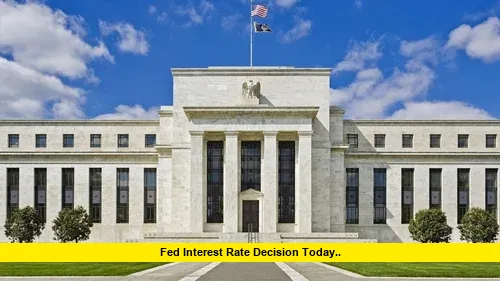

The fed interest rate decision today is drawing nationwide attention as the Federal Reserve concludes its first policy meeting of the year and signals how it plans to navigate inflation, employment, and economic growth in 2026. The central bank has chosen to keep its benchmark interest rate unchanged, maintaining the target range that was established late last year after a series of gradual rate cuts.
This decision reflects a cautious, data-driven approach as policymakers weigh signs of cooling inflation against a labor market that remains resilient. For households, businesses, and financial markets, the move offers short-term stability while keeping the focus on how economic conditions may shape future policy.
Stay informed on how this decision could affect your loans, savings, and investments in the months ahead.
Why the Federal Reserve Chose to Hold Rates
At its latest Federal Open Market Committee meeting, the Fed voted to leave the federal funds rate in the range of 3.50 percent to 3.75 percent. The decision followed several months of easing policy in late 2025, when officials reduced rates in response to slowing inflation and moderating economic growth.
By keeping rates steady, the central bank signaled that it wants more evidence that inflation is moving sustainably toward its long-term target before making additional changes. Economic growth has remained solid, consumer spending has continued, and employment levels have shown stability. These factors together support a wait-and-see strategy rather than an immediate shift in policy.
The vote was not unanimous, highlighting that some policymakers favor a more accommodative stance, while others believe current conditions still warrant caution.
How This Affects Everyday Borrowers
Interest rates set by the Federal Reserve influence a wide range of consumer and business borrowing costs. When the benchmark rate stays unchanged, it helps keep short-term lending rates stable across:
- Mortgage and home equity loans
- Auto and personal loans
- Credit cards and revolving credit
- Business and commercial financing
For homeowners and potential buyers, this means mortgage rates are less likely to experience sudden swings. For consumers carrying variable-rate debt, monthly payments are also expected to remain relatively consistent in the near term.
Businesses benefit from predictable financing conditions, which can support investment planning and expansion decisions.
Inflation Remains the Key Factor
Inflation continues to be the central issue guiding monetary policy. Although price growth has slowed compared with earlier years, it remains above the Federal Reserve’s long-term goal. Policymakers want to ensure that progress toward price stability is durable before making further rate cuts.
Recent data show that core inflation measures have moderated, but certain sectors, including housing and services, still experience upward price pressures. The Fed’s decision to hold rates reflects its effort to avoid loosening financial conditions too quickly, which could risk reigniting inflation.
At the same time, the central bank is mindful of not keeping policy too tight for too long, as that could slow economic activity more than intended.
Labor Market Conditions and Economic Growth
The U.S. labor market remains a crucial part of the policy equation. Job growth has eased from the rapid pace seen in previous years, but unemployment levels remain historically low. Wage growth has also shown signs of moderation, which could help ease inflation over time.
Economic output continues to expand, supported by consumer spending and business investment. These trends suggest that the economy is growing at a sustainable pace, allowing the Fed to pause and assess how past rate moves are filtering through the system.
Market Reaction and Investor Outlook
Financial markets had largely anticipated a pause, and reactions were relatively muted following the announcement. Stock indexes showed modest movement, while bond yields remained stable as investors digested the implications for future policy.
Market participants are now focusing on upcoming economic reports, particularly inflation and employment data, to gauge when the next policy shift might occur. Expectations currently point toward potential rate adjustments later in the year, depending on how economic conditions evolve.
What Comes Next for Monetary Policy
Future decisions will depend heavily on incoming data. The Federal Reserve will closely monitor:
- Monthly inflation reports
- Employment and wage growth figures
- Consumer spending and business activity
- Financial market conditions
If inflation continues to ease and economic growth remains balanced, policymakers may consider further rate reductions later in the year. If price pressures persist, the central bank could maintain its current stance for longer.
What This Means for Households and Businesses
For now, the decision to hold rates provides a measure of certainty. Borrowers can plan around stable interest costs, while savers and investors can assess their options in an environment where rates are no longer rising but have not yet entered a rapid cutting cycle.
The broader message is one of cautious optimism. The economy is showing resilience, inflation is moving in the right direction, and policymakers are aiming to guide the U.S. toward a period of sustained stability.
Share your thoughts on how this rate decision could impact your finances and stay tuned for the next major policy update.