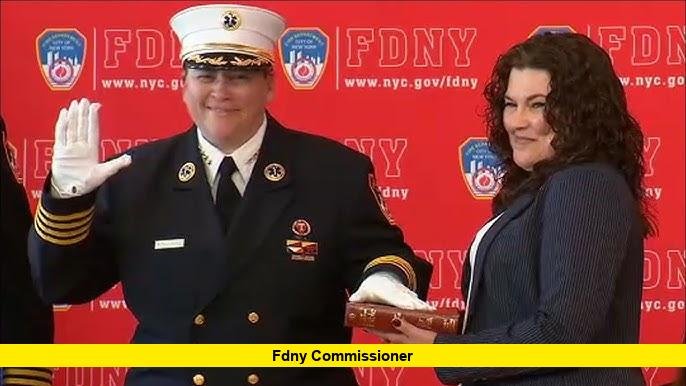

New York City is entering a consequential period of change as the fdny commissioner position shifts to new leadership, bringing renewed focus to how the nation’s largest municipal fire department is managed, staffed, and prepared for the future. This confirmed leadership transition comes at a time when public safety demands remain high and expectations for emergency response continue to evolve across the city.
The appointment of a new commissioner signals both continuity and change for the Fire Department of the City of New York. While day-to-day operations remain steady, the leadership shift carries long-term implications for policy direction, internal culture, and how the department adapts to modern challenges.
A Major Leadership Shift at a Critical Time
The Fire Department of New York stands at the intersection of tradition and transformation. Serving more than eight million residents, the department responds to fires, medical emergencies, hazardous incidents, technical rescues, and large-scale disasters. Leadership changes at the commissioner level shape how these responsibilities are prioritized and executed.
The recent transition follows the departure of the outgoing commissioner, whose term concluded in December 2025. His exit aligned with a broader change in city leadership, a moment when senior public safety roles often see realignment to reflect new administrative priorities.
City officials confirmed that Lillian Bonsignore, a retired FDNY Chief of EMS Operations, will assume the commissioner role. Her appointment introduces leadership with deep operational experience, particularly in emergency medical services, which now represent a substantial portion of FDNY call volume.
Understanding the Role of the Commissioner
The fire commissioner serves as the civilian head of the FDNY, overseeing strategic planning, budgeting, personnel management, and policy implementation. While uniformed chiefs manage daily operational decisions, the commissioner sets the overall direction of the department.
This includes balancing firefighter safety, public accountability, workforce morale, and fiscal responsibility. The role also requires close coordination with City Hall, other emergency agencies, and community stakeholders.
Because of this broad scope, a change in commissioner is more than symbolic. It can influence hiring strategies, training investments, technology upgrades, and how the department prepares for future risks.
The Outgoing Commissioner’s Tenure
The departing commissioner led the FDNY through a period marked by steady operational demand and internal leadership adjustments. During his tenure, he emphasized maintaining readiness amid staffing pressures and growing emergency call volumes.
One of his final major actions was strengthening leadership within the emergency medical services division. He appointed a veteran EMS leader to oversee operations, reinforcing the department’s recognition that medical response is central to modern fire service work.
His resignation followed the city’s mayoral election and reflected differences in administrative approach with the incoming leadership. The transition was handled through established procedures to ensure stability and uninterrupted emergency response.
Who Is Lillian Bonsignore
Lillian Bonsignore brings decades of experience within the FDNY, most notably as Chief of EMS Operations. In that role, she managed one of the largest emergency medical systems in the country, overseeing paramedics, EMTs, supervisors, and support staff across all five boroughs.
Her career focused on operational efficiency, responder safety, and improving patient outcomes. She worked extensively on training standards, response coordination, and large-scale incident management.
As commissioner, she becomes one of the few leaders to rise to the department’s top civilian position with a background rooted in EMS rather than traditional fire suppression. This distinction is expected to influence how resources and attention are allocated within the department.
A Historic Appointment
Bonsignore’s appointment carries historical significance. She becomes only the second woman to lead the FDNY, underscoring gradual but meaningful progress in diversifying leadership within one of the most tradition-oriented public safety agencies in the country.
Her selection reflects confidence in institutional experience over external management. Rather than bringing in an outsider, city leadership chose someone deeply familiar with the department’s culture, challenges, and strengths.
This approach is often seen as a way to ensure continuity while still allowing for thoughtful evolution.
What This Means for Firefighters and EMS Personnel
For the FDNY’s uniformed workforce, leadership changes often raise questions about policy shifts, staffing levels, and operational priorities. Early indications suggest that the new commissioner’s focus will be practical rather than disruptive.
Firefighters and EMS professionals are expected to see continued emphasis on training, safety protocols, and coordinated response. Given Bonsignore’s background, emergency medical services may receive increased attention in areas such as deployment strategies and resource planning.
However, department officials have emphasized that core firefighting missions will remain unchanged. The FDNY’s identity as a fire service remains central, even as medical response grows in importance.
The Growing Role of Emergency Medical Services
Across the United States, fire departments increasingly serve as frontline medical responders. In New York City, medical calls account for a significant share of FDNY responses, often far exceeding fire incidents.
This reality has reshaped how departments think about staffing, equipment, and training. The new commissioner’s experience aligns closely with these trends, positioning the FDNY to further integrate medical and fire operations.
That integration does not diminish traditional firefighting. Instead, it reflects the evolving nature of urban emergencies, where medical crises, fires, and complex rescues often overlap.
Leadership Transition and City Governance
Changes in the FDNY commissioner role often mirror broader shifts in city government. Public safety leadership must align with mayoral priorities while maintaining operational independence necessary for emergency response.
This transition occurs as the new administration outlines its vision for public services, infrastructure, and community engagement. The commissioner will play a key role in translating those priorities into departmental policy without compromising readiness.
Historically, strong relationships between City Hall and the FDNY have been essential during crises, from severe weather events to large-scale emergencies.
Operational Demands Remain Constant
Even amid leadership changes, the FDNY’s workload does not slow. Firefighters and EMS teams continue responding to multi-alarm fires, serious medical emergencies, and hazardous conditions across the city.
Recent incidents have underscored the department’s critical role in protecting life and property. These ongoing demands highlight why leadership transitions must be carefully managed to avoid operational disruption.
The department’s command structure and established procedures are designed to ensure continuity, regardless of changes at the top.
National Attention on FDNY Leadership
Because of its size and reputation, the FDNY often sets standards followed by other fire departments nationwide. Leadership decisions made in New York can influence broader conversations about public safety management.
The appointment of a commissioner with extensive EMS experience reflects a national trend toward recognizing medical response as a central fire service function. Other cities may look to New York’s approach as they evaluate their own leadership models.
This adds a layer of significance to the transition beyond city boundaries.
What Residents Should Know
For New Yorkers, the leadership change is unlikely to affect how quickly help arrives during an emergency. Firehouses remain staffed, EMS units remain active, and dispatch systems continue operating without interruption.
The commissioner’s influence is felt more in long-term planning than in immediate response. Over time, residents may see changes in public education efforts, safety campaigns, or resource deployment strategies.
The department’s mission to protect life and property remains unchanged.
Looking Toward the Future
As the new commissioner settles into the role, attention will turn to how the FDNY addresses ongoing challenges such as workforce recruitment, retention, and responder wellness. Budget decisions, equipment upgrades, and training investments will also shape the department’s trajectory.
Leadership stability during this period is critical. The combination of institutional knowledge and operational experience positions the department to move forward with confidence.
Later in the year, the fdny commissioner will be expected to outline priorities that reflect both the department’s traditions and the realities of modern urban emergency response.
A Moment of Continuity and Change
This leadership transition represents a balance between honoring the FDNY’s long-standing traditions and adapting to a changing city. While faces at the top may change, the department’s commitment to service remains constant.
For firefighters, EMS professionals, and the communities they serve, the coming months will reveal how leadership vision translates into action on the ground.
How do you think this leadership change will shape the future of emergency response in New York City? Share your perspective and stay connected for ongoing updates.