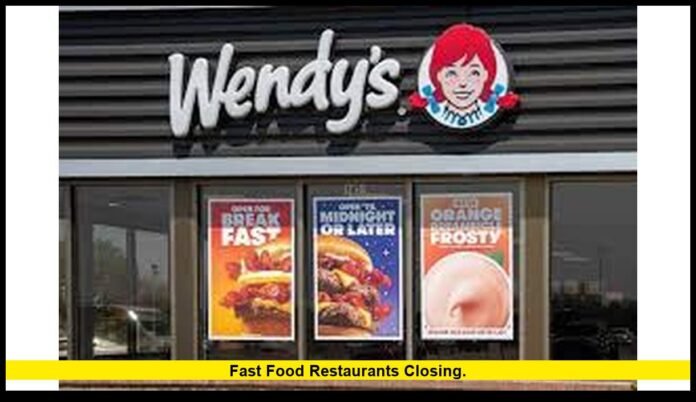

Fast food restaurants closing across the United States have become one of the defining business and consumer trends of 2025. From nationally recognized chains reducing their footprints to local quick-service favorites shutting down after years of operation, confirmed closures are changing how and where Americans eat. This in-depth report provides a fresh, detailed look at the latest verified developments, explaining what is closing, why it is happening, and what these changes mean for communities nationwide.
A Year Defined by Fast Food Restaurant Closures
The fast-food industry entered 2025 facing pressures that continued to intensify as the year progressed. While demand for quick, affordable meals remains strong, many operators have struggled to balance rising costs with changing customer expectations. As a result, fast food restaurants closing has become a frequent headline across the country.
Unlike short-term disruptions, these closures reflect confirmed, permanent business decisions. Companies are reassessing where they operate, which locations remain profitable, and how best to position themselves for the future.
Major National Chains Scaling Back Operations
Wendy’s Reduces Its U.S. Footprint
Wendy’s is one of the most prominent fast-food brands making large-scale changes in 2025. The company has confirmed plans to permanently close hundreds of underperforming restaurants across the United States.
These closures focus on locations that consistently fail to meet sales expectations. Wendy’s leadership has emphasized that the brand is not exiting the U.S. market. Instead, it is concentrating resources on higher-performing restaurants while reducing operational inefficiencies.
Key points shaping Wendy’s closures include:
- Long-standing locations with declining traffic
- Markets where labor and operating costs outweigh revenue
- A broader push to modernize remaining restaurants
For customers, these closures may mean longer travel times to the nearest Wendy’s location. For communities, they often mark the loss of a familiar dining option.
Jack in the Box Continues Its Restructuring
Jack in the Box has also been at the center of fast food restaurants closing in 2025. The chain launched a company-wide restructuring strategy aimed at stabilizing finances and improving long-term performance.
As part of this effort:
- Dozens of Jack in the Box locations have already closed
- Additional closures are scheduled as the company evaluates performance market by market
- Restaurants with declining sales or high operating costs are most affected
Jack in the Box still maintains a large national presence, especially in the western and southern United States. However, this reduction marks one of the most significant contractions in the brand’s history.
McDonald’s Ends Its CosMc’s Experiment
McDonald’s tested new territory with CosMc’s, a small, beverage-focused concept designed to attract customers through drive-thru convenience. That test concluded in 2025.
All CosMc’s locations have now closed permanently. The concept did not expand beyond a limited number of sites, and McDonald’s has confirmed it will no longer operate CosMc’s as a standalone brand.
While McDonald’s core restaurants remain strong, the CosMc’s closure highlights how even industry leaders must carefully evaluate new ideas in a crowded fast-food market.
Other Chains Experiencing Closures
Arby’s Quietly Shuts Select Locations
Arby’s has closed several restaurants in 2025, though without broad public announcements. These closures are tied to underperforming locations rather than a company-wide retreat.
The closures tend to occur in markets where sales have softened or operating costs have increased. Arby’s continues to operate hundreds of restaurants nationwide, but the adjustments signal a focus on efficiency.
Legacy Brands Continue to Shrink
Some fast-food names have been declining for years, and 2025 continued that trend.
- Arthur Treacher’s now operates only a small number of locations, primarily in Ohio
- Hot ’n Now, once a popular budget burger chain, is down to just a couple of operating restaurants
These reductions reflect long-term shifts in consumer preferences and competition from newer dining concepts.
Local and Regional Fast Food Restaurants Closing
While national brands dominate headlines, local and regional fast food restaurants closing often have the deepest impact on communities.
Bush’s Chicken Location Closes in Texas
A Bush’s Chicken restaurant in Laredo, Texas, permanently closed in 2025. The location had been open for a relatively short time but struggled to maintain consistent business.
Although Bush’s Chicken continues to operate many locations, this closure shows how individual franchise restaurants can face challenges even within otherwise stable systems.
Hamburger Depot Shuts Down After a Decade
In Bridge City, Texas, Hamburger Depot closed its doors after ten years of serving local customers. The closure marked the end of a neighborhood favorite known for classic fast-food offerings.
While other Hamburger Depot locations remain open, the Bridge City shutdown reflects how smaller operators are not immune to broader economic pressures.
Why Fast Food Restaurants Are Closing
The confirmed closures across the U.S. share several underlying causes. These are not isolated events, but part of a broader industry recalibration.
Rising Operating Costs
Fast-food businesses operate on narrow margins. In 2025, many faced:
- Higher wages and staffing costs
- Increased prices for food and packaging
- Rising rent, utilities, and maintenance expenses
For restaurants already struggling, these factors made continued operation unsustainable.
Changing Customer Expectations
Consumer behavior has evolved rapidly:
- Customers expect faster service and smoother drive-thru experiences
- Mobile ordering and delivery have become standard expectations
- Many diners seek value while also demanding quality and consistency
Locations that fail to meet these expectations often see declining traffic.
Strategic Corporate Decisions
Not all closures result from failure. Some are deliberate business choices.
Companies like Wendy’s and Jack in the Box are trimming weaker locations to strengthen their overall systems. These moves aim to improve profitability and prepare brands for future growth, even if they reduce the number of physical restaurants.
Fast Food Closures and Employment Impact
Fast food restaurants closing affect more than dining options. Workers are often the first to feel the impact.
Common effects include:
- Job losses or relocations
- Reduced hours leading up to closures
- Uncertainty for employees in affected locations
In some cases, employees can transfer to nearby locations. In others, closures leave limited options, particularly in smaller towns.
Community Reactions to Closures
Communities respond strongly when familiar fast-food restaurants close.
- Long-time customers often express disappointment and nostalgia
- Local businesses may feel reduced foot traffic
- Vacant buildings can remain empty for months or longer
In many areas, fast-food restaurants serve as informal gathering spots. Their absence can change local routines.
Closures Do Not Mean the End of Fast Food
Despite the number of fast food restaurants closing, the industry itself is not disappearing.
Important context includes:
- Many brands are renovating and upgrading remaining locations
- New restaurant formats focus on drive-thru efficiency and digital ordering
- Some chains continue selective expansion in high-performing markets
Closures often reflect optimization rather than collapse.
Confirmed Fast Food Restaurant Closures in 2025
The following summary highlights verified closures and reduction plans:
| Brand or Location | Status |
|---|---|
| Wendy’s | Hundreds of U.S. locations closing |
| Jack in the Box | Dozens closed, more planned |
| CosMc’s | All locations closed |
| Arby’s | Select underperforming locations closed |
| Bush’s Chicken (Laredo) | Permanently closed |
| Hamburger Depot (Bridge City) | Permanently closed |
| Arthur Treacher’s | Reduced to a few locations |
| Hot ’n Now | Only a small number remain |
This list reflects confirmed actions only.
What Comes Next for the Fast-Food Industry
As 2026 approaches, several trends are expected to shape the industry:
More Selective Operations
Brands will likely continue evaluating performance on a location-by-location basis. Underperforming restaurants may close, while stronger ones receive investment.
Technology-Driven Changes
Automation, digital menus, and enhanced drive-thru systems are becoming central to survival in competitive markets.
Smaller, More Efficient Restaurant Designs
Some companies are moving away from large dining rooms in favor of compact, pickup-focused locations.
The Bigger Picture
Fast-food restaurant closures throughout 2025 are telling a larger story about how American dining is evolving. This year, major quick-service chains such as Wendy’s have announced plans to shutter hundreds of underperforming locations across the U.S., trimming roughly 200–350 restaurants as part of turnaround strategies designed to focus on profitability and modernizing the brand. Jack in the Box has also been closing dozens of its older, less profitable stores amid broader efforts to streamline operations and reduce debt, with as many as 80–120 closures by year-end and more expected into 2026. Arby’s, though not issuing broad public lists, has quietly shut dozens of restaurants across multiple states as part of retrenchment. Beyond the big national burger brands, other sit-down and fast-casual players like Denny’s are cutting restaurant counts as well, reflecting industry-wide pressure from rising costs and changing consumer habits.
These closures are not just isolated cost cuts; they reflect deeper shifts in how Americans eat. Consumers increasingly demand faster service, digital ordering, delivery options, and quality that rivals sit-down experiences, while also being sensitive to price in a tightening economy. At the same time, chains that invest in technology, revamped drive-thrus, or improved customer experiences are positioning themselves to capture market share even as competitors contract. For consumers, this means fewer choices in certain local markets but potentially better experiences and greater efficiency where brands succeed in adapting. For businesses, it means constant adaptation—leveraging cost control, technology upgrades, and innovation in menu and service—to stay relevant in a competitive and evolving dining landscape.
Fast food restaurants closing are reshaping daily routines, local communities, and the future of quick-service dining—share how these changes are affecting your area and stay connected as the industry continues to change.