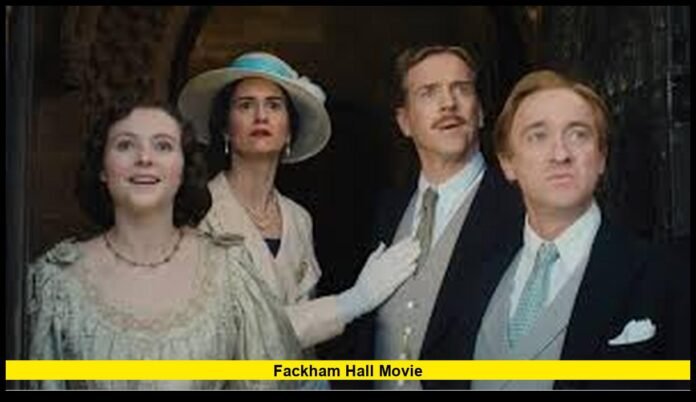

The fackham hall movie has emerged as one of the most distinctive comedy releases of late 2025, drawing attention for its unapologetic parody of aristocratic British dramas. Released in U.S. theaters on December 5, 2025, the film offers a sharp contrast to franchise-heavy holiday lineups by leaning fully into slapstick, character exaggeration, and theatrical humor. Its arrival has sparked steady conversation among moviegoers looking for something playful, irreverent, and intentionally over the top.
Rather than attempting to modernize or subtly reinterpret the period genre, Fackham Hall embraces exaggeration as its core strength. That creative clarity has helped the film maintain interest beyond its opening weekend, especially in urban and specialty markets across the United States.
A Period Setting Built for Comedy
Set in 1930s England, Fackham Hall takes place almost entirely within the sprawling Davenport family estate. The mansion itself functions as a central character, representing old wealth, rigid traditions, and an obsession with social order. Against this backdrop, the film introduces chaos through a story designed to poke fun at everything aristocratic dramas usually treat with reverence.
The plot follows Eric Noone, a clever pickpocket who unexpectedly finds employment as a hall boy at the estate. His arrival disrupts the household’s delicate balance almost immediately. Upstairs, the Davenport family clings to decorum and appearances. Downstairs, servants quietly observe the absurdity of their employers’ behavior. This contrast fuels much of the film’s humor.
As Eric becomes romantically involved with Rose Davenport, the daughter of the household, the story escalates into a whirlwind of misunderstandings, exaggerated jealousy, and an overblown murder accusation. Every development is intentionally heightened, turning familiar dramatic beats into comedic set pieces.
Clear Creative Direction
One of the reasons the fackham hall movie stands out is its consistency of tone. The film knows exactly what it wants to be and never strays from that vision. The direction prioritizes physical comedy, fast pacing, and visual gags, allowing jokes to land without being weighed down by realism.
Scenes unfold with theatrical rhythm. Formal dinners descend into chaos. Emotional confrontations are interrupted by absurd timing. Moments that would typically be treated with seriousness in a traditional period drama are instead played for laughs.
This approach ensures that the audience never mistakes the film’s intentions. It is not a drama with comedic elements. It is a comedy that uses drama purely as raw material for parody.
Writing Style and Humor
The screenplay leans heavily on contrast. Characters speak with exaggerated formality while engaging in increasingly ridiculous behavior. Polite language collides with outrageous situations, creating humor through contradiction rather than modern references.
Dialogue is sharp and deliberately theatrical. Many jokes rely on timing and delivery rather than punchlines alone. The humor favors momentum, stacking jokes on top of one another to keep energy high.
Importantly, the film avoids breaking immersion. It does not rely on modern slang or self-aware commentary. By staying grounded in its period setting, the comedy feels more cohesive and intentional.
Ensemble Cast Commitment
The cast plays a crucial role in selling the film’s exaggerated style. Each performer commits fully to the heightened tone, avoiding half-measures that could weaken the parody.
Thomasin McKenzie brings emotional sincerity to Rose Davenport, grounding the chaos with a character who believes in romance even as the world around her spirals. Ben Radcliffe’s Eric Noone functions as the audience’s entry point, reacting to the absurdity with quick wit and adaptability.
Damian Lewis delivers a performance defined by exaggerated authority, portraying Lord Davenport as a man obsessed with status and tradition to an almost cartoonish degree. Katherine Waterston’s Lady Davenport complements this with composed absurdity, maintaining elegance regardless of how irrational events become.
Supporting performances from Tom Felton, Emma Laird, Anna Maxwell Martin, and Sue Johnston add texture and variety, ensuring the ensemble never feels one-note. Each character is clearly defined, which strengthens the film’s comedic rhythm.
Production Design and Visual Authenticity
Although the film’s humor is intentionally exaggerated, its production design remains visually authentic. Filmed in historic English estates, Fackham Hall presents an environment that looks indistinguishable from traditional period dramas.
Costumes reflect accurate fashion from the era, from tailored aristocratic attire to servant uniforms. Interiors feature ornate furnishings, sweeping staircases, and carefully staged dining rooms. This visual credibility amplifies the comedy by placing absurd behavior in a convincingly refined world.
Rather than undermining the parody, authenticity enhances it. The more believable the setting, the sharper the contrast when characters behave outrageously.
Theatrical Release and U.S. Performance
The fackham hall movie opened in U.S. theaters during a competitive holiday period dominated by sequels and large-scale releases. Despite this, it found its audience through targeted distribution in major cities and specialty theaters.
Rather than relying on a massive opening weekend, the film has followed a steadier performance pattern. Attendance has been driven by curiosity, word-of-mouth, and interest from viewers who enjoy genre parody.
Its continued presence in select U.S. markets weeks after release reflects sustained engagement rather than short-lived buzz. This slower trajectory aligns with how niche comedies often perform when appealing to specific audience tastes.
Audience Response and Ongoing Interest
Audience reaction has been energetic and vocal. Viewers who appreciate broad comedy and slapstick have responded positively, often highlighting memorable scenes and exaggerated character moments.
Social media discussions focus on favorite jokes, physical comedy sequences, and the film’s willingness to fully commit to absurdity. Rather than debating plot realism, conversations center on entertainment value and comedic confidence.
This type of engagement has helped keep the film visible beyond its initial release window. For many viewers, discovering the movie through recommendations has become part of its appeal.
Position Within the 2025 Film Landscape
In a year crowded with familiar franchises and dramatic spectacles, Fackham Hall occupies a unique position. It does not aim for awards recognition or emotional depth. Its goal is laughter, and it pursues that goal without hesitation.
This clarity differentiates it from many mid-budget releases that struggle to define their identity. By focusing on parody, the film avoids direct competition with larger productions and instead serves as counterprogramming for audiences seeking lighter entertainment.
The result is a film that feels intentional rather than reactive, offering a theatrical experience that feels increasingly rare.
Why the Film Resonates
The film’s appeal lies in its confidence. It does not dilute its humor to broaden appeal. Instead, it trusts its audience to embrace exaggerated comedy rooted in tradition.
Key elements that resonate include:
- Commitment to parody without tonal confusion
- Strong ensemble chemistry
- Visual authenticity that strengthens humor
- A theatrical style designed for big-screen viewing
These factors combine to give the movie a distinct personality that lingers after the credits roll.
Current Status and What Lies Ahead
As of now, Fackham Hall continues its theatrical run in select U.S. locations, with screenings concentrated in independent theaters, specialty cinemas, and markets known for supporting niche comedy releases. While the number of screens has gradually narrowed since the initial rollout, the film has not exited theaters abruptly. Instead, it has followed a measured release pattern that reflects sustained, targeted interest rather than short-term spikes.
This approach has allowed the movie to remain visible beyond its opening weeks, particularly in cities where audiences are receptive to unconventional comedies and genre parodies. Attendance in these markets has been driven less by opening-week hype and more by steady discovery, repeat viewings, and word-of-mouth recommendations.
At present, there has been no official announcement regarding a digital release, streaming availability, or physical home media launch. No confirmed dates have been shared, and the film remains positioned as a theatrical-first experience. For U.S. audiences, this means the big screen remains the primary way to watch Fackham Hall.
The absence of an immediate home release has helped reinforce the film’s identity as a shared viewing experience. Much of its humor relies on timing, ensemble interaction, and visual scale, elements that benefit from a theater environment. This has contributed to continued interest among viewers who prefer to experience comedies with a live audience.
Ongoing discussion around the film suggests that awareness is still spreading. Viewers who missed the opening window are discovering it through recommendations, online conversation, and local theater listings. Rather than peaking early and fading quickly, the movie has shown signs of gradual audience growth within its niche.
As the theatrical window continues, attention remains focused on where and how the film will become available next. Until official updates are announced, Fackham Hall remains firmly rooted in theaters, maintaining relevance through steady attendance and continued conversation.
This sustained presence reflects the film’s clear identity and focused appeal, positioning it as a comedy that continues to find its audience over time rather than relying solely on opening-week momentum.
A Comedy With Clear Intent
The fackham hall movie succeeds not by trying to be everything, but by being very specific in its purpose and execution. From its opening scenes to its final moments, the film makes its intentions unmistakable. It is a parody first and foremost, and every creative choice supports that goal. In an era when many comedies dilute their identity to appeal to broader audiences, Fackham Hall stands out for refusing to compromise its vision.
The film understands its genre deeply. It draws directly from the visual language, pacing, and emotional beats of aristocratic period dramas, then exaggerates those elements to expose their inherent absurdity. Formal etiquette, rigid class structures, and melodramatic revelations are all pushed to extremes, transforming what audiences recognize into deliberate comedy.
This clarity allows the humor to feel purposeful rather than random. The jokes are not inserted for shock value or trend relevance. Instead, they emerge naturally from the setting and characters. Because the film stays consistent with its period framework, the comedy feels cohesive and controlled, even when it becomes chaotic.
Another factor that strengthens the movie’s identity is its understanding of audience expectations. Fackham Hall does not attempt to win over viewers who prefer subtle humor or grounded realism. It confidently caters to those who enjoy broad parody, theatrical performances, and exaggerated storytelling. That confidence translates into stronger audience engagement, as viewers know exactly what kind of experience they are getting.
The ensemble cast plays a major role in reinforcing this intent. Performances are deliberately heightened, yet coordinated. No character feels out of place or underplayed. Each role contributes to the overall rhythm of the comedy, creating a sense of unity that many modern comedies lack. This balance ensures the humor never collapses into noise or confusion.
Recent audience reactions suggest that this focused approach has helped the film maintain attention beyond its opening weekend. While some releases fade quickly after initial curiosity, Fackham Hall continues to generate discussion because it leaves a clear impression. Even viewers who do not connect with every joke often acknowledge the film’s confidence and commitment.
The movie’s staying power also benefits from its theatrical nature. Many of its biggest laughs rely on timing, visual scale, and ensemble interaction, elements that resonate more strongly in a cinema setting. This has helped sustain interest in select U.S. markets where audiences continue to seek out shared viewing experiences.
By committing fully to its comedic vision and avoiding genre confusion, the fackham hall movie establishes itself as a distinctive entry in the 2025 comedy landscape. Its success lies not in mass appeal, but in clarity of purpose. That clarity allows the film to stand apart, remain memorable, and continue finding its audience well beyond its debut.
Have you experienced Fackham Hall yet, or is it still on your watch list? Share your thoughts and keep checking back for more entertainment updates.