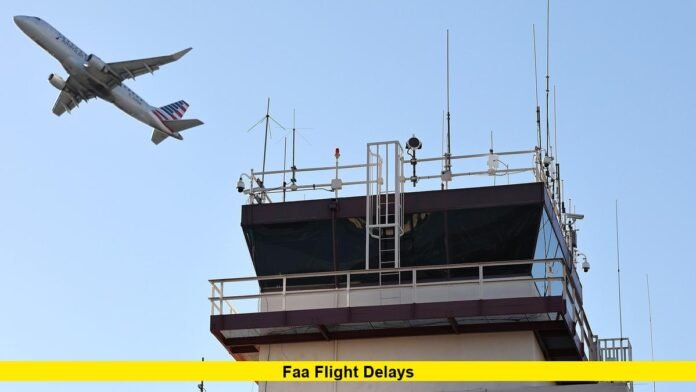

The FAA flight delays are intensifying across the United States this week as the Federal Aviation Administration continues to manage widespread disruptions in air traffic flow. As of November 2025, air travelers across major airports including New York, Chicago, Atlanta, and Los Angeles are facing an increased number of delayed flights due to a combination of staffing shortages, weather systems, and volume congestion. The FAA confirmed that flight operations are being temporarily scaled back in several regions to maintain safety and efficiency standards.
Current Situation: Delays Across Major U.S. Hubs
The latest data from national air traffic monitoring centers shows extensive flight delays across the East Coast, Midwest, and West Coast hubs.
- New York (JFK, LGA, EWR): Average delays range from 45 to 60 minutes, with Newark Liberty experiencing some of the longest ground holds.
- Chicago (ORD, MDW): Arrivals and departures are delayed up to an hour due to dense morning fog and high traffic volume.
- Los Angeles (LAX) and San Francisco (SFO): Persistent coastal weather patterns have triggered arrival delays of 30 to 50 minutes.
- Atlanta (ATL): The busiest airport in the country continues to manage significant volume, with rolling delays during peak travel hours.
On the FAA’s real-time flight management system, the number of aircraft operating under delay advisories remains higher than seasonal averages, a clear indicator of ongoing operational strain.
Primary Causes of FAA Flight Delays
While seasonal weather remains a consistent challenge, several key structural issues are now amplifying the scope of delays:
- Staffing Shortages:
The FAA has acknowledged a significant shortfall in certified air traffic controllers. Thousands of positions remain unfilled, leading to heavier workloads on existing staff and increased fatigue management efforts. - High Air Traffic Volume:
Post-pandemic travel demand has surged to record levels, with U.S. carriers reporting passenger loads exceeding 95 % on many domestic routes. This surge has stretched the national airspace system to capacity, especially during peak hours. - Weather-Related Disruptions:
Heavy fog in the Midwest, coastal low clouds in California, and early winter storms in the Northeast have contributed to cascading delays across connected routes. - Government Funding Challenges:
Temporary budget and staffing constraints have limited the FAA’s ability to hire and train new personnel as quickly as needed, creating long-term operational vulnerabilities.
FAA Traffic Reduction Measures
To stabilize flight operations, the FAA has temporarily ordered a 10 % reduction in air traffic capacity across 40 of the busiest U.S. markets. This measure is designed to reduce pressure on understaffed air traffic control centers and maintain safety standards.
- Approximately 1,800 flights per day could be affected nationwide.
- The reduction applies to both commercial and cargo flights, ensuring balanced load management.
- Airlines are being advised to pre-emptively adjust schedules to prevent last-minute cancellations.
- The FAA emphasized that safety remains the top priority despite reduced operational throughput.
This action reflects a growing recognition that safety margins must not be compromised, even if it means temporary inconvenience for travelers.
Impact on Airlines and Travelers
The ripple effects of FAA flight delays are visible across the aviation ecosystem:
- Airlines: Major carriers have been forced to adjust schedules, consolidate flights, and reallocate crews. Some are offering flexible rebooking options to affected passengers.
- Airports: Ground congestion is increasing as delayed flights wait for takeoff clearance, particularly during early morning and late-evening windows.
- Passengers: Travelers are advised to check flight status frequently, arrive early for check-in, and build extra buffer time for connections.
To minimize disruption, travelers should consider:
- Using airline apps for real-time notifications.
- Avoiding tight layovers when booking connecting flights.
- Choosing early-morning departures when airspace congestion is lower.
- Opting for nonstop routes when possible.
Safety and System Reliability
Despite the challenges, FAA leadership maintains that U.S. airspace remains the safest in the world. The agency has implemented several safeguards to prevent operational overloads:
- Strict monitoring of controller duty hours to avoid fatigue-related risks.
- Enhanced use of traffic management tools that optimize flight sequencing and airspace allocation.
- Collaboration with airlines to prioritize essential routes and minimize unnecessary flight overlap.
While passengers may experience longer wait times, the FAA’s proactive approach underscores its commitment to safety as the paramount concern.
Looking Ahead: The Road to Stability
Experts predict that FAA flight delays could persist through the holiday travel season if staffing shortages are not addressed swiftly. Training new air traffic controllers typically takes two to three years, meaning immediate relief is unlikely. However, the agency has accelerated hiring initiatives and expanded partnerships with aviation schools to build a stronger pipeline of qualified candidates.
In the short term, airlines are expected to coordinate closely with the FAA to adjust scheduling and reduce congestion during high-demand periods. Passengers, meanwhile, should plan for a period of continued unpredictability but can expect gradual improvement as systemic adjustments take hold.
Travel Tips During Extended Delays
For those navigating current disruptions, these strategies can make a significant difference:
- Book Direct Flights: Reduces exposure to missed connections and cascading delays.
- Track Weather Conditions: Early awareness of local weather can help you anticipate possible changes.
- Stay Connected: Use airline notifications and FAA flight-tracking systems to get real-time updates.
- Consider Alternate Airports: Smaller airports may offer more reliable departures during peak congestion.
Being informed and flexible remains the best defense against travel stress during ongoing FAA flight delays.
The nationwide air traffic slowdown is a reminder of the complex interdependence between staffing, technology, weather, and safety in aviation. The FAA’s decision to reduce traffic levels is a measured response to prevent larger disruptions while ensuring the integrity of the system. As efforts continue to restore full staffing and capacity, passengers can expect a gradual path toward normalcy—but patience and preparation remain essential.
Share your thoughts below about how the FAA flight delays have affected your travel plans or experiences.