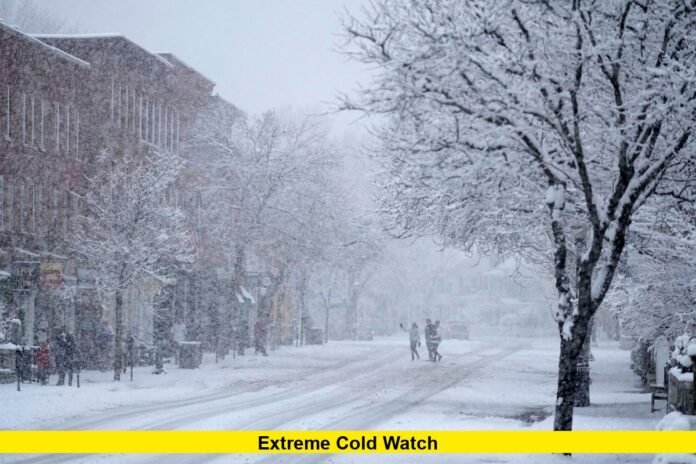

An extreme cold watch has been issued across parts of the Upper Midwest and northern Plains as an intense Arctic air mass pushes deep into the United States, bringing dangerously low temperatures and wind chills that are expected to remain below zero for extended periods. Meteorologists warn that this outbreak will test winter preparedness and could pose serious risks to health, infrastructure, agriculture, and transportation as it unfolds over several days.
Forecasters say this cold snap marks one of the most significant winter events so far this season, with some regions bracing for prolonged hours of sub-zero conditions and wind chills that could plunge well below safe thresholds. The expected duration of this bitterly cold pattern and its reach across state lines have heightened concerns among officials and residents alike.
What the Extreme Cold Watch Means for Your Area
An extreme cold watch is a forecast alert issued by the National Weather Service when conditions may soon develop that could produce dangerously cold air temperatures or wind chill values. This alert serves as a warning to prepare for potentially hazardous temperatures that pose elevated risks of frostbite and hypothermia if people are exposed without proper protection. These watches often precede warnings, which reflect a higher level of certainty that the cold will materialize as forecast.
In practical terms, the watch signals that extremely cold air is likely but that exact timing, locations, and intensity still have some uncertainty. Local authorities typically use this lead time to alert the public and mobilize resources to minimize adverse effects on communities.
Regions Under the Cold Watch and Forecast Details
Recent forecasts show that large portions of Minnesota and western Wisconsin will be placed under an extreme cold watch from Thursday night through the weekend. Temperatures in some areas could struggle to climb above -8°F even during daytime hours, while overnight lows may drop dramatically below zero. Wind chill values could make it feel like -45°F or colder, creating dangerously frigid conditions for anyone venturing outdoors.
Forecast models suggest a particularly robust Arctic high pressure system will funnel the coldest air southward from Canada, reinforcing the bitter chill and prolonging the duration of sub-freezing conditions. The system is also expected to support brief chances of light snow or flurries ahead of the coldest air arriving, though significant accumulation is not the primary concern at this stage.
Duration of Cold and When It’s Expected to Peak
Experts are forecasting that temperatures could remain below zero for up to 60 hours beginning Thursday night in some areas. This extended period of extreme cold means prolonged exposure to frigid air for surface water, soils, and infrastructure. Surfaces will remain frozen, and nighttime lows will be particularly brutal as the Arctic air mass settles in.
High temperatures on Friday in the hardest-hit zones could remain in the deep negatives, and even midday readings might barely creep above zero. Residents should anticipate persistently frigid conditions throughout the week, with only modest moderation expected after the coldest window has passed.
Dangerous Wind Chills: Health and Safety Risks
The combination of low temperatures and strong winds can create wind chill values that dramatically increase the risk of frostbite and hypothermia. Wind chill reflects the perceived drop in air temperature due to the wind removing heat from the body. When wind chill reaches extreme levels, exposed skin can freeze in a matter of minutes.
Medical professionals advise individuals to limit outdoor exposure, especially during the coldest parts of the day. Pets, the elderly, and infants are particularly vulnerable. Dress in layers, cover all exposed skin, and plan any necessary outdoor activities carefully. If possible, stay indoors in well-heated environments until conditions improve.
Impact on Infrastructure and Daily Life
Sustained extreme cold can strain infrastructure systems. Heating demand is likely to spike, stressing power grids and energy supplies. Utility companies may issue guidance on efficient heating practices or conservation reminders to avoid system overloads. Residents should ensure their home heating systems are functioning properly and have backup heating options if available.
Cold weather also affects water systems. Frozen pipes are a common issue during prolonged freezes. Leaving faucets dripping, insulating pipes in unheated areas, and maintaining consistent indoor temperatures can help reduce the risk of frozen or burst pipes.
Transportation and Commuting Challenges
Travel conditions may deteriorate as the cold persists. Road surfaces can become treacherously slick from black ice even without fresh snowfall. Vehicles may fail to start in frigid conditions or experience battery stress and cooling system issues. Drivers are advised to check automotive systems before travel, carry emergency supplies, and allow extra time for journeys.
Public transportation systems may also experience delays or mechanical challenges due to the extended cold spell. Riders should check schedule updates and prepare for potential disruptions.
Tips for Protecting Pets, Livestock, and Outdoor Workers
Outdoor animals need special attention during extreme cold events. Proper shelter, adequate bedding, and unfrozen drinking water are essential for livestock and pets. Animals left outdoors without protection are at elevated risk of cold-related health issues.
Workers who must perform outdoor tasks in these conditions should take frequent warming breaks, wear appropriate insulated gear, and watch for signs of cold stress. Employers may need to adjust schedules or shift work to warmer parts of the day to protect employee safety.
Community Preparedness and Emergency Measures
Some local authorities and emergency service departments may activate cold weather protocols to support vulnerable populations. This can include opening warming centers, providing transportation assistance, or coordinating with community organizations to ensure at-risk residents have access to heat and shelter.
Residents can support community efforts by checking on neighbors, especially elderly or isolated individuals who may need assistance staying warm.
Looking Ahead: When the Cold Breaks
Meteorologists will continue to monitor and update forecasts as the Arctic air mass evolves and eventually shifts. Historically, extreme cold outbreaks like this can be followed by a gradual warm-up once the high pressure begins to break down and air masses moderate.
However, until that shift occurs, the focus remains on safety, preparedness, and minimizing risk during one of the season’s most severe cold events.
Stay tuned to local weather updates and share your cold-weather preparedness tips or experiences in the comments below — your insights help others stay safe during this extreme freeze.