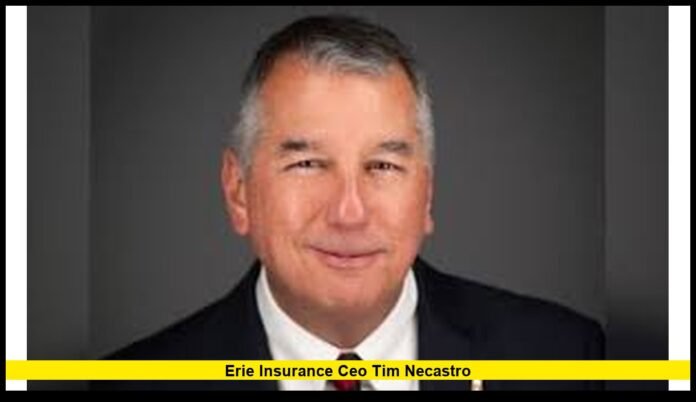

Erie Insurance CEO Tim NeCastro continues to shape the company’s direction as the insurer responds to rising claims costs, evolving customer expectations, and a competitive U.S. property-and-casualty market.
His leadership remains closely watched across the insurance industry. Recent corporate messaging, operational priorities, and performance indicators show how Erie Insurance is balancing stability with modernization while protecting long-term profitability.
Leadership Approach Defining Erie Insurance
Tim NeCastro’s tenure reflects a leadership model centered on consistency. Erie Insurance has historically prioritized disciplined underwriting, careful growth, and strong relationships with independent agents.
That philosophy has continued under NeCastro.
Instead of aggressive expansion, the company focuses on steady premium growth and controlled risk exposure. This approach helps maintain financial strength during volatile insurance cycles.
Key leadership characteristics include:
- Long-term decision making
- Conservative risk management
- Emphasis on customer retention
- Measured technology adoption
- Strong operational discipline
These priorities influence nearly every strategic decision within the organization.
Business Environment Shaping Leadership Decisions
The insurance landscape in 2026 presents several pressures that directly impact leadership strategy.
Across the industry, insurers are navigating:
- Higher repair and replacement costs
- Increased catastrophe activity
- Legal and medical inflation
- Reinsurance pricing shifts
- Greater digital expectations from customers
These factors require pricing adjustments and operational efficiency improvements.
Under Tim NeCastro, Erie Insurance has moved carefully, focusing on rate adequacy rather than rapid premium expansion.
Financial Performance Themes
Recent performance discussions around Erie Insurance highlight a familiar pattern: steady growth paired with margin pressure from claims trends.
Important business indicators often discussed include:
| Metric | Direction |
|---|---|
| Premium growth | Moderate and steady |
| Policy retention | Strong |
| Loss trends | Elevated across auto and property |
| Expense management | Ongoing focus |
| Profitability | Influenced by rate timing |
Leadership messaging consistently emphasizes restoring margins through disciplined pricing.
This reflects a long-standing operating philosophy rather than a short-term adjustment.
Pricing Strategy and Underwriting Discipline
Pricing remains one of the most important leadership priorities.
Insurance companies must balance competitiveness with risk accuracy. Tim NeCastro’s approach focuses on aligning pricing with claims experience across each state and product line.
Key elements of Erie’s pricing strategy:
- Targeted rate filings
- Market-specific adjustments
- Risk segmentation improvements
- Focus on profitability over volume
This strategy helps protect long-term financial stability, even when growth appears slower than competitors.
Technology Investments and Operational Modernization
Technology has become a defining topic during NeCastro’s leadership.
Erie Insurance continues investing in tools that improve efficiency while supporting its agent-driven distribution model.
Major modernization priorities include:
- Claims workflow automation
- Customer self-service capabilities
- Data analytics for underwriting decisions
- Agent platform improvements
- Internal process digitization
The company’s approach emphasizes practical implementation rather than rapid transformation.
Leadership messaging suggests technology should enhance human relationships rather than replace them.
The Role of Independent Agents
Independent agents remain central to Erie Insurance’s business model.
Tim NeCastro frequently highlights the agent channel as a competitive advantage, particularly in customer satisfaction and retention.
Recent initiatives connected to the agent network include:
- Digital quoting enhancements
- Training and support programs
- Expansion in selected markets
- Cross-selling tools
- Workflow simplification
Retention levels indicate this model continues to perform well.
Leadership views strong agent relationships as essential to sustainable growth.
Market Positioning: Regional Strength with Selective Expansion
Erie Insurance is widely recognized as a strong regional insurer. Under Tim NeCastro, the company has continued expanding carefully rather than pursuing national scale at high speed.
This positioning allows Erie to:
- Maintain underwriting discipline
- Build deeper agent relationships
- Control risk exposure
- Preserve brand trust
Selective geographic expansion remains part of the strategy, but growth is measured.
This approach aligns with the company’s long-standing identity.
Capital Management and Financial Strength
Capital discipline is another defining leadership theme.
Maintaining strong financial ratings supports policyholder confidence and regulatory relationships. Tim NeCastro’s leadership prioritizes balance sheet stability alongside operational investment.
Core capital priorities include:
- Supporting underwriting capacity
- Funding technology initiatives
- Maintaining dividend consistency
- Managing reinsurance partnerships
- Preserving liquidity
This conservative posture helps Erie navigate industry volatility.
Product Strategy and Portfolio Refinement
Product strategy under NeCastro focuses on improving existing offerings rather than launching large numbers of new products.
Areas receiving attention include:
- Auto insurance pricing accuracy
- Homeowners risk segmentation
- Bundled policy growth
- Small commercial opportunities
Portfolio refinement aims to improve risk quality and customer lifetime value.
Leadership emphasizes sustainable profitability over rapid product expansion.
Corporate Culture and Organizational Stability
Erie Insurance’s corporate culture is frequently cited as a differentiator.
Tim NeCastro’s leadership reinforces continuity, employee engagement, and customer focus.
Common cultural themes include:
- Long employee tenure
- Community involvement
- Service-driven mindset
- Collaboration between agents and staff
- Stability during industry disruption
Maintaining culture while modernizing operations remains a leadership priority.
Industry Perspective on Tim NeCastro’s Tenure
Industry observers often describe NeCastro’s leadership as steady execution.
Rather than dramatic strategic shifts, his tenure reflects consistent progress across multiple areas:
- Underwriting discipline
- Operational efficiency
- Digital capability growth
- Agent network strength
- Capital management
This predictability can appeal to investors seeking stability in the insurance sector.
Challenges Facing Erie Insurance
Despite stability, Erie Insurance faces several ongoing challenges.
Claims Inflation
Repair costs and medical expenses remain elevated.
Catastrophe Exposure
Weather events continue to create volatility in property insurance.
Digital Competition
Customers expect seamless digital experiences across insurers.
Talent Demand
Competition for analytics and technology talent is increasing.
Tim NeCastro’s leadership strategy focuses on incremental improvement to address these pressures.
Expense Management and Efficiency Initiatives
Expense control has become increasingly important across the industry.
Erie Insurance continues working on operational efficiency through:
- Process automation
- Vendor management improvements
- Technology-enabled workflows
- Claims handling optimization
- Workforce productivity tools
These initiatives aim to offset claims cost pressure while supporting customer experience.
Leadership messaging links efficiency directly to long-term profitability.
Customer Experience Strategy
Customer experience remains central to Erie’s brand identity.
Tim NeCastro has emphasized improving both digital and human touchpoints.
Key focus areas include:
- Faster claims resolution
- Easier policy servicing
- Transparent communication
- Agent-supported service model
- Digital accessibility
The company’s hybrid service model aims to combine technology convenience with personalized support.
Competitive Landscape
Erie Insurance competes with both national carriers and emerging insurtech companies.
Competitive pressures include:
- Direct-to-consumer digital insurers
- Large carriers with broader scale
- Pricing competition in auto insurance
- Technology innovation across the industry
Under Tim NeCastro, Erie’s response emphasizes differentiation through service quality and underwriting discipline.
This strategy focuses on long-term positioning rather than rapid market share gains.
Reinsurance and Risk Management Focus
Risk transfer plays a key role in property-and-casualty strategy.
Erie Insurance continues managing catastrophe exposure through reinsurance programs and portfolio adjustments.
Leadership priorities include:
- Catastrophe risk modeling
- Geographic diversification
- Reinsurance cost management
- Exposure monitoring
- Claims preparedness
These measures support financial resilience during severe weather cycles.
Workforce Strategy and Talent Development
Talent development is increasingly important as insurers adopt advanced analytics and digital tools.
Tim NeCastro’s leadership emphasizes:
- Employee training programs
- Technology skill development
- Leadership pipeline planning
- Recruitment in analytics roles
- Retention initiatives
Workforce strategy supports both modernization and cultural continuity.
Strategic Outlook Signals
Recent executive messaging suggests Erie Insurance will continue following its established strategic path.
Expected priorities include:
- Continued rate adjustments where needed
- Technology investment with clear return targets
- Agent network strengthening
- Portfolio refinement
- Expense discipline
These signals indicate continuity rather than major strategic change.
Why Leadership Continuity Matters
Insurance operates on long time horizons. Leadership stability can influence pricing discipline, risk appetite, and customer trust.
Tim NeCastro’s tenure demonstrates how continuity supports:
- Consistent underwriting philosophy
- Strong regulatory relationships
- Predictable capital strategy
- Long-term planning
For Erie Insurance, this stability remains a defining characteristic.
Broader Industry Significance
The leadership approach associated with Tim NeCastro reflects a broader industry trend toward balance.
Many insurers are shifting away from aggressive growth cycles toward sustainable profitability.
Erie’s model highlights:
- Controlled expansion
- Technology with purpose
- Agent-driven differentiation
- Financial discipline
This positioning may become increasingly relevant as market volatility continues.
Conclusion
The leadership of Erie Insurance CEO Tim NeCastro continues to influence how the company navigates pricing pressure, technology change, and competitive dynamics in 2026.
His strategy emphasizes steady growth, disciplined underwriting, and modernization that supports — rather than disrupts — Erie’s core strengths. While challenges remain, the company’s direction reflects continuity and careful adaptation.
As industry conditions evolve, attention will remain on how NeCastro balances profitability, innovation, and customer experience. Readers following Erie Insurance’s trajectory can expect leadership consistency to remain a central theme. Share your perspective in the comments and stay connected for ongoing coverage.
FAQ
Who is Tim NeCastro?
Tim NeCastro is the chief executive officer of Erie Insurance, responsible for company strategy, operations, and long-term business performance.
What defines Tim NeCastro’s leadership style?
His leadership focuses on disciplined underwriting, agent relationships, financial stability, and gradual technology adoption.
What are Erie Insurance’s main priorities under Tim NeCastro?
Key priorities include pricing accuracy, operational efficiency, digital modernization, portfolio quality, and strong customer retention.
Disclaimer
This article is intended for informational purposes only. Information reflects publicly available business updates and general industry context at the time of writing. It does not represent financial, investment, or professional advice. Readers should independently verify details before making decisions.