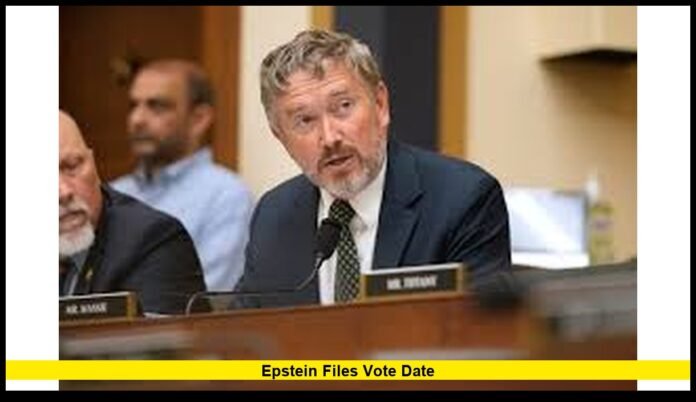

The epstein files vote date has captured nationwide attention as lawmakers gather to determine whether long-requested federal records related to Jeffrey Epstein will finally be released. With intense public pressure building and political interest reaching new levels, this day has become a defining moment in the ongoing push for governmental transparency. The decision unfolding now has the potential to reshape how much the public learns about one of the most controversial criminal networks in recent U.S. history.
Why This Vote Matters More Than Ever
For years, the public has questioned why so much Epstein-related documentation has remained sealed, fragmented, or heavily redacted. With new information continuing to surface, the expectation for clarity has never been higher. Today’s vote offers lawmakers the rare opportunity to decide whether to open previously restricted federal files or maintain the limits placed on public access.
Supporters of the release argue that transparency is overdue, while critics warn that certain sensitive material must still be handled carefully. That delicate balance sets the stage for an unusually intense congressional decision.
What the Legislation Proposes
At the center of the vote is a bill designed to compel federal agencies to release specified materials connected to Epstein’s trafficking operations. The proposed legislation outlines several core requirements:
- Government agencies must identify and publish all eligible unclassified documents within a regulated timeframe.
- Only content tied to victim protection or active investigations may receive redactions.
- Files must be uploaded in formats accessible to the public without special permissions or legal requests.
- Agencies would face deadlines to ensure timely release and prevent delays.
These details reflect a growing national appetite for visibility into cases where secrecy has contributed to public distrust.
How the Epstein Files Became a Symbol of Government Transparency
The Epstein case is not merely a criminal narrative—it has evolved into a larger debate about transparency, institutional responsibility, and the handling of sensitive federal records. As interest grew, the demand for clarity expanded beyond Epstein himself. People began asking broader questions:
- How were his crimes allowed to continue for so long?
- Which federal agencies interacted with him during their investigations?
- Were influential individuals involved or protected?
- Why did various documents remain sealed years after his death?
The public’s interest in these questions helped push today’s vote to the center of national attention.
Growing Public Pressure Leading into Today’s Vote
The momentum behind the epstein files vote date is the result of constant pressure from a range of groups. Advocacy organizations, survivors, and engaged citizens have insisted that the only path to closure is through full, unfiltered access to information.
Some of the most notable drivers of this momentum include:
- Survivor advocacy groups, who continuously call for clarity and justice.
- Bipartisan lawmakers, who recognize the public’s demand for accountability.
- Grassroots movements, which amplify concerns through social platforms.
- Legal experts, who highlight inconsistencies between various federal filings and the information made public.
This network of pressure has created an environment in which delay is no longer viewed as acceptable.
Political Stakes Surrounding the Vote
Although transparency is the highlighted issue, political dynamics play a significant role. Lawmakers know that the public is closely watching how different parties approach the vote. The decision has become both a matter of governance and a test of political courage.
Several political considerations heighten the stakes:
- Voting against release could appear as though officials are protecting certain individuals or institutions.
- Voting in favor could expose figures across political, social, and financial networks.
- The outcome may influence future debates about government secrecy.
- Political reputations may shift depending on how lawmakers position themselves.
This tension ensures that today’s vote is more than procedural—it is symbolic.
How Federal Agencies Might Respond After the Vote
Regardless of the vote’s outcome, federal agencies stand at a critical juncture. If the measure passes, agencies will need to begin identifying, organizing, and preparing documents for public release. This involves reviewing thousands of pages, determining which materials need limited redactions, and creating public access portals.
If the vote fails, agencies may continue releasing documents at their own pace, though without the strict oversight that Congress aims to introduce. Some agencies may still choose to voluntarily expand the release of records, but without a mandate, timelines could remain unpredictable.
What the Public May Expect From Released Files
Although the exact content of unreleased files remains unknown, historical context suggests that several categories of documents may be included if the legislation passes:
- Internal investigation notes
- Communications between federal investigators
- Travel records documenting Epstein’s movements
- Correspondence involving individuals linked to his network
- Testimonies that have not been publicly released
- Early case files from previous investigations
- Records connected to Epstein’s business entities
Each type of file may answer long-standing public questions—or raise new ones.
Impact on Survivors and Why They See This Day as Significant
The epstein files vote date carries additional emotional weight for survivors. Many have waited years for acknowledgment, transparency, and closure. They view the files not as political documents but as evidence that may validate their experiences and reveal the full truth behind Epstein’s operations.
Survivors and their advocates believe:
- The files may expose missed investigative opportunities.
- Transparency may prevent similar failures in future cases.
- Public access may encourage reforms in how trafficking cases are handled.
- Release of information is an important part of healing.
For survivors, today is less about politics and more about justice.
How the Vote Could Influence Future Congressional Decisions
If the bill succeeds, it may set a precedent for how Congress handles requests to disclose high-profile federal records. Lawmakers may explore similar legislation involving other cases where public interest outweighs concerns about secrecy.
Future legislation could include:
- Stronger standards for when agencies can redact materials.
- Broader requirements for publicly accessible federal archives.
- Deadlines that prevent multi-year delays in document releases.
- Oversight mechanisms ensuring compliance with transparency laws.
This vote may become the starting point for long-term government reforms.
Potential Outcomes if the Vote Passes
Should lawmakers support the bill today, several immediate outcomes are likely:
- Agencies must begin preparing files for release with a predetermined deadline.
- A wave of public and media analysis will follow as the files become available.
- Institutional responses may occur from organizations named or referenced in the documents.
- Further congressional hearings may be scheduled to review the disclosures.
A successful vote may also prompt debates about whether additional files outside the Epstein case should be reevaluated for release.
What Happens If the Vote Fails
If the proposal does not pass:
- Advocates will likely push for an updated version of the bill.
- Lawmakers may propose more targeted disclosure legislation.
- Public pressure could intensify, especially among groups demanding answers.
- Agencies may still release documents, but without consistent timing.
A failed vote would not end public interest, but it would prolong uncertainty.
Why Today Will Be Noted in the Broader Transparency Debate
Whether the vote succeeds or fails, this moment reflects a growing shift in how citizens view transparency. People want direct access to information, not filtered summaries. This shift challenges traditional government practices and forces officials to rethink long-standing norms around document secrecy.
The epstein files vote date will be remembered because it symbolizes a key shift in public expectations. Citizens no longer assume that sealed records will remain sealed indefinitely. Instead, they are actively pushing for openness across all branches of government.
A Timeline of What Comes Next
Although details depend on the final vote, the general timeline after today may look like this if the measure passes:
- Week 1–2: Agencies acknowledge new disclosure requirements.
- Month 1: Initial batches of non-sensitive files begin release.
- Month 2–3: Larger document sets undergo review and preparation.
- Month 4: Full digital archive becomes accessible with search features.
This timeline may shift, but it represents the kind of structured release advocates expect.
Why The Vote Matters for Institutional Accountability
One of the strongest arguments for full release is that it encourages accountability at both individual and institutional levels. Epstein’s case involved numerous failures—some acknowledged, others still unclear. The files may clarify:
- Whether investigations were mishandled
- Which institutions may have failed to act
- Whether warnings were ignored or overlooked
- How oversight might be improved in the future
Supporters believe that only a comprehensive release can provide this clarity.
Final Perspective on the Importance of Today’s Decision
The significance of the epstein files vote date extends far beyond the political sphere. It represents a collective effort to understand a complex criminal network and demand accountability from institutions expected to uphold justice. Today’s decision could determine how much of the truth becomes accessible, how survivors find closure, and how future cases are handled.
Regardless of the outcome, this vote is a pivotal moment—one that reflects a national determination to understand the full scope of events surrounding Epstein and the networks connected to him.
FAQ
Q1: What is being decided on the epstein files vote date?
Lawmakers are voting on whether federal agencies must release their Epstein-related documents under a formal timeline and with limited redactions.
Q2: What happens if the files are released?
If the bill passes, agencies will begin preparing documents for public access. The release may occur in stages depending on review and redaction requirements.
Q3: Will all names appear in the released files?
Not necessarily. Certain identifying information may be hidden to protect victims or ongoing investigations, but other details may become public depending on the classification.
Disclaimer:
This article provides general informational content based on the latest available developments at the time of writing. It does not offer legal, investigative, or professional conclusions.