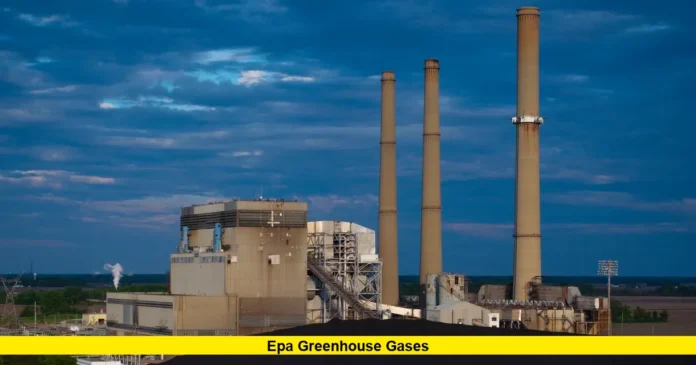

The EPA greenhouse gases regulatory framework in the United States has undergone a sweeping overhaul as federal authorities move to roll back longstanding climate protections, sparking intense national debate and legal challenges. This unprecedented policy change affects the nation’s ability to regulate emissions that trap heat in the atmosphere and influence climate outcomes.
In February 2026, the U.S. Environmental Protection Agency, alongside top federal leaders, declared the repeal of a pivotal climate regulation that had governed greenhouse gas emissions for over a decade. This decision fundamentally alters the regulatory landscape for how major sources of heat-trapping gases are monitored and controlled.
This shift has immediate implications for vehicle standards, industrial emissions, and broader climate policy across the country.
Want deeper insight into how this impacts American industries and families? Read on for the latest developments and what they mean for your community.
What Changed: End of a Cornerstone Climate Rule
The U.S. Environmental Protection Agency officially rescinded the 2009 endangerment finding that previously declared carbon dioxide and other greenhouse gases a threat to human health and the environment and provided legal authority to regulate them under the Clean Air Act. This foundational finding enabled federal limits on vehicle tailpipe emissions, power plant pollution, and other regulations aimed at curbing heat-trapping emissions. The repeal effectively strips away that legal basis and with it most federal greenhouse gas standards.
Administrators and federal leaders described this action as a major deregulatory victory that could save trillions of dollars in regulatory costs and expand consumer choice, especially in the auto industry. Officials stated that removing these standards will lower costs for vehicles and other products by reducing compliance requirements.
However, critics have argued that this action jeopardizes decades of climate progress and creates uncertainty for industries, states, and communities trying to plan for a low-emissions future. Given that transportation is the largest contributor to U.S. greenhouse gas emissions, the rollback of federal vehicle standards has drawn particular scrutiny.
Impact on Vehicle Emission Standards
One of the most immediate and visible effects of the policy change is the elimination of federal greenhouse gas standards for cars and light trucks. These standards formerly pushed manufacturers toward higher fuel efficiency and lower emissions, including incentives for electric vehicle adoption.
Under the new regulations, those limits no longer apply. The EPA also ended specific vehicle credits tied to technologies designed to reduce fuel use, such as automatic start-stop systems. These features had been a small but meaningful part of federal efforts to lower greenhouse gas emissions from passenger vehicles.
Supporters of the rollback claim that these changes will benefit consumers with lower vehicle costs and fewer regulatory constraints. However, experts worry that without these federal standards, emissions could rise as automakers face reduced obligations to deliver fuel-efficient models.
Legal and Political Backdrop
The endangerment finding originally stemmed from a landmark Supreme Court ruling that affirmed the EPA’s authority to regulate greenhouse gases under the Clean Air Act. That legal foundation had withstood multiple challenges over the years.
Federal policymakers recently cited Supreme Court decisions that limited the scope of federal regulatory agencies as part of the rationale for reviewing and ultimately repealing the greenhouse gas rule. They argued that Congress had not explicitly authorized such broad emissions regulation, making the original finding an overreach of agency authority.
With the legal basis altered, several states and environmental organizations are preparing challenges in federal courts, suggesting that the repeal could trigger extensive litigation.
Reactions from Across the Nation
The policy shift has sharply divided political leaders, environmental advocates, industry stakeholders, and public health officials.
Political Leaders and Industry Advocates
Proponents, including key federal officials, maintain that reducing greenhouse gas regulations will stimulate economic growth and lower costs for consumers. They argue that expansive federal mandates hampered innovation and placed undue burdens on manufacturers and families.
Some automotive industry representatives have welcomed the flexibility to adjust vehicle offerings based on market demand rather than federal requirements.
Environmental and Public Health Advocates
Opponents of the rollback have voiced alarm over the potential environmental and health consequences. They highlight that greenhouse gases are linked to climate change and extreme weather events, with record levels observed globally and in the U.S. in recent years.
Public health experts further emphasize that increased levels of greenhouse gases contribute to respiratory illness and heat-related health impacts, particularly among vulnerable populations.
Many governors, mayors, and state officials have also pledged to maintain or strengthen their own climate initiatives in response to federal changes, signaling a growing patchwork of state-level policies.
What This Means for Greenhouse Gas Emissions in the U.S.
With the federal standards dismantled, the country’s overall trajectory on greenhouse gas emissions could shift dramatically. Transportation remains the largest source of U.S. emissions, and without federal limits, states or private sector actors may need to fill the regulatory void.
Meanwhile, other greenhouse gases beyond carbon dioxide — such as methane and nitrous oxide — still pose global warming challenges. While the EPA’s broader authority to regulate certain pollutants unrelated to climate change remains intact, this change weakens the agency’s tools for addressing the primary drivers of climate warming.
Looking Ahead: Uncertainty and Adaptation
The repeal of federal greenhouse gas rules ushers in a period of uncertainty for climate policymaking in the United States. States with aggressive climate agendas may step forward to set their own standards, potentially creating a diverse regulatory environment across the nation.
Industries that had invested in low-emission technologies may reassess their strategies in light of reduced federal oversight, while legal battles could shape the future of environmental regulation.
The decisions made now set the tone for how the U.S. balances economic growth, environmental protection, and public health in the years to come.
Share your thoughts on how these changes could affect your community or industry — leave a comment or follow for updates.