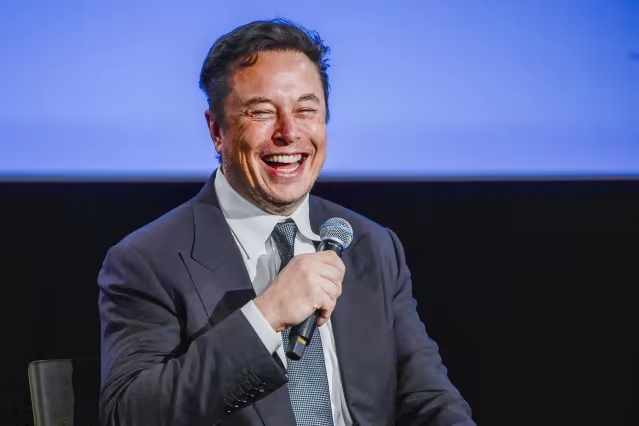

As of May 29, 2025, Elon Musk has officially announced his departure from his role as a Special Government Employee in the Trump administration, marking the end of a high-profile and controversial tenure. The tech mogul, known for his ambitious ventures like SpaceX and Tesla, took to social media to express gratitude to President Donald Trump for the opportunity to serve, particularly in the Department of Government Efficiency (DOGE). However, whispers from Washington insiders suggest Musk’s exit was less amicable than his public statement implies, with some describing him as the administration’s “whipping boy.” This blog dives into the latest developments surrounding Elon Musk’s departure, exploring the highs, lows, and behind-the-scenes drama of his time in the nation’s capital.
The Rise and Fall of Musk’s Washington Stint
Elon Musk’s entry into the Trump administration was a bold move. Appointed to co-lead DOGE alongside Vivek Ramaswamy, Musk promised to slash government spending and streamline bureaucracy. His vision was audacious—think Cybertrucks rolling through D.C. with a mission to dismantle red tape. Early on, he garnered attention for his ambitious proposals, including cutting federal budgets by billions and reducing the size of government agencies. Supporters hailed him as a disruptor, while critics questioned whether a Silicon Valley billionaire could navigate the swamp of Washington politics.
But the honeymoon didn’t last. Reports surfaced of tension between Musk and Trump, with insiders claiming the president grew frustrated with Musk’s polarizing public persona. Polls showed Musk’s favorability plummeting, dropping from a net positive of 24 points to a negative 19 points in recent months. This decline wasn’t just political—it hit Musk’s businesses, with Tesla’s brand popularity taking a 20-point dive. The tech titan, once celebrated as a visionary, found himself increasingly isolated in the administration’s upper echelons.
Whipping Boy or Visionary? The DOGE Experiment
Musk’s role in DOGE was meant to be his crowning achievement in government. Tasked with identifying wasteful spending, he and Ramaswamy proposed sweeping reforms, from consolidating federal agencies to automating processes with AI. Musk’s tech background fueled his confidence, but Washington’s entrenched bureaucracy proved a tougher foe than anticipated. Insiders reveal that Musk’s aggressive style—described as “chain saws and Cybertrucks”—clashed with the slower, more diplomatic pace of government work.
One former DOGE staffer, a Silicon Valley transplant, shared a vivid account of Musk’s time in the administration. They claimed Trump used Elon Musk as a “whipping boy,” allowing him to take the heat for unpopular cost-cutting measures while shielding the president from backlash. This dynamic strained their relationship, with Trump reportedly distancing himself from Musk on social media, dropping mentions of the billionaire entirely by mid-May 2025. The lack of public support stung, especially as Musk faced growing criticism from both Democrats and Republicans.
| Key Metrics of Musk’s DOGE Tenure | Details |
|---|---|
| Proposed Budget Cuts | $2 trillion in federal spending |
| Favorability Rating (Pre-DOGE) | +24 points |
| Favorability Rating (May 2025) | -19 points |
| Tesla Popularity Drop | -20 points |
| Duration in Administration | January–May 2025 |
The Political Kryptonite Label
Why did Elon Musk’s star fade so quickly? Political analysts point to his polarizing presence. His outspoken nature, once a strength in Silicon Valley, became a liability in Washington. Democrats vilified him for his wealth and perceived alignment with Trump’s agenda, with his favorability among them dropping by a staggering 126 points. Even Republicans grew wary, with one party official bluntly stating, “He’s done. His approval ratings are terrible. People hate him.” This sentiment wasn’t just personal—it reflected a broader shift in public perception.
Musk’s business empire also felt the fallout. Tesla, once a darling of the eco-conscious crowd, saw its brand tarnished as Musk’s political involvement alienated key demographics. The company’s stock took hits, and consumer sentiment soured, with many associating Tesla with Musk’s controversial Washington stint. This backlash underscored a harsh reality: political involvement comes with risks, even for a billionaire with a cult-like following.
Behind-the-Scenes Drama: Musk and Trump’s Falling Out
Whispers of a rift between Musk and Trump began circulating in early May 2025. Sources close to the administration suggest Musk felt unsupported, particularly during health challenges that required him to scale back public appearances. One insider claimed Trump was “nowhere to be found” when Musk needed backing, leaving the billionaire to face criticism alone. This lack of loyalty reportedly deepened Musk’s disillusionment with the administration.
Publicly, Musk remained diplomatic. In his May 28 announcement, he emphasized DOGE’s long-term impact, stating, “The mission will only strengthen over time as it becomes a way of life throughout the government.” Yet, the absence of warmth in his farewell message spoke volumes. Trump’s silence on the matter further fueled speculation of a falling out, with some insiders suggesting the president saw Musk as a liability as his approval ratings tanked.
What Musk’s Exit Means for DOGE
Elon Musk’s departure raises questions about DOGE’s future. The department, still in its infancy, faces an uphill battle without its high-profile co-leader. While Ramaswamy remains at the helm, Musk’s exit could dampen the initiative’s momentum. Supporters argue DOGE’s framework—rooted in data-driven efficiency—will endure, but critics question whether it can deliver without Musk’s star power and technical expertise.
The broader implications are equally significant. Musk’s tenure highlighted the challenges of bringing outsider perspectives into government. His bold ideas clashed with Washington’s entrenched systems, exposing the limits of disruption in a city built on compromise. For Musk, the experience may serve as a cautionary tale about the perils of political involvement, even for someone with his resources and influence.
Musk’s Next Move: Back to Silicon Valley?
With his Washington chapter closed, speculation is rife about Elon Musk’s next steps. Will he return to leading Tesla and SpaceX with renewed focus, or will he double down on political influence from the private sector? Musk has hinted at staying engaged, suggesting DOGE’s principles could inspire his future ventures. His X platform, a hub for real-time discourse, may become a megaphone for his views on government efficiency and beyond.
Industry watchers expect Musk to pivot back to innovation, leveraging lessons from Washington to streamline his companies. Tesla’s upcoming product launches and SpaceX’s Mars ambitions could benefit from his undivided attention. Yet, the political scars may linger, with Musk’s polarizing image likely to shape how he’s perceived in both tech and public spheres.
Lessons from a Turbulent Tenure
Elon Musk’s time in the Trump administration was a rollercoaster of ambition, conflict, and controversy. He arrived with grand promises to revolutionize government but left under a cloud of strained relationships and public backlash. His experience underscores a key lesson: even the most brilliant minds can struggle in the political arena, where alliances and optics often outweigh results.
For Washington, Musk’s exit is a moment to reflect. Can outsiders truly disrupt a system designed to resist change? For Musk, it’s a chance to recalibrate, focusing on what he does best—building the future. As he steps away from D.C., the tech world watches eagerly, wondering how this chapter will shape the next phase of his storied career.
The Bigger Picture: Tech Titans in Politics
Musk’s saga isn’t just about one man—it’s a case study in the growing intersection of tech and politics. As Silicon Valley leaders wield more influence, their forays into government reveal both opportunities and pitfalls. Musk’s tenure showed that tech expertise doesn’t always translate to political success. Future tech titans eyeing public roles may look to his experience as a warning: disruption is harder when the stakes are national.
The public’s reaction to Musk also highlights a shifting landscape. Voters are increasingly skeptical of billionaires in politics, regardless of their intentions. This skepticism could shape how tech leaders engage with government moving forward, pushing them toward quieter, less visible roles.
What do you think about Elon Musk’s exit from the Trump administration? Share your thoughts in the comments below and let us know if you believe his DOGE efforts will leave a lasting impact.