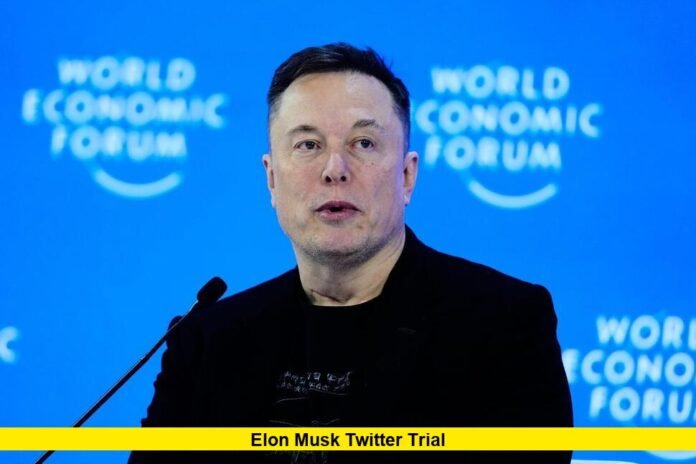

A landmark verdict landed Friday in a San Francisco federal courthouse, sending shockwaves through the business and tech worlds: a nine-person jury found Elon Musk liable for misleading investors during his turbulent $44 billion acquisition of Twitter in 2022. The Elon Musk Twitter trial — one of the most closely watched corporate court battles in recent memory — concluded with jurors determining that Musk made materially false and misleading statements that caused measurable financial harm to ordinary shareholders. Damages are estimated to reach up to $2.6 billion.
The verdict raises urgent questions about executive accountability, social media influence, and the limits of power in the modern financial markets. This story is still developing, so keep following it for real-time updates as the legal and financial fallout continues to unfold.
Background: A Deal That Was Never Simple
Elon Musk, the billionaire behind Tesla, SpaceX, and the artificial intelligence company xAI, agreed in April 2022 to purchase Twitter for $54.20 per share — a deal totaling roughly $44 billion. Almost immediately, the transaction descended into chaos. Musk publicly questioned Twitter’s reported figure that only about 5% of its accounts were bots or spam, called the company’s disclosures misleading, and eventually attempted to walk away from the deal entirely.
Twitter responded by suing Musk in Delaware, seeking to force him to honor the original agreement. Days before that case was set to go to trial, Musk reversed course, completed the purchase at the agreed price, and renamed the platform X. In February 2026, SpaceX acquired xAI — which housed X — creating what became the world’s most valuable private company, valued at approximately $1.25 trillion.
What Triggered the Trial
The civil class-action lawsuit, known as Pampena v. Musk, was filed in October 2022. Shareholders alleged that between May and October of that year, Musk used public statements to deliberately drive down Twitter’s stock price — either to escape the deal or renegotiate it at a lower cost.
The case centered on two tweets posted in May 2022. The first announced the Twitter deal was “temporarily on hold” pending Musk’s investigation of bot accounts. The second cast further doubt on whether the deal could move forward at all. Those posts, combined with comments made on a podcast, sent Twitter’s share price falling nearly 10% in a single trading session. Shareholders who sold during that window argued they suffered direct and preventable financial losses.
The trial began on March 2, 2026, with testimony from former Twitter executives including CEO Parag Agrawal and CFO Ned Segal, as well as Musk himself, who spent more than a full day on the stand.
The Verdict
After nearly four days of deliberation, jurors returned a nuanced verdict. They found Musk liable for the two tweets — ruling them to be materially false or misleading — but cleared him of a separate and more serious allegation that he engaged in a deliberate scheme to defraud investors. The jury also determined that a statement Musk made during a podcast appearance did not meet the legal threshold for investor harm.
The damages award falls between approximately $3 and $8 per share per day during the affected period, with plaintiff attorneys estimating the total payout at between $2.1 billion and $2.6 billion. The exact amount owed to individual shareholders will be calculated through a formal claims administration process expected to take several months.
Public and Market Reaction
The verdict drew immediate and polarized reaction from legal experts, investors, and the public alike.
Attorneys for the plaintiff shareholders declared it a victory for everyday Americans. “This is a great example of what you cannot do to the average investor — people that have 401ks, kids, pension funds, teachers, firemen, nurses,” said plaintiff attorney Joseph Cotchett outside the courthouse. Fellow attorney Francis Bottini added, “Musk’s status as the world’s richest man is not a free pass. If you’re able to move markets with your tweets, you’re responsible for the harm you cause to investors.”
Legal analysts noted the verdict’s complexity. While finding liability, the jury’s rejection of a full fraud scheme allegation gives Musk’s legal team a meaningful foothold for appeal — and signals that courts are still working to define the line between reckless communication and calculated deception.
What Musk Has Said
During his testimony, Musk maintained that Twitter’s leadership misrepresented bot account data and withheld critical information. He described Twitter’s internal figures as dishonest and said he had a genuine basis for concern. “I did make it clear that I thought it was BS,” Musk said of the company’s claimed 5% bot figure.
Musk also argued that shareholders who held onto their stock ultimately profited from the deal at the original purchase price — and that he had no control over who chose to sell during the period of uncertainty. Following the verdict, his legal team at Quinn Emanuel Urquhart & Sullivan called the outcome “a bump in the road” and stated they look forward to “vindication on appeal,” pointing to two recent appellate victories in other high-profile cases.
Why This Matters
The implications of this ruling reach far beyond the courtroom. It represents one of the first major verdicts establishing legal accountability for a billionaire’s social media posts as market-moving instruments. In an era when a single tweet from a high-profile executive can shift a company’s stock price by billions of dollars within minutes, the question of where free speech ends and investor fraud begins has never been more consequential.
Musk has faced similar legal battles before, including a 2023 trial over his 2018 “funding secured” tweet about taking Tesla private. He won that case. This outcome is different — and it sets a precedent that courts will scrutinize social media statements with the same rigor applied to formal financial disclosures. The verdict also runs parallel to a separate SEC civil lawsuit accusing Musk of failing to timely disclose his early Twitter stake purchases, a case in which settlement discussions were reportedly ongoing as of this week.
What Comes Next
Musk’s legal team has made clear it intends to appeal, and the post-verdict process for compensating shareholders is expected to unfold over several months. The parallel SEC investigation adds another layer of legal exposure. Meanwhile, X — now housed within SpaceX — continues to operate as a major global communications platform, making the regulatory and legal questions surrounding Musk’s conduct as consequential as ever.
For shareholders, pension funds, and regulators alike, this trial has redefined what it means to be held accountable in the age of social media.
This verdict is just the beginning — share your thoughts in the comments below and stay with us for every update as this historic case moves into the appeals process.