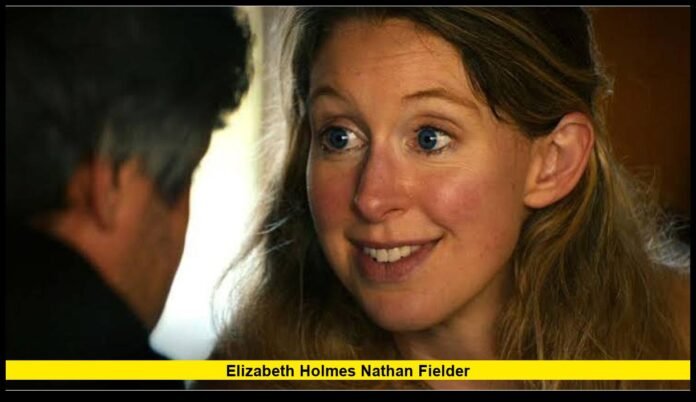

Elizabeth Holmes Nathan Fielder has become one of the most closely watched documentary stories of the week after their secret film You Can See Everything was unexpectedly unveiled at the 2026 Telluride Film Festival.
The documentary, co-directed by Nathan Fielder and Lance Oppenheim, follows Holmes during the period surrounding her 2023 prison sentence and continues across roughly three years of filming. A24 revealed the project after keeping it largely hidden from the public.
The film received its surprise world premiere at Telluride on September 6, 2026. A24 also released its first teaser, giving audiences their first public glimpse of Holmes speaking directly with Fielder.
The project is now scheduled for a U.S. theatrical release in October.
Elizabeth Holmes Nathan Fielder Documentary Finally Emerges
For years, reports circulated that Fielder was working on an unusual documentary involving Holmes. The project remained largely out of public view while filming continued.
That secrecy ended at Telluride.
Festival organizers kept the screening under unusually tight security. Attendees were required to secure their phones before entering the theater, helping prevent photographs, recordings and immediate leaks.
The surprise worked.
Audiences discovered that the mystery film was You Can See Everything, a feature-length documentary centered on Holmes and her life around the beginning of her federal prison sentence.
Fielder appeared at the festival with Oppenheim following the screening.
The documentary immediately attracted attention because it does not simply revisit the Theranos scandal. Instead, it gives the filmmakers extended access to Holmes and her family, then turns that access into a much more complicated examination of trust, perception and filmmaking.
What You Can See Everything Covers
The documentary starts 34 days before Holmes was scheduled to report to prison.
At that point, Holmes had already been convicted in federal court and sentenced to more than 11 years in prison for fraud connected to Theranos.
She invited a small film crew into her home with the apparent goal of allowing the filmmakers to observe her life directly.
The initial concept sounds straightforward.
Holmes would allow cameras to document her final period before incarceration. The filmmakers would spend time with her family and record an intimate portrait of someone preparing to enter federal prison.
Instead, the project developed into something far more expansive.
The filmmakers continued working with Holmes and her husband, Billy Evans, for about three years. As the relationship developed, the documentary moved beyond its original premise.
That evolution is central to the movie.
Rather than simply presenting Holmes’ version of events, Fielder and Oppenheim appear increasingly interested in their own difficulty understanding what they were witnessing.
Nathan Fielder Becomes Part of the Story
Fielder is not simply an unseen director.
His interaction with Holmes becomes an important part of the documentary.
The teaser released by A24 shows Holmes speaking with Fielder while holding or caring for her young child. Fielder questions whether she is being genuine.
Holmes insists that she has no reason to deceive him.
The brief exchange establishes the unusual relationship at the heart of the film.
Fielder already knew the public story surrounding Holmes. He also understood that her credibility had become one of the most important issues surrounding Theranos.
Yet the experience of meeting Holmes in person created a different challenge.
The documentary reportedly explores the gap between what Fielder knew about Holmes’ public history and what he experienced while spending time with her.
That tension became increasingly important as filming continued.
The Teaser Raises Questions About Trust
A24’s teaser is short, but it reveals the basic tone of the documentary.
Holmes looks directly toward Fielder as they discuss whether she is being truthful. Her confidence contrasts with Fielder’s skepticism.
The conversation is especially striking because the camera eventually reveals the larger domestic setting.
Holmes is not sitting in a courtroom or giving a formal business interview.
She is at home with her family.
That contrast appears intentional.
The documentary places a person associated with one of Silicon Valley’s most controversial corporate failures inside an ordinary family environment.
The result is an uncomfortable question for the viewer.
How should audiences interpret Holmes when the person on screen appears calm, personable and completely convinced by her own explanation?
Fielder does not provide an easy answer.
Instead, the uncertainty appears to become one of the documentary’s central subjects.
The Film Was Made Over Three Years
The production period is one of the most important facts about the project.
You Can See Everything was not made as a quick documentary following a major news event.
Filming began around the time Holmes was preparing to enter prison and continued for approximately three years.
That gave Fielder and Oppenheim an unusual opportunity to observe changes in the people and relationships involved.
It also allowed the documentary to develop naturally.
The filmmakers reportedly had considerable freedom during the production. They were not working under a conventional deadline that required them to turn the initial footage into a finished movie immediately.
That freedom mattered.
The project could change as the filmmakers learned more about Holmes and her family.
It could also follow unexpected developments instead of remaining locked into the original idea.
By the time the finished film reached Telluride, it had become much larger and stranger than the simple portrait initially suggested.
Why Lance Oppenheim Is Important to the Project
Oppenheim co-directed the documentary with Fielder.
His previous work is rooted more directly in documentary filmmaking, giving the project a different creative foundation from Fielder’s television background.
Oppenheim’s involvement also helps explain why the film can operate as both an observational documentary and a highly constructed cinematic experience.
The filmmakers reportedly use reenactments and other unusual techniques as the story progresses.
That approach is important because the documentary is not merely an archive of Holmes’ life.
It also examines how reality can be reconstructed through filmmaking.
The filmmakers are observing Holmes, but they are also creating situations that allow them to examine their own reactions to what they see.
That creates several layers within the film.
There is Holmes’ story.
There is Fielder’s reaction to Holmes.
There is Oppenheim’s documentary perspective.
And there is the audience trying to determine how those different viewpoints fit together.
Holmes’ Life Before Prison Is Central to the Story
The documentary begins during one of the most consequential periods of Holmes’ life.
She was preparing to surrender to federal authorities and begin serving her sentence.
At home, she was also living with Evans and their children.
That private setting gives the filmmakers access to a side of Holmes that had rarely been visible during the years of intense media coverage surrounding Theranos.
The cameras capture family interactions rather than courtroom arguments or corporate presentations.
That does not erase the legal history.
Instead, it creates a different environment for examining the person behind the public controversy.
Holmes had become one of the most recognizable figures in the Theranos story. Her image had already been examined through documentaries, books, podcasts and scripted television.
This project approaches her differently.
She is not portrayed by an actor.
She is present as herself.
Why Holmes’ Own Participation Matters
Holmes’ decision to allow the filmmakers into her home is central to the documentary.
She was not simply interviewed after the events surrounding Theranos had ended.
She participated while preparing for prison.
That timing gives the footage unusual significance.
Holmes was already aware that the public had formed strong opinions about her.
She also had a clear interest in explaining how she viewed herself and the events that led to her conviction.
The documentary therefore becomes a study of self-presentation.
Holmes is attempting to show the filmmakers who she believes she really is.
Fielder, meanwhile, is trying to determine what he believes.
The audience ultimately gets to watch that process unfold.
Nathan Fielder’s Documentary Style
Fielder’s involvement makes the project particularly unusual.
He became widely known through Nathan for You, where he placed himself inside elaborate situations involving real businesses and people.
He later created The Rehearsal, a series built around simulations, preparation and unusual experiments involving real-life participants.
His work frequently examines the difference between reality and performance.
That makes Holmes an especially distinctive subject.
Her story already involves questions about credibility, image and persuasion.
Fielder’s filmmaking naturally focuses on similar questions.
The documentary therefore allows him to investigate a real person whose public identity has been debated for years.
The result is not simply a traditional investigative documentary.
It is also an exploration of how people behave when cameras are watching and how filmmakers interpret that behavior.
The Film’s Unexpected Direction
One of the biggest reasons the documentary generated such strong reactions at Telluride is that it reportedly does not remain a conventional portrait.
The story develops into a more complicated exploration involving reenactments and increasingly unusual filmmaking choices.
Those developments are being kept relatively quiet because revealing too much would spoil the experience for future viewers.
That secrecy is especially important for a film built around surprise.
Audiences who attend the theatrical release will likely encounter major developments without knowing exactly where the story is going.
Fielder has indicated that even after spending years with the project, he remains uncertain about how to interpret everything he experienced.
That uncertainty is not presented as a production problem.
It became part of the film.
Elizabeth Holmes’ Theranos History Still Shapes the Documentary
Although the new documentary focuses heavily on personal access, the Theranos story remains essential background.
Holmes founded Theranos in 2003 and promoted the company as a revolutionary health technology business.
Theranos claimed its technology could perform numerous medical tests using very small blood samples.
The company attracted major investors and became one of the most heavily discussed startups in Silicon Valley.
The business eventually collapsed after investigations raised serious questions about its technology and claims.
Holmes was convicted in 2022 on four counts related to defrauding investors.
She was acquitted on separate patient-related fraud counts.
A federal judge later sentenced her to 11 years and three months in prison.
Holmes reported to federal prison in Texas on May 30, 2023.
That is the point at which the documentary’s story begins.
How the Documentary Differs From Earlier Holmes Projects
Holmes’ story has already appeared in several major productions.
Alex Gibney’s documentary The Inventor: Out for Blood in Silicon Valley examined the Theranos collapse and Holmes’ rise.
Hulu later dramatized the story in The Dropout, with Amanda Seyfried playing Holmes.
The new documentary takes a fundamentally different approach.
There is no actor playing Holmes.
The filmmakers are documenting Holmes herself.
That distinction allows viewers to observe her expressions, reactions and conversations directly.
It also makes the role of the filmmaker more important.
Rather than presenting a completed historical interpretation, the project captures the filmmakers’ own process of trying to understand their subject.
The Significance of the Telluride Premiere
Telluride provided an ideal setting for the project’s unveiling.
The festival is known for surprise screenings and carefully protected premieres.
This time, the secrecy went even further.
Audience members had their phones secured before the screening, and the festival did not publicly identify the movie in advance.
That allowed the documentary to reach its first audience without widespread spoilers.
The reaction was immediate.
Early reviews described the movie as unusual, unsettling and difficult to categorize.
Its nearly three-hour running time also separates it from a typical documentary release.
The Telluride screening established the film as one of the festival’s most talked-about surprises.
When U.S. Audiences Can Watch the Film
A24 is bringing You Can See Everything to U.S. theaters in October.
The project has already had its world premiere at Telluride, but the festival screening was only the beginning of its public release.
A24 has released the first teaser, allowing people who were not at Telluride to see a brief portion of the Holmes-Fielder interaction.
The company has not treated the documentary like a conventional heavily promoted project.
Its secret production and surprise premiere have become part of the film’s identity.
The theatrical release will provide a much wider audience with the opportunity to experience the documentary without relying solely on festival reactions.
What the Latest Development Means for Elizabeth Holmes
The new documentary gives Holmes another opportunity to appear publicly after years dominated by legal proceedings and media coverage.
It also gives Fielder an opportunity to explore one of the most recognizable corporate controversies in recent American history through his own unconventional filmmaking style.
The central question is not simply what happened at Theranos.
It is also about how Holmes sees herself after the company’s collapse, conviction and imprisonment.
Fielder’s presence adds another question.
Can a filmmaker who already knows the public story develop an independent understanding of the person behind it?
The documentary does not appear to offer a simple conclusion.
Instead, it leaves room for viewers to examine Holmes’ words, behavior and interactions for themselves.
Elizabeth Holmes Nathan Fielder: What Happens Next
The most important current development is that the previously secret documentary is now officially public.
The project has premiered at Telluride, its teaser is available, and A24 plans a U.S. theatrical release in October.
Fielder and Oppenheim have spent years developing the film, giving the project an unusually long production history.
Holmes’ participation makes the documentary different from earlier accounts of Theranos.
She is not being reconstructed through an actor.
She is not appearing only through archival footage.
She is directly participating in the story.
That access is likely to remain the biggest reason audiences are interested in the film.
For Fielder, however, the documentary appears to be about more than Holmes.
It is also about the difficulty of understanding another person when the evidence in front of you conflicts with what you already believe.
That tension gives You Can See Everything its unusual identity.
Final Thoughts
The unexpected arrival of You Can See Everything has reopened public interest in Holmes while introducing a completely different kind of examination of her life. The combination of direct access, Fielder’s unconventional approach and years of secret filming makes the project unlike the earlier screen treatments of the Theranos story.
What do you think about this unusual documentary collaboration? Share your thoughts and stay tuned for the latest confirmed developments surrounding the film.