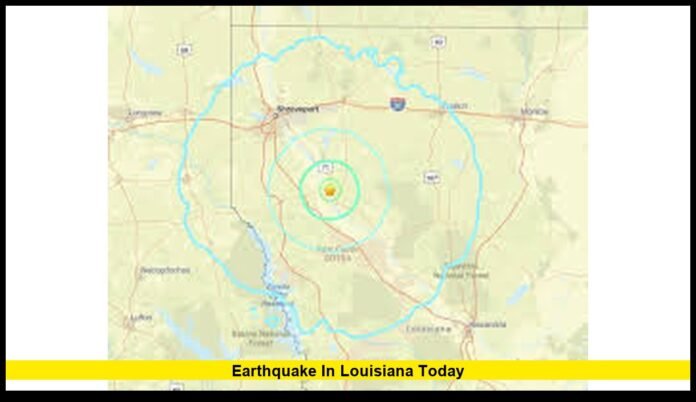

Earthquake in Louisiana today drew attention across the region after residents reported feeling a sudden tremor on March 5, 2026. Seismic monitoring networks detected the event and confirmed that a measurable earthquake occurred within the state, an unusual development in a region not commonly associated with seismic activity.
People in several communities described brief shaking that lasted only a few seconds. Although the tremor was relatively small compared with earthquakes in more active regions, it still prompted widespread discussion and concern. Local officials and monitoring agencies quickly reviewed data from seismic sensors to determine the magnitude, depth, and location of the event.
Because Louisiana rarely experiences earthquakes, even a minor tremor can surprise residents and spark strong public interest. Today’s seismic activity has become a topic of conversation across the state as people share their experiences and look for more information about what happened.
What Happened During the Tremor
The earthquake occurred earlier in the day and was detected by regional seismic monitoring systems that track ground movement throughout the United States.
Earthquakes happen when energy stored in the Earth’s crust suddenly releases along geological faults. That energy travels outward as seismic waves, causing the ground to shake.
Residents who experienced the tremor reported sensations that included:
- Brief rumbling sounds
- Vibrations inside homes
- Light shaking of objects on shelves
- Movement lasting only a few seconds
For many people in the affected area, the shaking came without warning and ended quickly.
Because the earthquake was relatively small, it did not cause widespread structural damage. Still, the experience surprised residents who rarely encounter seismic activity in Louisiana.
Location and Basic Seismic Details
Early monitoring data identified the approximate location of the earthquake within Louisiana. Seismologists analyze recordings from multiple monitoring stations to determine the epicenter and depth.
Basic characteristics of the event include:
| Seismic Detail | Information |
|---|---|
| Date | March 5, 2026 |
| State | Louisiana |
| Type of Event | Shallow earthquake |
| Depth | Shallow seismic activity |
| Magnitude Range | Minor to moderate |
A shallow earthquake often produces stronger surface shaking than a deeper one, even if the magnitude remains relatively low.
Because of this factor, some residents near the epicenter were able to feel the tremor despite its modest size.
Communities Reporting Shaking
Residents across several nearby communities reported feeling the tremor.
Many people described a sudden vibration beneath their feet or a quick shaking sensation inside their homes.
Common observations included:
- Windows or dishes rattling briefly
- Furniture shifting slightly
- A quick rumbling sound similar to a heavy vehicle passing nearby
In most cases, the shaking lasted only a few seconds before stopping.
The intensity of an earthquake typically decreases with distance from the epicenter. As a result, people farther away may not have felt the tremor at all.
Public Reaction Across Louisiana
The earthquake quickly became a trending topic among residents after people began discussing it online.
Many individuals shared posts describing the moment they felt the shaking.
Some residents initially believed the vibration came from construction equipment or a large truck driving nearby. Others immediately suspected an earthquake due to the unusual movement.
Common public responses included:
- Asking neighbors if they felt the shaking
- Checking online earthquake tracking websites
- Sharing experiences on social media platforms
Because earthquakes occur so rarely in Louisiana, many people were surprised to learn that seismic activity had occurred in their area.
Why Earthquakes Are Uncommon in Louisiana
Louisiana sits far from the major tectonic plate boundaries where most earthquakes occur.
The Earth’s crust consists of massive tectonic plates that slowly move relative to each other. When these plates interact, they create zones where earthquakes are more common.
Major seismic regions in the United States include:
- California’s San Andreas Fault system
- The Cascadia Subduction Zone in the Pacific Northwest
- The New Madrid Seismic Zone in the central United States
Louisiana lies outside these highly active regions.
However, small earthquakes can still occur because of underground stress along minor geological faults.
These events usually remain low in magnitude.
Influence of the New Madrid Seismic Zone
The closest major earthquake region to Louisiana is the New Madrid Seismic Zone, which stretches across parts of Missouri, Arkansas, Tennessee, and Kentucky.
This seismic zone produced some of the strongest earthquakes in North American history during the winter of 1811–1812.
Those historic earthquakes caused ground shaking across a vast area of the central United States.
While Louisiana sits outside the primary zone, seismic waves from large events there can sometimes be felt across neighboring states.
Occasionally, smaller earthquakes occur within Louisiana itself due to localized geological stress.
How Earthquakes Are Detected
Modern earthquake detection relies on networks of seismographs.
These instruments measure ground motion and record seismic waves traveling through the Earth.
The detection process typically works as follows:
- Sensors detect ground movement.
- Data transmits instantly to monitoring centers.
- Scientists analyze wave patterns.
- The earthquake’s location and magnitude are calculated.
Multiple monitoring stations help determine the epicenter accurately.
Within minutes of an event, preliminary earthquake information usually becomes available.
Understanding Earthquake Magnitude
Earthquake strength is measured using the moment magnitude scale, which calculates the total energy released during the event.
This scale helps scientists classify earthquakes into several categories.
| Magnitude | Typical Impact |
|---|---|
| Below 3.0 | Usually not felt |
| 3.0–3.9 | Light shaking |
| 4.0–4.9 | Noticeable shaking with minor damage possible |
| 5.0–5.9 | Potential structural damage |
| 6.0+ | Strong earthquake capable of widespread damage |
Most earthquakes that occur in Louisiana fall within the lower magnitude ranges.
These events rarely cause serious structural damage.
Emergency Monitoring and Safety Checks
After reports of shaking emerged, local authorities began reviewing the situation.
Emergency management teams often check for several potential impacts following an earthquake.
Officials typically assess:
- Structural damage to buildings
- Road and bridge conditions
- Utility system disruptions
- Injuries or emergency incidents
Initial reports have not indicated widespread damage from today’s tremor.
However, authorities continue monitoring the situation as more information becomes available.
What Residents Should Do During an Earthquake
Even in areas where earthquakes are rare, experts recommend knowing basic safety steps.
During ground shaking, individuals should follow the Drop, Cover, and Hold On method.
Safety guidance includes:
- Drop to the ground immediately
- Take cover under sturdy furniture
- Hold on until the shaking stops
People should avoid windows and heavy objects that could fall.
Once the shaking ends, residents should check their surroundings for potential hazards.
Preparedness remains important even in regions where earthquakes rarely occur.
Historical Seismic Activity in Louisiana
Although the state does not frequently experience earthquakes, Louisiana has recorded occasional seismic events over the years.
These events typically include:
- Minor earthquakes detected by monitoring networks
- Tremors felt in northern or central areas of the state
- Seismic waves traveling from nearby states
Most recorded events remain small and cause little damage.
Still, they demonstrate that seismic activity can occur almost anywhere in the United States.
Why Small Earthquakes Still Matter
Even minor earthquakes provide valuable data for scientists studying the Earth’s crust.
Seismologists analyze these events to better understand underground geological structures.
Important research areas include:
- Fault line activity
- Stress patterns within the crust
- Ground motion characteristics
- Regional seismic risk
Studying small earthquakes helps improve earthquake monitoring systems and hazard planning.
Monitoring for Aftershocks
After an earthquake occurs, scientists watch for additional seismic activity.
These follow-up tremors are known as aftershocks.
Most aftershocks are smaller than the original earthquake and occur near the same location.
In many minor earthquakes, aftershocks do not occur at all.
However, monitoring networks remain active to detect any additional seismic movement.
Why People Felt Today’s Tremor
Several factors determine whether people feel an earthquake.
Important influences include:
- Distance from the epicenter
- Depth of the earthquake
- Local soil conditions
- Structural design of buildings
Shallow earthquakes often produce noticeable surface shaking.
Soft soil or sediment layers can also amplify ground motion in certain areas.
These factors likely contributed to residents feeling the tremor earlier today.
Ongoing Seismic Monitoring
Scientists will continue studying the event and reviewing data from monitoring stations.
The analysis may refine information about the earthquake’s exact magnitude and location.
Most earthquakes of this size represent isolated events rather than part of a larger seismic sequence.
However, monitoring remains important for understanding regional geological activity.
Residents across the state continue discussing the earthquake in Louisiana today, and anyone who felt the tremor can share their experience as monitoring agencies provide additional updates about the rare seismic event.