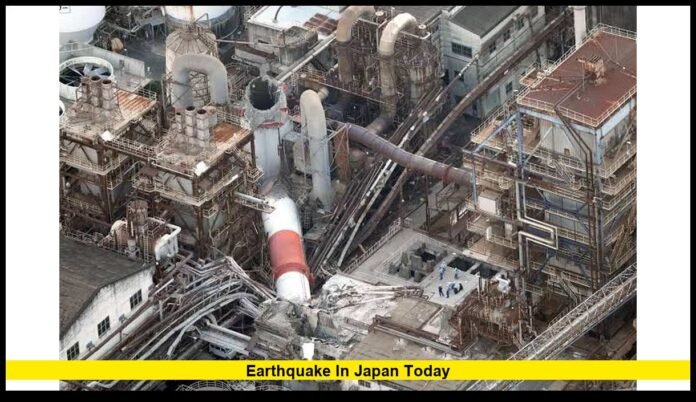

Earthquake in Japan today updates are focused on Kumamoto Prefecture after a magnitude 7.1 earthquake struck southwestern Japan on July 28, 2026. The powerful quake produced severe shaking across parts of Kyushu, damaged buildings and transportation infrastructure, interrupted electricity service, and triggered emergency operations across the affected region.
Japan’s Meteorological Agency recorded the earthquake at magnitude 7.1. The strongest areas reached level 7 on Japan’s seismic intensity scale, the highest reading available on the country’s system.
The earthquake struck at approximately 4:27 p.m. local time at a relatively shallow depth of about 10 kilometers. Authorities initially issued a tsunami advisory for coastal areas around the Ariake and Yatsushiro seas. That advisory was later lifted.
Rescue operations, structural inspections and infrastructure checks continued as officials assessed the consequences of the severe shaking.
Earthquake in Japan Today: What Happened in Kumamoto?
The earthquake struck Kumamoto Prefecture on Kyushu, the southwesternmost of Japan’s four main islands. The hardest-hit communities experienced violent ground movement capable of damaging buildings, roads and other infrastructure.
The epicentral area was roughly 20 kilometers, or about 12 miles, south of Kumamoto City. Communities including Uki, Uto, Yatsushiro, Mashiki and Misato experienced significant shaking.
Tremors were also felt across a wider portion of Kyushu.
Japan’s location along highly active tectonic boundaries makes earthquakes common, but an intensity level of 7 represents an exceptionally severe level of local shaking.
The shallow depth of Tuesday’s earthquake contributed to the powerful movement experienced near the epicenter.
Japan Records Maximum Seismic Intensity of 7
Magnitude and seismic intensity describe different features of an earthquake.
Magnitude measures the overall energy released during the seismic event. Japan’s intensity system measures how strongly the earthquake shakes individual locations.
The July 28 earthquake reached the maximum intensity of 7 in the hardest-hit area.
At this intensity, people can find it extremely difficult to move without support. Furniture can shift or overturn, while poorly secured objects may fall.
Buildings can also sustain substantial structural damage.
Tuesday’s event marked Kumamoto’s first intensity 7 earthquake since the devastating seismic sequence that hit the prefecture in April 2016.
It was also Japan’s first level 7 event since the January 2024 Noto Peninsula earthquake.
Damage Reported Across Kumamoto Prefecture
Reports from the affected region showed damage to buildings, roads and bridges.
Emergency teams responded to collapsed structures and other dangerous locations while authorities worked to establish the extent of the destruction.
One major emergency developed at an Aeon shopping center in Kashima, Kumamoto Prefecture. The property suffered extensive damage following the earthquake and an explosion.
Rescue crews searched the damaged site as officials worked to determine the number of people affected.
Workers were initially reported unaccounted for, while emergency teams rescued people and transported injured individuals for medical care.
Authorities continued investigating the circumstances surrounding the explosion.
Building Collapse and Rescue Operations
Emergency crews also responded to building collapses elsewhere in the earthquake zone.
At least one death was reported following the collapse of a building near the epicentral area. Officials continued checking damaged structures for people who could be trapped.
The earthquake affected several communities simultaneously, forcing emergency services to handle multiple incidents involving structural damage, fires and infrastructure problems.
Japan deployed additional personnel to assist local authorities.
Military aircraft also helped assess damage from above, allowing emergency officials to identify areas requiring urgent attention.
Paper Mill Chimney Collapses in Yatsushiro
A serious incident occurred at a Nippon Paper Industries facility in Yatsushiro.
A large chimney collapsed during the earthquake, prompting another search operation. People were reported missing following the collapse.
The intense shaking also led industrial facilities across the region to conduct immediate safety inspections.
Factories often suspend operations after major earthquakes even when buildings appear intact. Engineers need to inspect machinery, utility connections and structural components before workers can safely return.
Kumamoto’s importance as an industrial and semiconductor manufacturing center made these inspections particularly significant.
Hospitals Receive Earthquake Injuries
Medical facilities throughout the region treated people hurt during the earthquake.
A hospital in Yatsushiro received roughly 40 patients, while another facility in Kumamoto City treated around 50.
Other hospitals also received earthquake-related patients.
Some injuries resulted directly from falling objects and damaged structures. Several passengers aboard high-speed trains also suffered injuries during the shaking.
The regional injury count remained subject to ongoing emergency assessments.
Hospitals and emergency responders continued preparing for additional patients as rescue crews searched damaged locations.
Tsunami Advisory Lifted After the Earthquake
Japan issued a tsunami advisory shortly after the earthquake.
The warning covered coastal communities around the Ariake and Yatsushiro seas. Authorities instructed people near affected shorelines to stay away from the water while monitoring continued.
Officials later lifted the advisory.
No destructive tsunami followed the earthquake.
There was also no broader tsunami threat to the United States from the event.
The end of the advisory reduced one immediate concern for coastal residents. However, damaged buildings, unstable ground and aftershocks continued to pose risks.
Tens of Thousands of Homes Lose Power
The earthquake disrupted electricity service across the affected region.
About 48,000 homes experienced power outages following the quake.
Loss of electricity created additional difficulties for households and businesses while emergency crews carried out rescue work.
Communication networks also experienced disruption in some locations. Power failures can affect mobile network infrastructure and make it harder for residents to contact relatives or emergency services.
Utility teams began assessing damaged equipment and working to restore service.
The timing of the earthquake during Japan’s summer also made prolonged outages a concern because residents could lose access to air conditioning.
Road and Bridge Damage Disrupts Travel
Transportation infrastructure suffered significant effects.
Cracks and other damage appeared on roads in Kumamoto Prefecture, while authorities inspected bridges for structural problems.
A bridge in Yatsushiro suffered partial collapse.
Road closures can significantly complicate earthquake rescue operations. Emergency crews need reliable routes to move ambulances, equipment and personnel into damaged communities.
Authorities restricted access to some affected roads while engineers carried out inspections.
Residents were urged to avoid unnecessary travel through damaged areas.
Read More – What Time Was the Earthquake in Japan Today: December 2025 Seismic Activity Update
Shinkansen Services Suspended
Rail transportation across Kyushu experienced major interruptions.
JR Kyushu suspended high-speed Shinkansen and other train services so workers could inspect tracks, bridges, signaling equipment and electrical systems.
A train at Yatsushiro Station derailed and fell onto its side during the earthquake.
Rail operators began safety checks before considering when individual routes could reopen.
Major earthquakes can shift tracks or damage elevated railway structures. Even small changes can make normal operations unsafe until engineers complete inspections.
Passengers across Kyushu faced delays and cancellations as a result.
Kumamoto Airport Runway Closes
Air travel was also disrupted after the earthquake.
Aso Kumamoto Airport closed its runway for inspections, affecting flights serving the region.
Airlines canceled or diverted some services while airport authorities checked runways and facilities.
Travelers heading to or from Kumamoto faced potential schedule changes throughout the emergency response.
For American visitors in Japan, transportation problems remained concentrated mainly around the affected parts of Kyushu rather than Tokyo and other distant regions.
Evacuation Instructions Affect Hundreds of Thousands
Around 300,000 people received instructions to use evacuation centers during the emergency response.
Authorities had several reasons for moving residents away from vulnerable locations.
The initial tsunami advisory created concerns in coastal communities. Damaged buildings also remained at risk from aftershocks.
Residents living near unstable slopes faced another hazard. Strong earthquakes can weaken hillsides and increase the possibility of landslides.
Evacuation centers provided safer locations for people unable to remain in damaged homes.
Aftershocks Continue Across the Region
Numerous aftershocks followed the initial earthquake.
Japan’s Meteorological Agency recorded around 100 smaller tremors during the early monitoring period. One significant aftershock reached approximately magnitude 6.1.
Officials warned that strong shaking could occur again.
Aftershocks present a particular threat to buildings that already suffered structural damage during the main earthquake.
Residents were advised to avoid unstable buildings and areas with visible damage.
Authorities also warned people to remain alert around slopes and other locations vulnerable to landslides.
Kumamoto Castle Suffers New Damage
The earthquake caused additional damage at historic Kumamoto Castle.
Sections of the castle’s stone walls collapsed during the severe shaking.
The landmark had already endured extensive damage during the 2016 Kumamoto earthquakes. Restoration work has continued for years following that disaster.
The latest earthquake created another challenge for preservation efforts.
Officials began inspecting the historic complex to determine the extent of the new damage and identify areas that remained unsafe.
Semiconductor and Manufacturing Operations Affected
Kumamoto has become increasingly important to Japan’s semiconductor industry.
Major manufacturers evacuated workers and inspected facilities following the earthquake.
TSMC, Sony and Fujifilm were among companies with operations affected by safety procedures in the region.
TSMC reported no significant impact at its Kumamoto facility and began gradually resuming operations.
Tokyo Electron temporarily stopped work at two factories in Kumamoto, while Honda prepared to temporarily suspend operations at its motorcycle facility.
The precautionary shutdowns allowed companies to inspect buildings, production equipment and utilities.
No Abnormalities Reported at Nuclear Facilities
Nuclear facilities in the broader region underwent immediate safety checks.
Japan’s nuclear regulator reported no abnormalities at nearby nuclear power stations after the earthquake.
No nuclear emergency was reported.
Monitoring remained important because powerful earthquakes can affect power supplies and other essential systems even when a facility does not suffer direct structural damage.
Officials continued watching nuclear sites while the wider earthquake response progressed.
Why Kumamoto Is Closely Watched After Major Earthquakes
Kumamoto has experienced destructive seismic activity before.
In April 2016, the prefecture endured a devastating sequence of earthquakes that caused widespread building and infrastructure damage.
That disaster remains especially relevant because a major earthquake was followed by an even stronger event roughly 28 hours later.
Tuesday’s earthquake does not mean the same sequence will happen again.
However, the history underscores why authorities treat aftershock warnings seriously and encourage residents to maintain emergency precautions following intense shaking.
What Americans in Japan Should Know
U.S. travelers in Kyushu should follow local emergency instructions and check transportation schedules before traveling.
Train services, flights and roads may remain disrupted while inspections continue.
Travelers should avoid damaged structures, restricted areas and unstable slopes. Aftershocks may occur without significant warning.
The tsunami advisory has been lifted, removing the immediate coastal threat associated with the earthquake.
The hardest-hit region lies hundreds of miles southwest of Tokyo. The most serious damage and emergency operations remain centered on Kumamoto and surrounding parts of Kyushu.
Latest Earthquake Situation in Japan
As July 28 emergency operations continue, authorities remain focused on finding missing people, treating the injured and determining the full extent of structural damage.
Power restoration and transportation inspections are also underway.
The magnitude 7.1 earthquake produced Japan’s highest seismic intensity level in parts of Kumamoto and triggered significant disruption across the prefecture.
The tsunami advisory has ended, and no abnormalities have been reported at regional nuclear facilities. Aftershocks, however, remain an important safety concern.
The earthquake in Japan today has left Kumamoto facing a major emergency response as rescue workers, utility crews, transportation operators and local authorities assess damage and work to restore essential services.
Stay alert for confirmed developments as rescue efforts and damage assessments continue across Kumamoto and other affected areas of Kyushu.