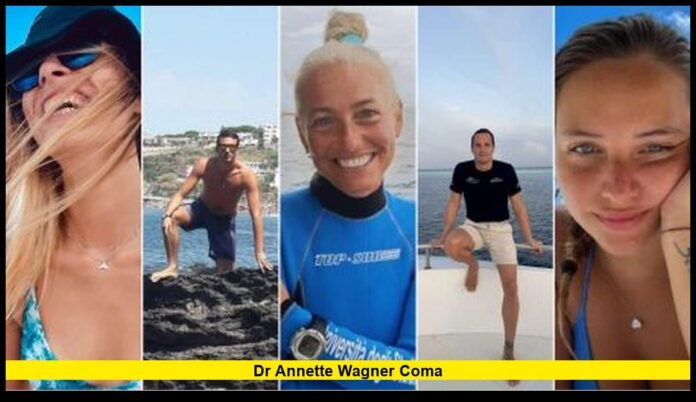

The dr annette wagner coma story has become a powerful example of how a family’s medical history, genetic research, and timely intervention can change the course of a life-threatening disease. Dr. Annette Wagner, a pediatric dermatologist from Glen Ellyn, Illinois, survived a catastrophic aortic dissection that nearly killed her in 2025. After emergency surgery, life support, and a coma, she eventually recovered enough to return home and urge three of her adult children to undergo preventive heart operations.
Wagner’s family faced an unusual medical journey. She and three of her six children carry Loeys-Dietz syndrome, a rare genetic condition that weakens connective tissue and can make the aorta vulnerable to aneurysms and sudden tears. Within roughly six months, the mother and her three affected children underwent major aortic surgery.
Their experience has drawn attention to the importance of understanding inherited cardiovascular conditions, especially when relatives have experienced serious heart or blood-vessel problems at unusually young ages. It also highlights the difficult decisions families may face when doctors recommend preventive surgery before a medical emergency occurs.
A Medical Emergency That Wagner Recognized Immediately
Wagner’s crisis began in July 2025 while she was working in her pediatric dermatology clinic. During a patient appointment, she suddenly experienced severe, tearing pain in her chest. The sensation was alarming, but her family history and medical knowledge helped her recognize what might be happening.
She knew that the pain could signal an aortic dissection, a dangerous condition in which blood enters a tear in the inner wall of the aorta and separates its layers. The injury can disrupt blood flow to organs, cause the artery to rupture, and lead to death without emergency treatment.
Wagner excused herself from the examination room and went into the hallway. She alerted her nurse and asked for a wheelchair. Her symptoms were so severe that she understood she needed immediate medical attention.
Although she had been receiving medical monitoring because of her genetic condition, the dissection still occurred. The emergency demonstrated how unpredictable Loeys-Dietz syndrome can be and why regular surveillance cannot completely remove the risk.
Doctors rushed Wagner to a hospital, where she underwent emergency surgery to address the aortic injury. Her condition remained extremely serious in the aftermath of the operation.
The Coma and the Fight to Stabilize Her Heart
The first operation did not end Wagner’s medical crisis. She developed serious complications and required life-support treatment. During the most critical phase of her illness, she entered a coma.
Her family faced an uncertain period as doctors attempted to stabilize her cardiovascular system. The complications following her emergency surgery made her condition particularly challenging.
Wagner’s recovery involved more than simply surviving the original tear. Doctors had to evaluate the damage to her heart and aorta, determine which problems required additional intervention, and manage the risks associated with another major operation.
After her initial treatment, she was transferred to Northwestern Memorial Hospital in Chicago. Specialists there continued treating her complex cardiovascular condition.
Her family remained closely involved during the difficult period. Her children were trying to understand what had happened to their mother while also confronting their own inherited risk.
Wagner eventually emerged from the coma. Her recovery was a major milestone, but she still needed further surgery to address the extensive damage caused by the dissection.
Why Her Second Major Operation Was Necessary
The aortic dissection had caused widespread damage to Wagner’s cardiovascular system. The medical team determined that additional reconstruction was necessary to address the injured portions of her aorta and related heart structures.
Her follow-up operation involved complex work on the ascending aorta, aortic arch, aortic root, and aortic valve. Doctors also had to address damage involving the coronary arteries, which supply blood to the heart muscle.
The operation required surgeons to reconstruct portions of her cardiovascular system. Veins taken from her legs were used to create a new route for blood flow to areas affected by the dissection. The team also repaired a leaking tricuspid valve.
The procedure was especially complicated because Wagner had already undergone emergency surgery. Scar tissue and fragile connective tissue made the reconstruction more challenging.
Her underlying Loeys-Dietz syndrome added another layer of risk. The genetic condition can affect the structural integrity of blood vessels and other connective tissues, requiring doctors to take extra care during surgical procedures.
Despite the challenges, Wagner survived the operation and continued recovering.
Wagner’s Recovery Was Remarkable but Not Complete
The latest publicly reported information indicates that Wagner survived her coma and major cardiovascular operations and returned home to her family.
Her survival is remarkable given the severity of the original dissection and the extensive surgical reconstruction she required. However, recovery does not mean that every cardiovascular problem has disappeared.
Reports indicate that she continues to have residual aortic damage involving the descending portion of the artery. The remaining dissection extends through portions of her chest and abdomen, toward the femoral artery in her right leg.
Her doctors must continue evaluating the condition because another major operation could carry substantial risk. The fragile tissue associated with Loeys-Dietz syndrome and the damage from her original emergency complicate future treatment decisions.
Wagner has also described reduced heart function following the medical crisis. Despite those limitations, she has reported having stamina and being able to spend meaningful time with her children.
Her story is therefore one of survival and ongoing medical management rather than a simple return to life without health concerns.
The Family History That Led to Genetic Research
Wagner’s experience was connected to a medical pattern that had troubled her family for years.
Her brother suffered an aortic dissection at a relatively young age. The event raised questions about whether an inherited condition could explain the cardiovascular emergencies affecting relatives.
Wagner used her medical background to investigate. She traveled to Nova Scotia, where the family had roots, and collected blood samples and skin biopsies from relatives willing to participate in research.
The process was not quick. The family waited years for answers while researchers investigated possible genetic causes of aortic dissections.
In 2011, Wagner received information identifying a genetic finding associated with Loeys-Dietz syndrome. She and three of her children—Charles, Gavin, and Kirstin—were found to carry the condition.
The discovery changed the family’s approach to healthcare. Instead of treating each medical problem as an isolated event, the diagnosis provided an explanation for the pattern of cardiovascular risk.
It also allowed doctors to identify which family members required closer monitoring and specialized care.
What Loeys-Dietz Syndrome Means for the Wagner Family
Loeys-Dietz syndrome is a genetic disorder involving connective tissue. Connective tissue helps support and organize structures throughout the body, including blood vessels, joints, and organs.
In affected individuals, genetic changes can interfere with normal connective-tissue function. The condition may cause abnormalities in the aorta and other arteries, increasing the risk of aneurysms and dissections.
An aneurysm occurs when a section of an artery becomes enlarged or weakened. If the vessel wall becomes sufficiently vulnerable, it may tear. An aortic dissection can allow blood to travel between the layers of the artery wall, creating a medical emergency.
The severity of Loeys-Dietz syndrome can vary. Some patients may have significant vascular problems, while others may experience different manifestations of the condition. Risk depends on the specific genetic variant, family history, imaging findings, and other clinical factors.
For the Wagner family, the diagnosis was particularly important because several relatives shared the same genetic risk.
Why Regular Monitoring Could Not Guarantee Safety
After identifying the genetic condition, Wagner and her affected children received ongoing cardiovascular monitoring.
Doctors used imaging examinations and medical evaluations to track changes in the aorta. Monitoring can help identify enlargement or other abnormalities before symptoms develop.
The family also received guidance on managing blood pressure and heart rate. These measures can help reduce stress on the aorta, although they cannot eliminate the possibility of a dissection.
Wagner’s emergency demonstrated the limits of surveillance. She was already aware of her condition, had been monitored, and understood the potential symptoms. Nevertheless, the aortic tear occurred at a size that surprised her medical team.
The experience was particularly significant because some people with Loeys-Dietz syndrome can experience dissections at smaller aortic diameters than patients with other conditions.
Doctors therefore must consider more than one measurement when deciding when to recommend surgery. Family history, genetic information, the rate of aortic enlargement, and the patient’s overall medical condition may all affect treatment decisions.
The Decision That Changed Her Children’s Medical Plans
After Wagner recovered enough to speak with her family, she called her three affected children to her bedside.
Her experience had changed how she viewed the risks they faced. She knew that each of them carried the same genetic condition and that a serious aortic event could happen without much warning.
She urged Charles, Gavin, and Kirstin to consider preventive surgery.
The conversation was emotionally difficult. Major open-heart surgery is not a decision families make lightly. It involves potential complications, lengthy recovery periods, and significant medical risks.
However, the Wagners had witnessed the consequences of waiting until an emergency developed. Their mother had survived a dissection that required extensive reconstruction and left her with ongoing health problems.
The siblings discussed their situation with cardiovascular specialists. Their medical teams evaluated their aortic measurements and individual risks before determining that preventive procedures were appropriate.
The family ultimately decided to proceed with the surgeries.
Gavin Wagner Was the First of the Siblings to Undergo Surgery
Gavin Wagner underwent his preventive operation on December 3, 2025.
The procedure involved repairing the affected section of his aorta. Doctors replaced the aneurysmal portion with a graft while preserving his own aortic valve.
His recovery was relatively quick. He spent several days in the hospital and completed rehabilitation over the following months.
The operation helped reduce the risk associated with the weakened portion of his aorta. Gavin later described the relief of no longer feeling that a potentially fatal dissection could occur in the background of everyday activities.
The experience also gave him a clearer understanding of the medical decisions his family had made. His mother’s emergency had transformed the inherited condition from an abstract concern into something the family had witnessed firsthand.
Charles Wagner’s Recovery Took Longer
Charles Wagner, also known as Charlie, underwent surgery on March 9, 2026.
His operation addressed the aneurysmal portion of his aorta, with doctors working to reduce the risk of a future dissection.
Although the surgery was successful, his recovery involved complications. He developed inflammation around the heart, a condition that caused symptoms including chest discomfort and other problems.
The inflammation prolonged his recovery beyond the period initially expected. He required additional time before he felt ready to return fully to his normal activities.
His experience showed that preventive surgery can still involve a difficult recovery. The procedure may reduce the risk of a catastrophic vascular event, but patients must also manage the immediate challenges associated with major cardiac surgery.
Charlie eventually recovered and returned to his activities. He has described his mother’s emergency as a wake-up call about the seriousness of the genetic condition.
Kirstin Wagner Had Her Operation in France
Kirstin Wagner also underwent preventive surgery because she carried the same genetic condition.
She lives in France, so her operation was performed in Paris on February 23, 2026.
Her procedure was part of the family’s coordinated effort to address the risk of aortic dissection before an emergency occurred.
Although the siblings had different surgical experiences and recovery timelines, each underwent a major procedure designed to repair the affected aortic area.
The fact that three siblings proceeded with surgery within a relatively short period highlights the significance of the family’s genetic diagnosis and the decisions they faced after their mother’s emergency.
Four Major Heart Operations Within Six Months
The Wagner family’s experience is extraordinary because four immediate family members underwent major open-heart surgery within approximately six months.
Annette’s emergency and follow-up operations were followed by preventive procedures for Gavin, Charles, and Kirstin.
The family had to coordinate medical care, recovery schedules, and emotional support across multiple operations. Each procedure brought uncertainty, but the shared diagnosis helped them understand why the surgeries were being recommended.
Their experiences also created a strong sense of solidarity. The siblings could relate to one another’s recovery because they had undergone similar procedures and faced many of the same concerns.
For the family, the scars left by surgery became reminders of the danger they had faced and the steps they had taken to reduce future risks.
The Importance of Family Medical History
Wagner’s story illustrates why family medical history can be important when evaluating cardiovascular risk.
A history of aneurysms, aortic dissections, unexplained sudden deaths, or serious cardiovascular problems at younger ages may warrant further discussion with healthcare professionals.
Genetic conditions can affect multiple relatives, and identifying a mutation may help doctors determine who needs additional testing or monitoring.
Family members may not always know the details of relatives’ medical conditions. Conversations about diagnoses, surgeries, and the circumstances surrounding deaths can provide useful information.
The Wagner family’s experience also demonstrates that genetic testing may affect decisions across generations. Once doctors identify an inherited condition, relatives may be able to pursue monitoring and preventive care before developing symptoms.
Preventive Surgery and the Difficult Balance of Risk
Preventive aortic surgery can be lifesaving, but it is not without risks.
Open-heart procedures may involve bleeding, infection, complications affecting the heart or lungs, and prolonged recovery. Doctors must balance the danger of waiting against the risks of operating.
For people with Loeys-Dietz syndrome, the timing of surgery may depend on several factors. The genetic variant, aortic size, family history, the rate of enlargement, and previous vascular complications may all influence recommendations.
The Wagner family had a particularly compelling reason to consider surgery after Annette experienced a severe dissection despite medical monitoring.
Their decisions were made in consultation with specialists who understood the condition and the family’s medical history.
How Genetic Information Can Affect Future Generations
The Wagner family’s diagnosis also influenced decisions about future generations.
Loeys-Dietz syndrome can be inherited, and affected individuals may have a significant chance of passing the genetic variant to their children.
Some family members have discussed reproductive options that may help reduce the chance of transmitting the mutation. These decisions are personal and involve genetic counseling, medical information, and individual circumstances.
The family’s experience shows how genetic diagnoses can affect more than immediate medical treatment. They can influence decisions about family planning, testing, and long-term health management.
Where the Wagner Family Stands Today
The latest confirmed public updates indicate that Annette Wagner and her three affected children have survived their major heart surgeries and are returning to everyday life.
The family is spending time together after a year marked by emergency treatment, hospital stays, recovery, and preventive procedures.
Wagner’s health remains complicated by the residual aortic injury and reduced heart function reported after her medical crisis. She will continue to require specialized care and monitoring.
Her children, meanwhile, have undergone procedures intended to reduce the risk of a future aortic dissection in the repaired sections of their aortas.
The family’s experience remains a powerful reminder that inherited cardiovascular conditions can have serious consequences, but genetic information, specialist care, and timely intervention may help people make decisions before a crisis develops.
Dr. Annette Wagner’s survival and her children’s preventive surgeries have turned an extraordinary medical ordeal into a story of resilience, awareness, and the importance of knowing your family’s health history.